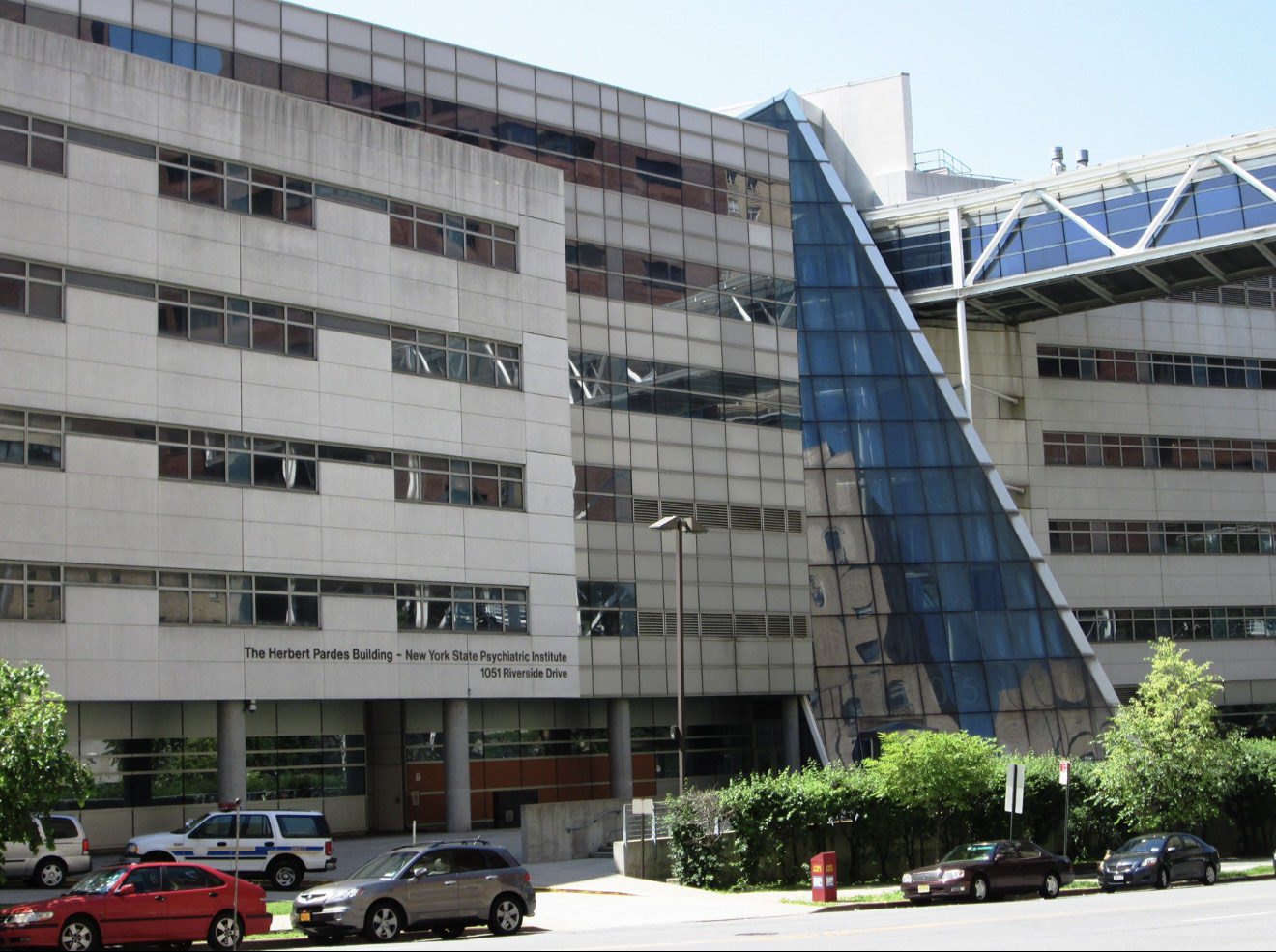

Founded over a century ago, the New York State Psychiatric Institute (NYSPI) remains one of the world’s most influential—and controversial—medical institutions. It is a place where modern evidence-based psychiatry essentially began and where foundational classifications of mental disorders were drafted. Yet, it is also where tragedies unfolded, forcing the government to radically overhaul the rules governing human experimentation. In this article on i-new-york.com, we will take a look at NYSPI’s pioneering scientific breakthroughs, its modern infrastructure, and the high-profile ethical scandals that forever changed clinical psychiatry and patient rights.
From Asylums to Science
The history of mental health care in New York began in dark times. Patients, stripped of all rights, were confined in prisons, almshouses, and damp basements alongside criminals and the destitute. By the 19th century, state asylums were catastrophically overcrowded. The sick were often left without basic medical care, doomed to lifelong isolation.
Recognizing the scale of this humanitarian crisis, the New York State Commission established the Pathological Institute of the State Hospitals in 1895 (which later received its current name, NYSPI). It was one of the first facilities in the U.S. to integrate academic teaching, laboratory research, and practical therapy. A true conceptual revolution occurred in 1902 when Adolf Meyer—a distinguished expert often called the father of modern American psychiatry—took over as director. He categorically rejected the purely “chronic” and “isolationist” view of mental illness. Instead, he introduced a holistic approach, where a patient’s detailed life history and social environment became key to understanding and treating the disease.

In 1925, the institute made a strategic move to join forces with Presbyterian Hospital and Columbia University. This partnership firmly cemented its status as a premier research center, unlocking access to the nation’s best academic resources.
Architecture and Modern Infrastructure
Today, NYSPI is located in the Washington Heights neighborhood of upper Manhattan, forming a massive medical cluster. The institute’s infrastructure is impressive in its scale, technology, and meticulous design. The modern complex consists of two main buildings connected by enclosed pedestrian bridges, symbolizing the link between different eras of scientific progress:
- The Lawrence G. Kolb Research Laboratory (1983): A uniquely designed multi-story building that houses the core scientific facilities, advanced labs, and analytical centers.
- The Herbert Pardes Building (1998): A state-of-the-art facility spanning over 320,000 square feet. It towers majestically over the Hudson River, providing patients with a therapeutic view and a comfortable healing environment.
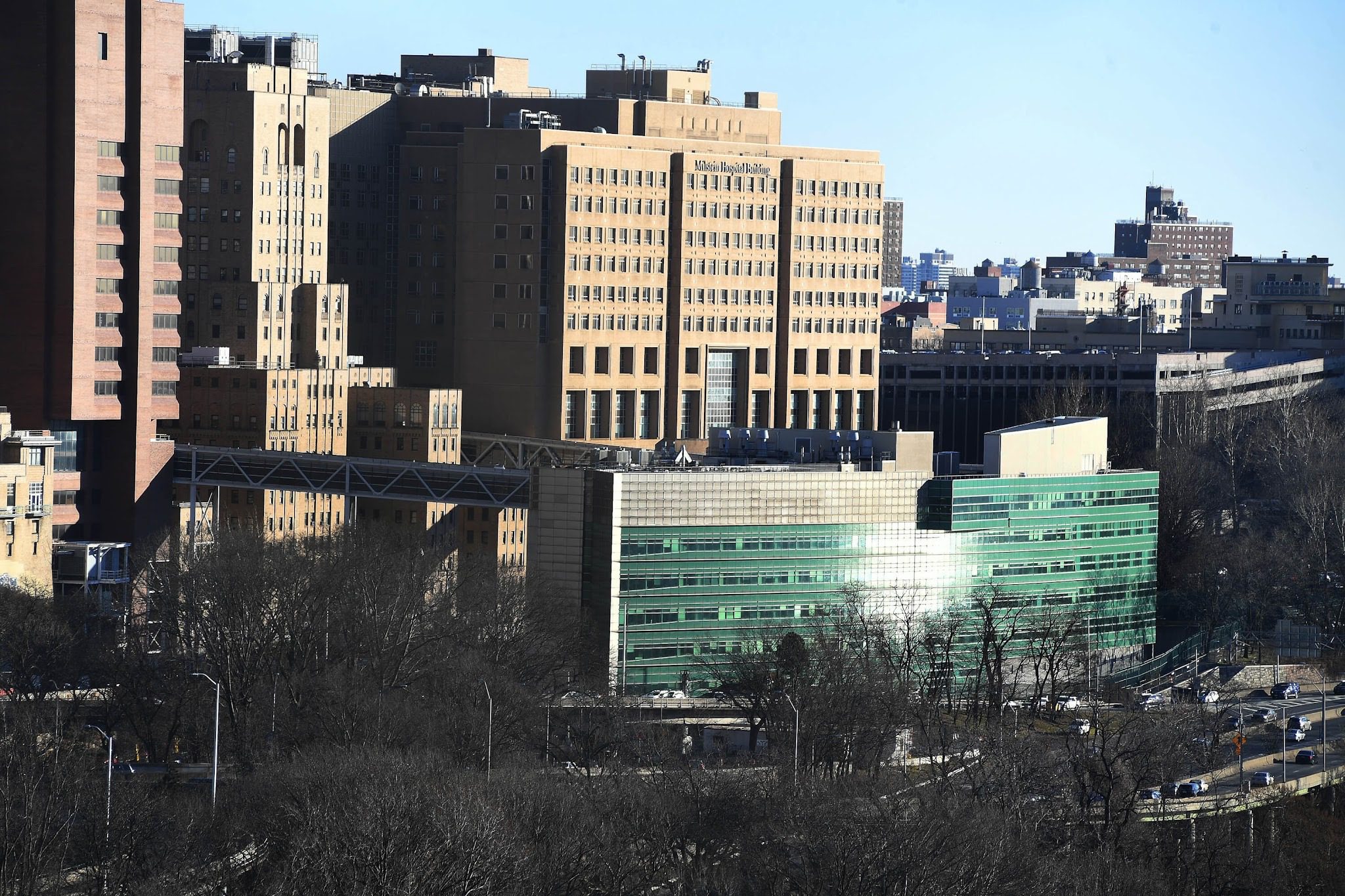
The institute holds about 60 inpatient beds and operates a robust network of over 20 specialized outpatient clinics that treat hundreds of people daily. The inpatient facility is strictly divided into research and purely clinical zones. Notably, it features a 22-bed General Clinical Research Unit and a highly specialized 14-bed Eating Disorders Unit. A crucial social aspect of the institute is that patients who agree to participate in clinical trials receive top-tier treatment completely free of charge, regardless of their financial status or health insurance coverage.
Cutting-Edge Research and Scientific Breakthroughs
NYSPI’s research potential is hard to overstate. Since its inception, the institute has consistently been at the forefront of global psychiatry. Its most landmark historical achievements include:
- Discovering the spirochetal origin of general paresis, which radically changed the understanding of organic brain lesions.
- The first successful use of lithium in the U.S. to stabilize patients’ moods.
- Gathering the first reliable data on the genetic predisposition to schizophrenia.
- Playing a fundamental role in developing the DSM-III, DSM-III-R, and DSM-IV diagnostic manuals, which standardized psychiatric practice worldwide.

Today, the Brain Imaging Lab, led by Drs. Jeffrey Miller and Francesca Zanderigo, continues to push boundaries. They use cutting-edge neuroimaging techniques (MRI and PET) to dive deep into the neurobiology of mood disorders and identify hidden biomarkers for suicide risk. Furthermore, the institute is a recognized global leader in eating disorder research. The department, founded by Dr. Timothy Walsh over 40 years ago, continues to study anorexia nervosa and bulimia. Specialists here are successfully integrating innovative, non-invasive methods, including transcranial magnetic stimulation (TMS), to rewire neural networks.
Dark Chapters and Ethical Crises
Despite its undeniable scientific triumphs, NYSPI’s reputation has repeatedly taken a hit due to severe ethical violations and tragedies that sparked public outrage.
At the height of the Cold War in 1953, a shocking incident occurred. Harold Blauer, a patient being treated for depression, died after being injected with an amphetamine derivative (MDA). The injection was given without his knowledge or consent as part of a secret U.S. Army chemical warfare experiment. The government and the institute’s top management spent years covering up this horrific fact. The truth only surfaced by chance in 1975 during a massive Congressional investigation.
In 2011, an audit by the New York State Comptroller’s Office revealed deep, systemic issues with the management of public resources. The official probe found that Columbia University had been using the institute’s space for free for years to house its own staff. Worse, the university attempted to illegally pocket patents for promising technologies funded by taxpayers. The institute couldn’t even provide documentation to prove that specialists collecting double salaries (from both the state and the university) were actually working their paid hours on state projects.

The loudest scandal in recent years erupted in 2023, sending shockwaves through the medical community. The federal Office for Human Research Protections (OHRP) and the National Institutes of Health (NIH) took the unprecedented step of suspending all clinical trials at NYSPI following a patient’s suicide. The tragedy occurred during a study led by Dr. Bret Rutherford, who was testing the efficacy of the drug levodopa for treating depression in older adults.
A subsequent, rigorous FDA inspection in late 2023 uncovered severe failures within NYSPI’s Institutional Review Board (IRB). Not only did the board fail to report the patient’s suicide to the FDA, but it also ignored the fact that researchers were systematically violating medical protocols. It turned out that, in a rush to enroll participants, doctors blatantly ignored the rules for weaning patients off their previous antidepressants. Some patients were abruptly taken off their medications just one day before starting the new study, instead of the safe 28-day tapering period. This severe withdrawal syndrome destabilized their mental state and critically increased the risk of suicide.
Yet, despite everything, the New York State Psychiatric Institute remains a fundamental pillar of global science. It pulls in tens of millions of dollars in grant funding every year and offers real hope to thousands of patients with the most severe, treatment-resistant diagnoses. Its complex, contradictory history is a perfect reflection of the evolution of psychiatry itself: from cruel isolation and unchecked experiments to the era of precision medicine and high-tech brain scanning.

However, recent tragic events serve as a harsh reminder: no scientific ambition, career goal, or grant quota can ever justify gambling with human safety. The institute’s true, profound mission can only be achieved through absolute procedural transparency, uncompromising medical ethics, and the utmost respect for every patient’s life.