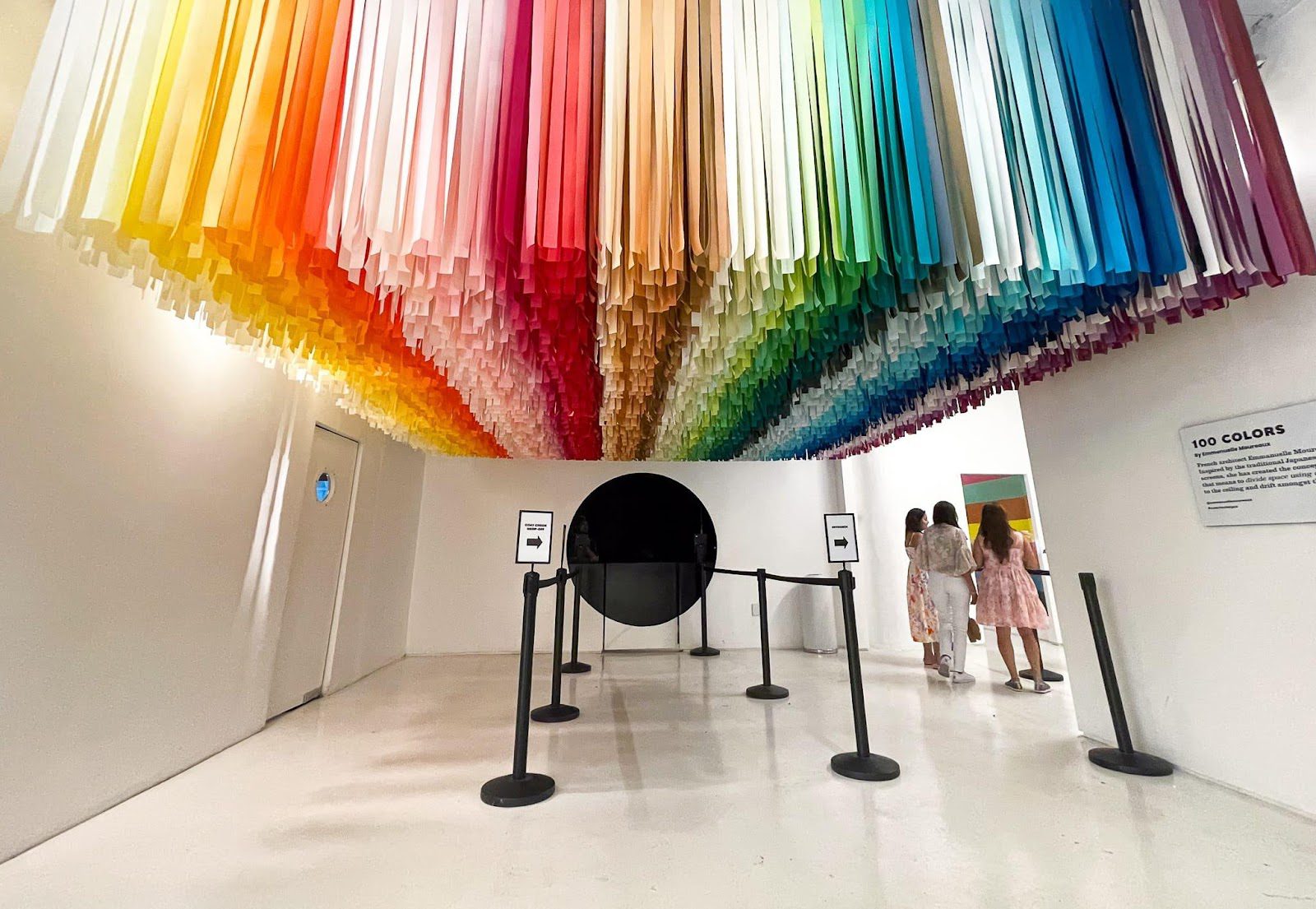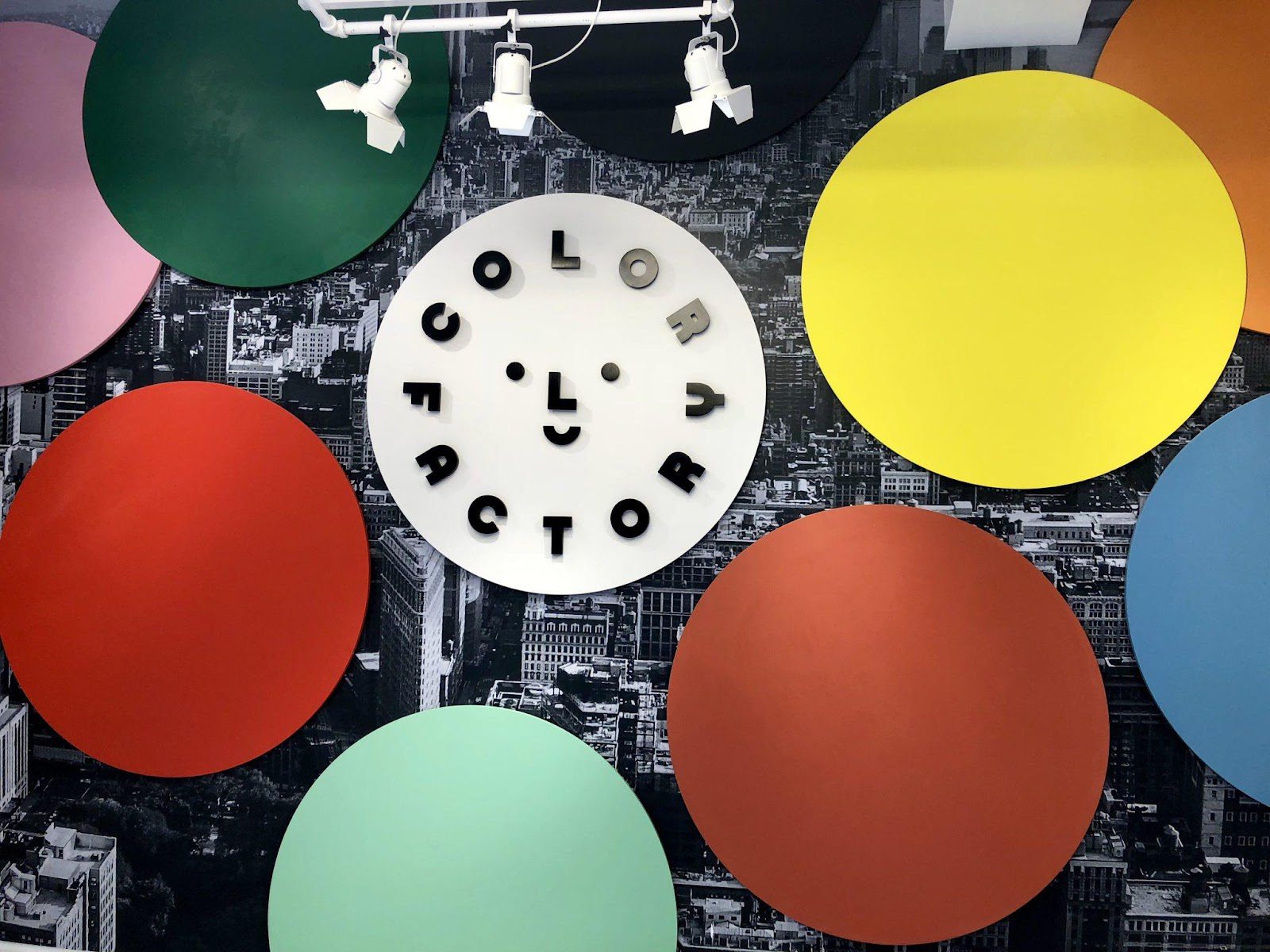

In today’s world, it seems like nothing can surprise people anymore. Countless movies, books, events, art performances, active social media feeds, and other things have all become commonplace. That’s why it’s so valuable to find something that can spark a variety of emotions. And that’s exactly what the Color Factory does, offering a hefty dose of endorphins to all its visitors. Gallery, exhibition, color factory—no matter what you call it, it’s a project worth learning about. Read more at i-new-york.
The Story of Color Factory
The Color Factory is an interactive art exhibition that attracts a huge number of people every year. It’s a young project that quickly took off and continues to shine today. It all started on a hot summer day in 2017, when blogger and businesswoman Jordan Ferney had her latest brilliant idea. That idea was the Color Factory, which fit perfectly with every trend. Jordan can’t stand still, so she’s constantly creating, organizing events, and coming up with new projects. Despite her success, the woman doesn’t consider herself an artist or a designer, but an entrepreneur. She loves coming up with interesting ideas and then handing them off to masters of their craft. Ferney has developed a professional eye for spotting talent. That’s what happened with the Color Factory, as she invited artist Leah Rosenberg and designer Erin Jang to join her team. Together, the women created an incredible space that exceeded all expectations.
The birthplace of the Color Factory was San Francisco. Jordan Ferney set aside an office space for the exhibition, which was rented for one month. However, that wasn’t enough, as tickets for the new attraction sold out instantly, and the creators extended the run for another eight months. It was then that the team realized the impact of their project and its market demand. Fans of art, bright experiences, and new adventures loved those first 15 locations, which were mesmerizing with the scent of pine, a coloring room with giant pencils, and everything you could touch. Just a year later, the Color Factory set out to conquer New York, and it was a success. This metropolis was a test of strength for the team. It had to prove whether the project was ready to scale. What’s more, the city constantly presented competitors, new challenges, and tasks. The art exhibition succeeded here, establishing itself and continuously evolving. You can find it in SoHo at 251 Spring Street. But the Color Factory didn’t stop there, opening locations in Houston and Chicago as well. The team adds its own flavor to each city it appears in, taking into account the residents’ preferences and finding unique, creative ideas everywhere. Despite a wide range of critical opinions on the project’s influence, it has received numerous awards and remains a top-tier artistic experience.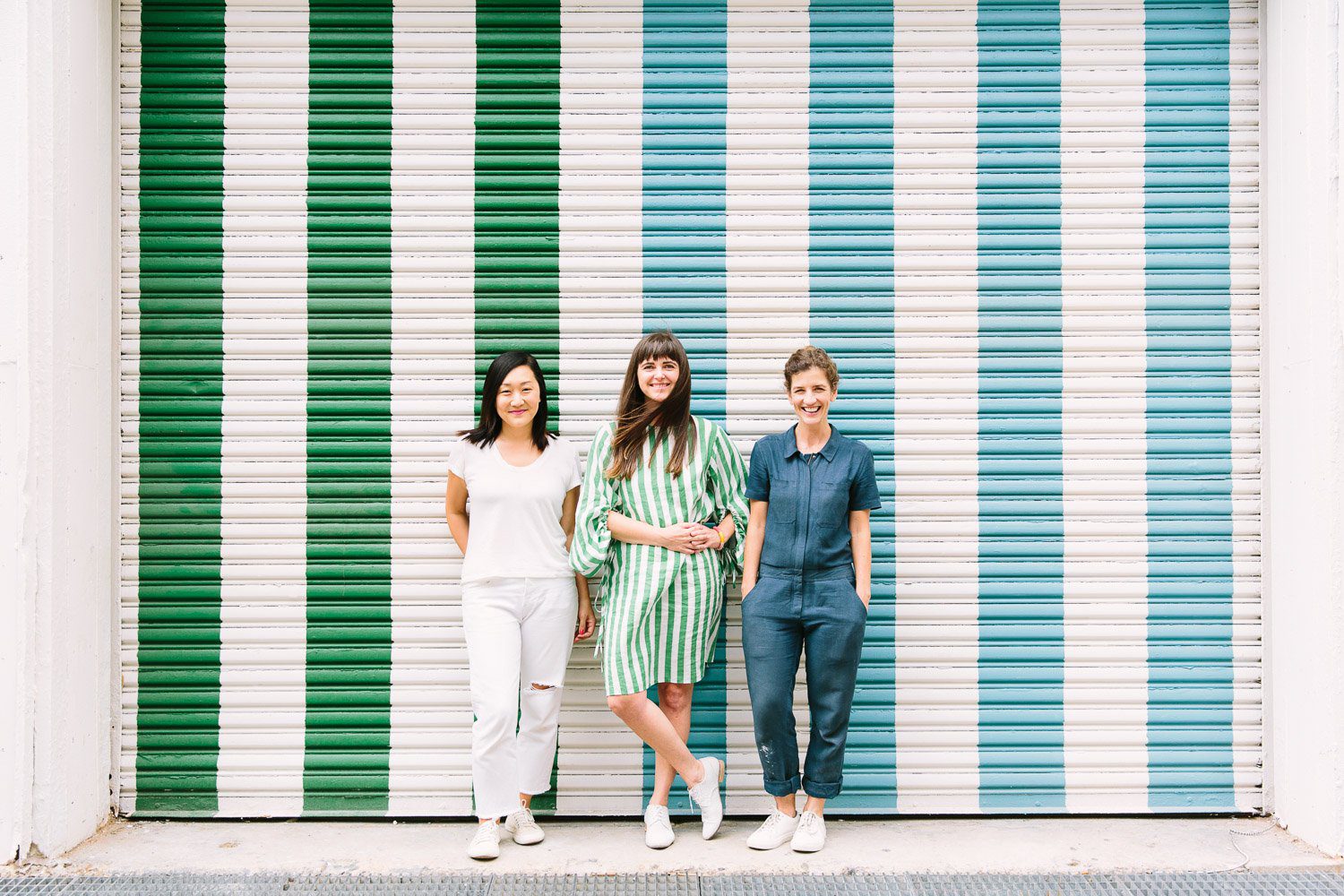
The Project’s Mission
The Color Factory came about from Jordan Ferney’s desire to always move forward and follow trends. The woman isn’t used to being idle, so she quickly caught the public’s mood and took on this unusual project. While it might seem like just another art location at first glance, it actually expresses a much deeper meaning. As Jordan admitted, the exhibition was initially created just for fun, but over time it developed a clear identity and began to convey its own mission.
The first thing the team committed to was giving people a variety of emotions. The creators noticed that the world was lacking in color and people were lacking in experiences, so they set out to fix that. The Color Factory is a multi-colored space where everyone can be inspired by art, feel a variety of shades, and find their own meaning. The project uses every single color, believing there’s no such thing as a bad color. And it’s these various combinations that allow visitors to dive into new sensations.
The art exhibition also never forgets what it was all created for. The Color Factory’s main goal is to bring a new experience to everyone. That’s why the project is filled with diverse locations, interactive elements, stories, and opportunities. You can touch everything, try out a ton of fun things the team has prepared, and dive into adventures waiting at every turn. And while many people don’t give much importance to this kind of entertainment, the number of visitors says otherwise. What’s more, if there’s an opportunity to interact with something in a space, people will absolutely use it. That’s why the Color Factory makes its exhibitions as mobile, engaging, and safe as possible. Employees make sure every location is comfortable and sturdy. And all the elements are constantly updated and improved.
And let’s not forget that the project forms a successful partnership with the environment and the city where it settles. The creators consider it an important part of their job to showcase the unique qualities of each metropolis. They collaborate with local artists, study people’s preferences, street culture, and other details. All of this helps them get creative with new locations, artistic features, and interactive details. The Color Factory creates a unique product that represents the city’s culture and entertains its residents.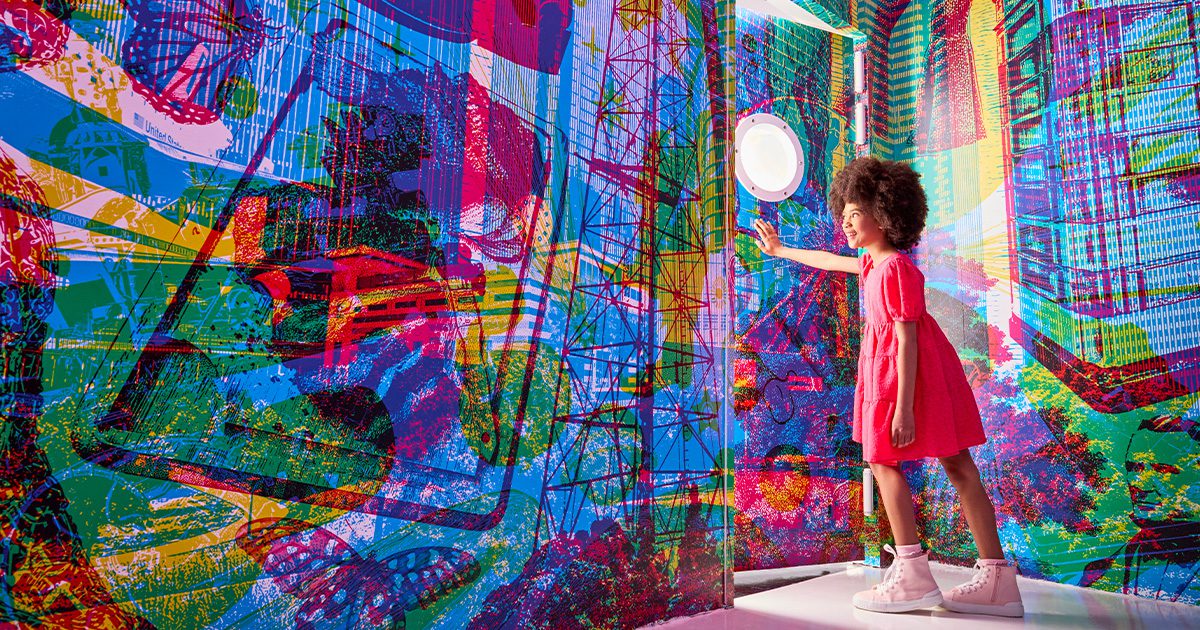
Locations
While the project opened in San Francisco with 16 different locations, the Color Factory in New York first surprised locals with a street installation. The Color Walk served as both an introduction to the new company in the metropolis and a way to get to know the city’s true vibe. The team created a long pathway of 265 colors that was installed at the Cooper Hewitt. This project not only added color to the garden but also revealed a different side of New York. Each color symbolizes a unique aspect of the city that its residents adore. One color might be associated with a favorite street food, another hints at a famous landmark, and yet another symbolizes the green nooks among the skyscrapers. The team was able to highlight what attracts people and what they consider special places. As Jordan Ferney noted, she especially wanted to see and showcase colors in New York, as it’s often associated with gray. She also loves to walk the city’s streets and look for bright details.
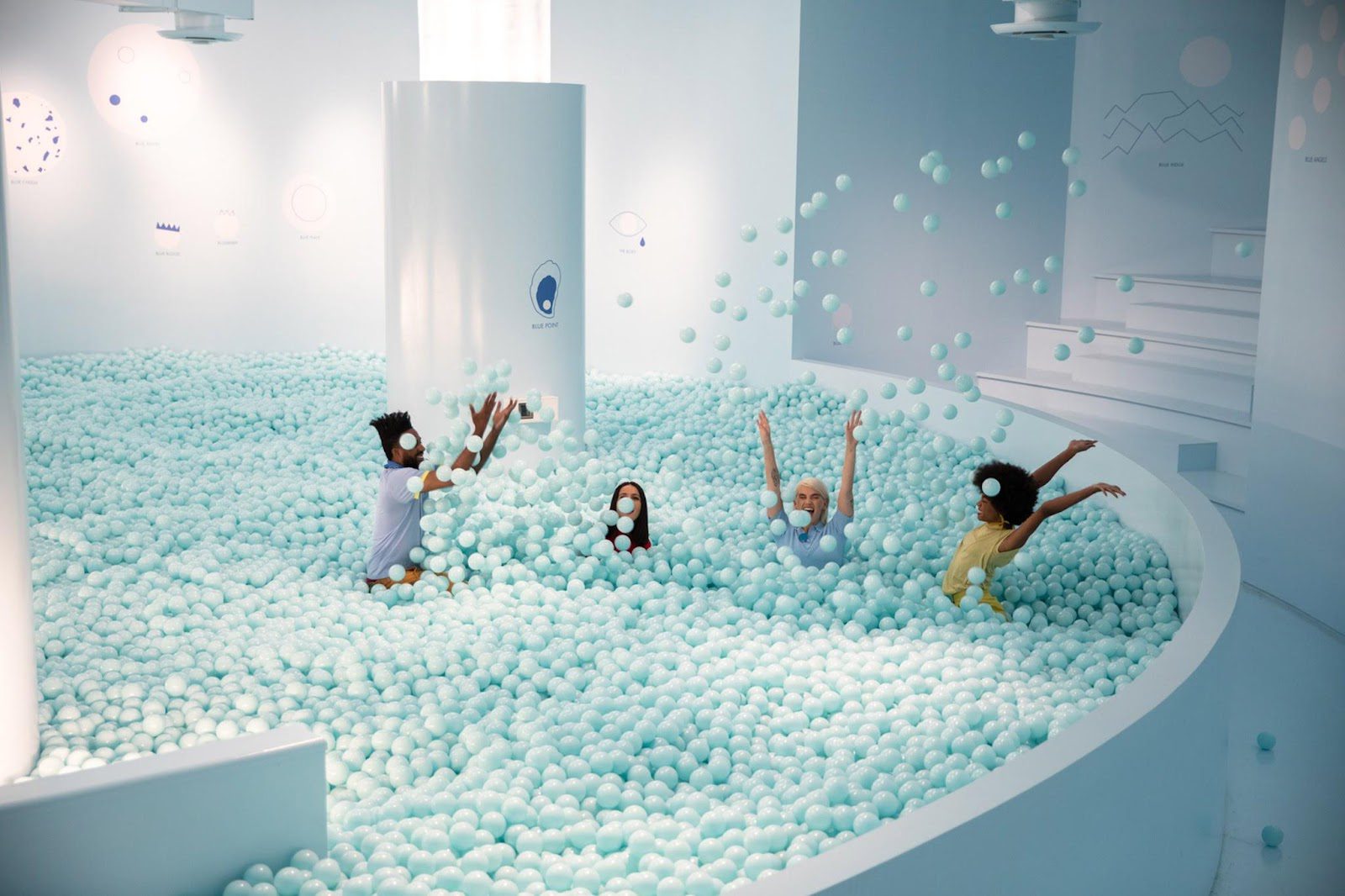
The opening of the Color Factory in New York impressed people with its numerous locations. Taking pictures of people has become a tradition at the exhibition. The team wants everyone to get the most enjoyment from the experience, so they encourage visitors to put their phones away. To do this, there are cameras in all the rooms that take pictures of people. Employees then send all the photos to visitors via email. The first location in this section featured booths with glass partitions. Through them, visitors can observe each other and recreate another person’s features in a drawing. The installation by Molly Young, who created a wall-sized diagram where everyone could choose their own course of events, caused a real sensation. And let’s not forget the blue ball pit, which also became a favorite among visitors. It was the grand finale of the exhibition. In addition, New Yorkers were treated to many other locations that instantly became a hit with the public. This approach cemented the Color Factory’s place in the metropolis.
Currently, the exhibition offers the chance to dive into a confetti stream whose colors reflect each season in New York, uncover the city’s secrets through a combination of colors and lights, dance to your heart’s content on a special floor, and more. The Color Factory has kept people’s favorite installations while also adding new meaning with each visit. It’s also worth noting the constant collaborations with other projects. For example, the space never fails to delight city-dwellers with themed installations for Valentine’s Day, Independence Day, Thanksgiving, and other holidays. There was also an incredible collaboration with Wicked, which allowed everyone to visit a space inspired by the musical.
The ‘Instagram’ Debate
From its inception, the Color Factory was immediately labeled an “Instagram museum.” It was counted among venues that aim to gain popularity through social media users. Critics called the exhibition a temporary phenomenon meant only for photos. Many experts also questioned whether the space could be considered a form of contemporary art. However, the creators cleverly answered all these questions, and time has proven the project’s longevity and relevance.
Jordan Ferney confirmed that she wanted to create something trendy and modern for people. However, she strongly rejects the idea of it being an “Instagram venue” and has good reasons for that. The main goal of the Color Factory was and remains to give people a new experience. The team does everything possible to ensure that everyone can interact with each installation to the fullest. What’s more, she makes sure that no one feels cheated after visiting the Color Factory. That’s why all the locations are not just backdrops for good photos, but full-fledged projects that offer a wealth of emotions. You can draw, touch, dance, taste, and enjoy every new process. And it’s this entertainment that has given the exhibition such popularity, which only grows with each passing year.