
Robert Oppenheimer, a brilliant physicist, became the intellectual driving force behind the Manhattan Project. He led the development of the world’s first nuclear weapons, a monumental achievement that forever changed history. However, public perception of this groundbreaking invention remains deeply controversial. Have a closer look at the genius who altered the course of human events on i-new-york.
Early Life of Robert Oppenheimer
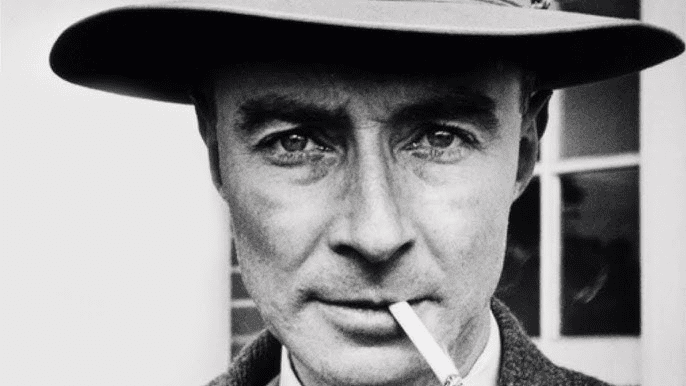
Julius Robert Oppenheimer was born in New York City on April 22, 1904, to affluent German immigrant parents. His mother, an artist, had studied in Paris, while his father built a successful textile import business. Robert also had a younger brother, Frank.
From 1912 onward, the family resided in a wealthy Manhattan neighborhood. Robert attended a local school and showed an extraordinary curiosity about the world around him from a young age. By age five, he had amassed a valuable mineral collection, and by ten, he joined the New York Mineralogical Club.
After graduating from high school, Oppenheimer enrolled at Harvard College, initially majoring in chemistry. Simultaneously, he delved into architecture and physics, studied Greek and Latin, and pursued his passion for poetry, even writing and publishing his own verses. He earned his Bachelor of Arts degree in 1925, a year ahead of his peers, graduating with honors. After Harvard, he set off for Europe to find his calling.
Education in Europe and Entry into the Scientific World
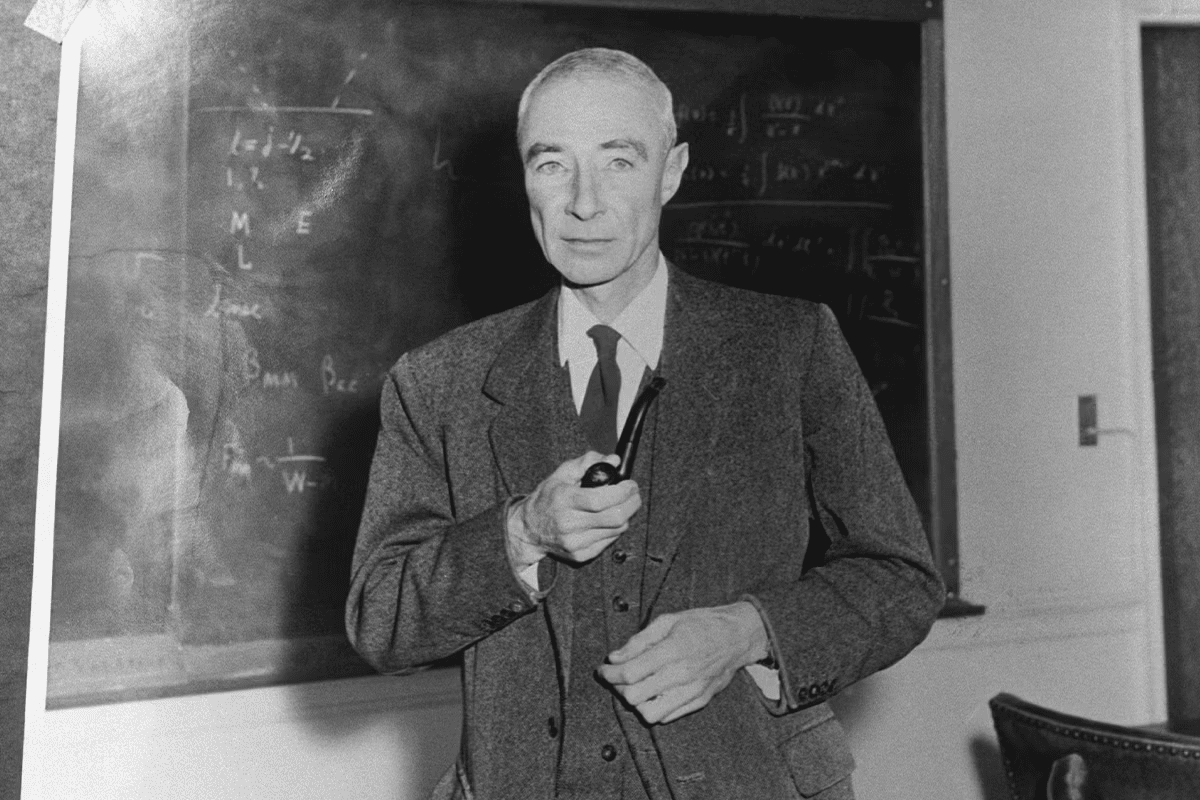
The talented young man was accepted into Cambridge and joined the Cavendish Laboratory, led by the renowned scientist Ernest Rutherford. This was a hub for the burgeoning field of nuclear science. At the time, physics hadn’t fully captured Robert’s interest, and he wasn’t particularly happy at Cambridge, but he continued his scientific work.
In 1926, German physicist Max Born invited him to the University of Göttingen, where prominent mathematicians and physicists of the era worked. Famous scientists from around the world attended conferences there, fostering many engaging scientific discussions. The educational process itself was also unique.
Oppenheimer met Werner Heisenberg, Wolfgang Pauli, Enrico Fermi, and many other scientists. He finally found not only like-minded individuals but also friends. In 1927, he earned his Ph.D. Along with Born, he published an influential paper on the Born-Oppenheimer approximation, which garnered significant interest and high citation rates within the scientific community.
Robert Oppenheimer also visited the Universities of Zurich and Leiden. At the latter, he even delivered a lecture in Dutch. It was time to return home.
Career Beginnings and a Pivotal Moment
In the U.S., Robert Oppenheimer’s name was already recognized; American scientific journals published his research. As a result, he was invited to become an associate professor at the University of California, Berkeley.
He accepted the position and continued his research in theoretical astrophysics, nuclear physics, and quantum electrodynamics. During this period, he published his findings on the transformation of lithium into beryllium when struck by a proton.
Beyond his scientific work, Oppenheimer was actively engaged in social issues, speaking out against the persecution of German scientists by the Nazis. When his father passed away in 1937, he used a significant portion of his inheritance to financially support anti-fascist organizations.
In California, Oppenheimer befriended active members of the Communist Party and shared their views. His brother Frank, who also became a physicist, joined the Communist Party. However, tragic news of the persecution of anti-fascist physicists began to emerge from the USSR, leading Oppenheimer to distance himself from the communist movement. Nevertheless, he maintained many friendships with those who continued to support these activities.
Meanwhile, World War II had begun. By 1941, the U.S. could no longer ignore the growing threat, and the White House allocated funds for the creation of a nuclear bomb. Research conducted by physicists in various countries in previous years had laid the groundwork for such a development. Simultaneously, the Nazis were pursuing the same goal. It became clear that whoever developed this powerful new weapon first would win the war.
Oppenheimer was invited to join a committee of the National Academy of Sciences. For two days, scientists debated the feasibility of using atomic energy for military purposes. Robert Oppenheimer supported the creation of an atomic bomb. So, when the top-secret Manhattan Project was organized, he was offered the leadership of its laboratory.
The Reality of Nuclear Weapons
When Robert Oppenheimer took charge of the Manhattan Project, he was 38 years old. Though well-known in scientific circles, he hadn’t yet made any high-profile scientific discoveries. Moreover, he faced accusations of communist ties, with some believing he shouldn’t be privy to military secrets. Nevertheless, the highest levels of leadership placed their trust in him.
To realize the project, a clandestine Los Alamos Laboratory was constructed. Oppenheimer assembled the best specialists of the time and began working on the atomic bomb’s development. The scientists were in a rush, knowing that the Nazis were pursuing the same objective. However, in 1944, it became clear that the Germans were still quite far from this goal.
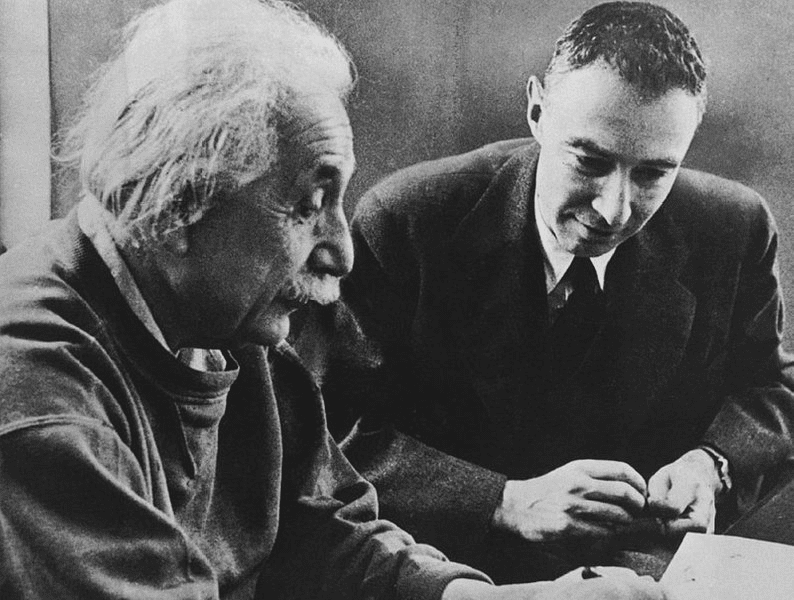
Some scientists suggested that the U.S. should abandon the Manhattan Project. Leo Szilard and Albert Einstein, who had initially urged U.S. involvement in these developments, appealed to President Roosevelt to halt the scientific work. Unfortunately, Roosevelt soon died without having seen their letter.
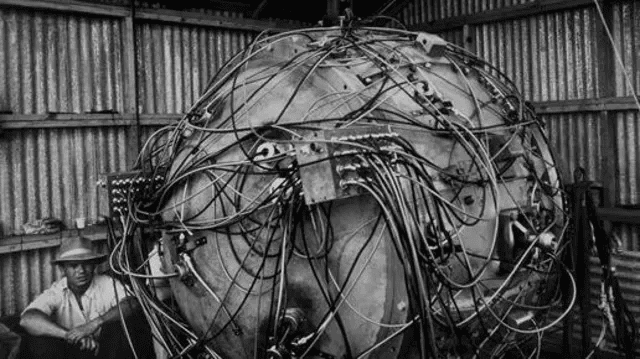
Meanwhile, Hitler’s Germany capitulated, and Robert Oppenheimer stood on the brink of success. The first successful nuclear weapon test occurred on July 16, 1945, near Alamogordo, New Mexico. Less than a month later, the U.S. leadership decided to carry out atomic bombings on Japan—Hiroshima was attacked on August 6, followed by Nagasaki on August 9. All of humanity witnessed the immense power and horror of a new weapon capable of destroying the world in mere seconds.
As for Oppenheimer, who was thenceforth called the “father of the atomic bomb,” he left his position as director of the Los Alamos Laboratory in the fall of 1945 and returned to teaching. In 1947, he became the director of the Institute for Advanced Study at Princeton. However, the scientist remained a member of government commissions on atomic issues. Two years later, when the process of creating the hydrogen bomb began, Oppenheimer did not publicly support the project.
Security Hearings and Final Years
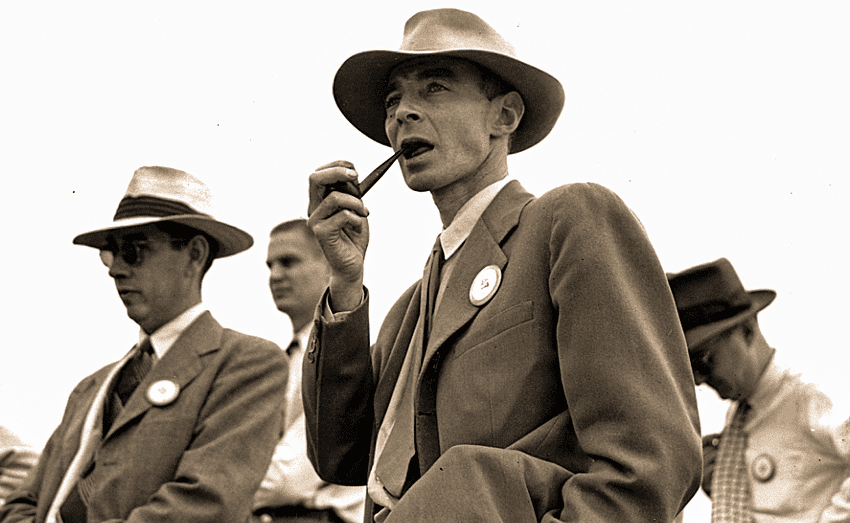
In 1953, Robert Oppenheimer faced an indictment. He was accused of communist ties and opposing the creation of the hydrogen bomb. The scientist’s loyalty and dedication to the United States were also called into question.
As a result of the security hearings, these accusations were deemed unfounded. However, his past connections to communists played a role. Oppenheimer was barred from any positions involving access to military secrets, and his contract with the Atomic Energy Commission was revoked.
From 1954 onward, the scientist spent considerable time on St. John, in the U.S. Virgin Islands, where he built a house and lived with his wife and daughter.
Public opinion toward him remained quite controversial. Nevertheless, he continued his scientific research, gave lectures, and wrote scientific papers. In 1963, he was awarded the Enrico Fermi Award, which served as a partial political rehabilitation.
Throughout his life, Robert Oppenheimer was a heavy smoker. In his youth, he was diagnosed with tuberculosis. He died of throat cancer on February 18, 1967, at his home in Princeton, New Jersey.