
Grace Murray was a curious child, fascinated by how things worked. She’d spend hours disassembling and reassembling gadgets. Later in life, she became a mathematician, but her career took a pivotal turn at 37 when she dove into the world of IT. There, she revolutionized the industry by creating the first compiler and the programming language COBOL. On top of her groundbreaking tech contributions, this remarkable woman also achieved the rank of Rear Admiral in the U.S. Navy. Read on i-new-york to discover more about her incredible journey and the innovations that changed our world.
Early Life and Education
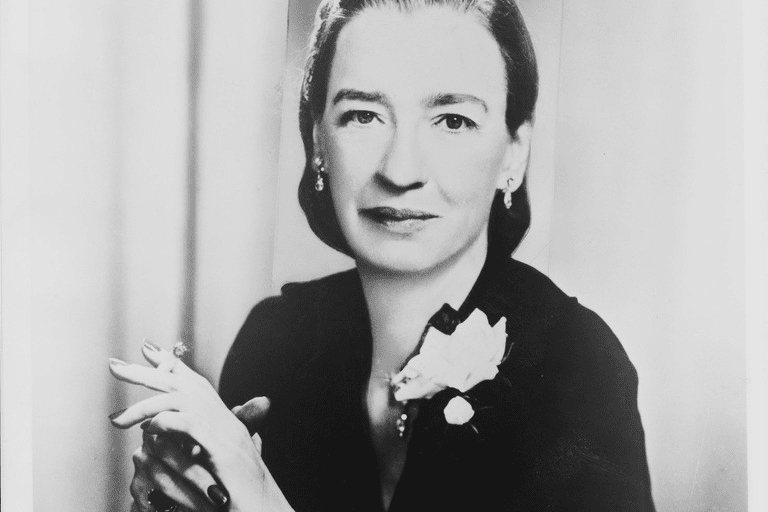
Grace Murray was born on December 9, 1906, in New York City. Her family was well-to-do, residing on Manhattan’s Upper West Side. Her grandfather was a civil engineer, her mother a mathematician, and her father headed an insurance company.
After high school, the bright young woman enrolled at Vassar College, earning her bachelor’s degree. She then went on to complete her master’s and Ph.D. in mathematics at Yale University. It’s worth noting that women in this field were incredibly rare at the time. In the 1930s, only 113 women, or 15% of the total, managed to earn a doctorate in mathematics.
While still a student, Grace began her teaching career at Vassar, where she served as a mathematics professor for nearly a decade. She married Vincent Hopper, a professor at New York University.
In 1940, Grace decided to make a change and took a leave of absence from Vassar. She continued her studies under the renowned mathematician Richard Courant at New York University, focusing her research on solving partial differential equations.
A turning point in her life came in late 1941, following the attack on Pearl Harbor. She resigned from Vassar College, divorced her husband, and enlisted in the U.S. Navy.
Military Service and the Dawn of Her IT Career
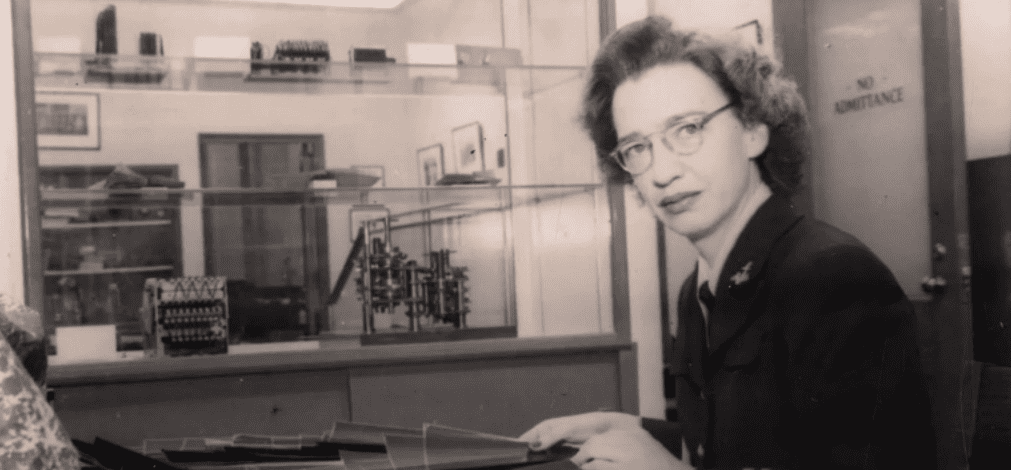
Could a 35-year-old Grace Hopper really join the military? Not only was she considered too old, but she also had a very slender build. However, with men heading to the front lines, specialized fields like mathematics desperately needed qualified professionals. Thanks to the “WAVES” program, she was accepted into the U.S. Naval Reserve in 1943.
Initially, she was sent to the Reserve Midshipmen’s School at Smith College in Massachusetts. She graduated in 1944 as a lieutenant, achieving top honors in her class. Afterward, Hopper was assigned to the Bureau of Ordnance Computation Project at Harvard University. There, she began working on the “Mark I” computer, an automatic sequence-controlled calculator. This was the first programmable computer in the U.S., measuring 56 feet long, 8 feet high, and occupying an entire room. Grace Hopper famously called it a “fascinating monster.”
At that time, the term “computer programming” wasn’t even in use, but that’s precisely the task Hopper faced. She became involved in complex calculations for the military, such as missile trajectories and creating firing tables for artillery.
Her supervisor was Howard Aiken, a pioneer in computer engineering. In 1946, he tasked Grace with editing the computer’s operational and maintenance manual. The result was a 500-page book meticulously detailing every aspect of the machine’s physical components, operation, and maintenance. This guide essentially became the world’s first computer programming manual.
Creating the A-0 Compiler and Programming Languages
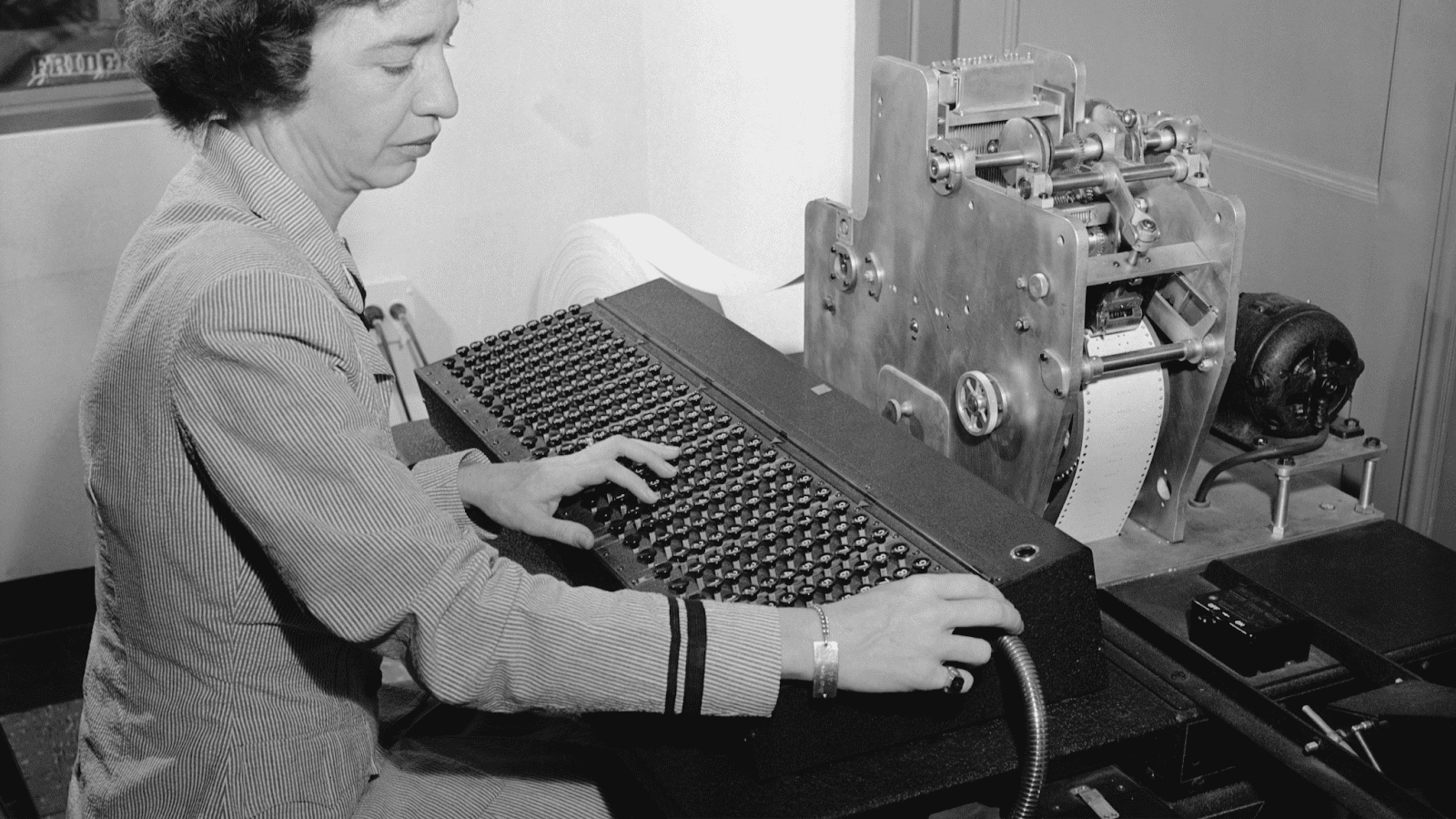
In 1949, Grace Hopper was invited to become the senior mathematician at the Eckert-Mauchly Computer Corporation. She accepted and began working on the development of the UNIVAC I, the first electronic digital computer in the U.S. In 1950, she was promoted to head of automatic programming development.
The UNIVAC I processed more information than the Mark I. This device performed 455 multiplication operations per second and could store up to 1,000 operations in memory. So, Hopper began experimenting with ways to use it for coding, aiming to eliminate the need to rewrite the entire program each time the device needed to be configured. This led to the creation of the A-0 compiler in 1952.
This invention allowed computer language to be converted into binary (machine language), marking a crucial step in programming development. Hopper laid the groundwork for modern programming languages and later released several updated versions of the compiler.
Furthermore, the scientist championed the idea of writing programs with words rather than symbols. She wanted programming languages to be closer to English, not binary code. This would make working with computers more accessible to everyday users. At the time, a lack of engineering and mathematical education was a significant barrier for many trying to master the new technology.
In 1956, the first programming language, FLOW-MATIC, was released, which later became the foundation for COBOL. Grace Hopper presented this development in 1959 at the Conference on Data Systems Languages. The language used English keywords, and its syntax was close to English sentences. Its drawbacks included being cumbersome and lacking structure. Nevertheless, this programming language gained widespread use in subsequent decades, making computers more user-friendly.
By 1997, COBOL code handled 75% of commercial transactions and 90% of financial transactions worldwide. This programming language is still in use in the U.S. In 2023, it ranked 15th in popularity among all existing programming languages.
The Legacy of the Amazing Grace Hopper
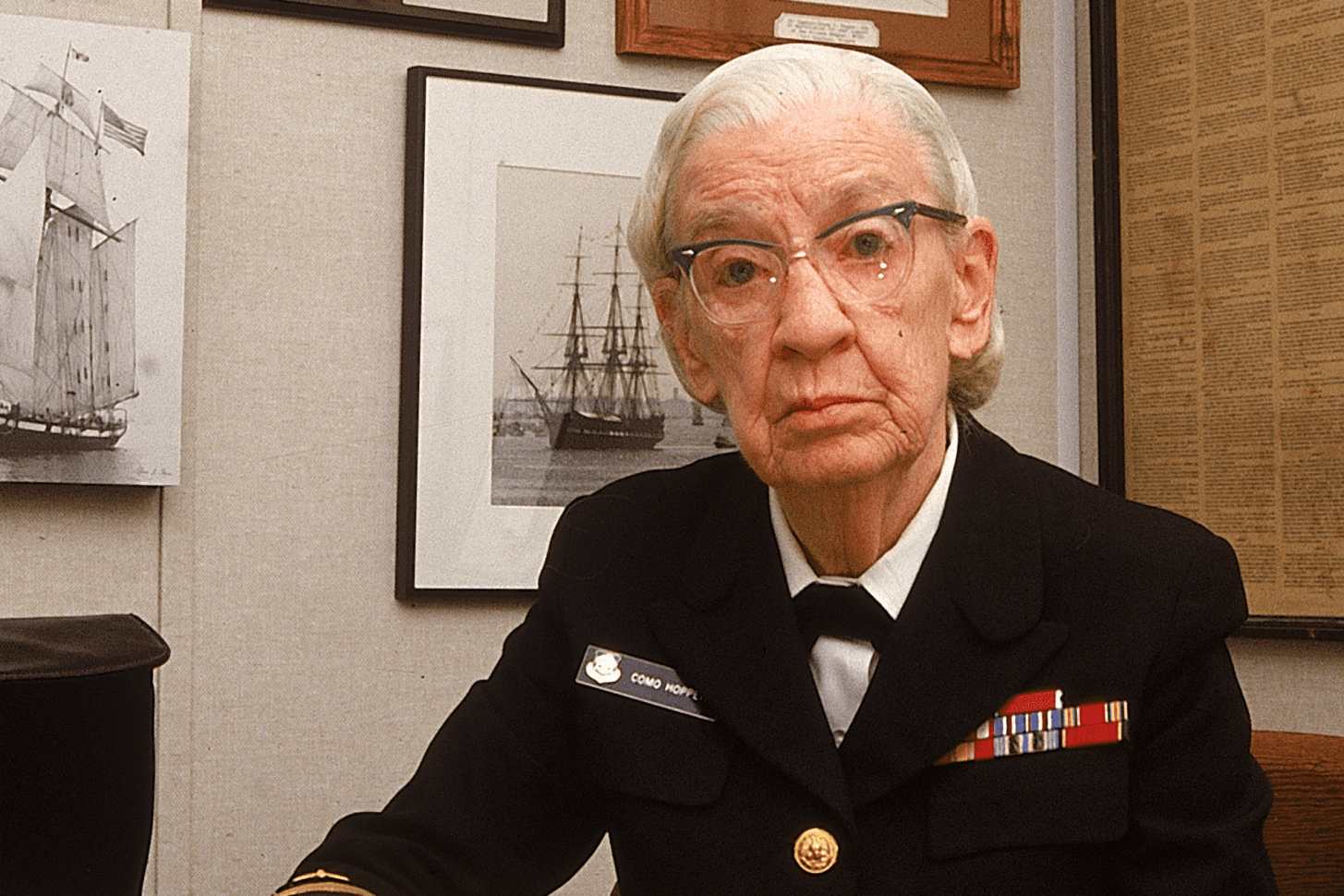
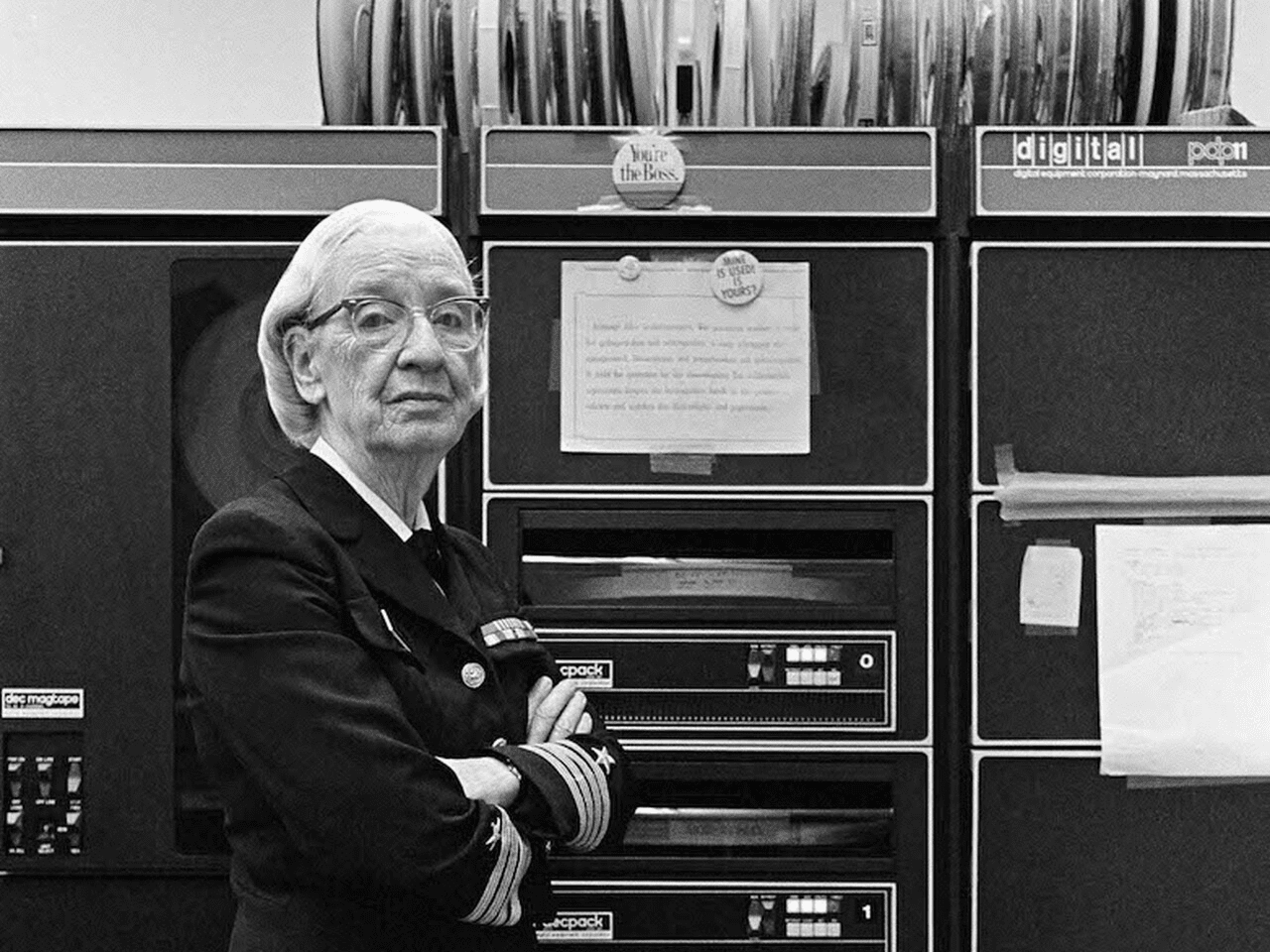
It’s important to note that throughout her active IT career, Grace Hopper remained in the U.S. Naval Reserve. Therefore, all her developments pertained to both civilian and military applications. In 1966, she was offered a lifetime contract. In 1985, she was promoted to Rear Admiral, at which point she was 79 years old.
Hopper was instrumental in developing the idea of replacing large, centralized computer systems with a network of many small computers. This would allow all users to access a shared database regardless of their physical location. This initiative ultimately led to the creation of the internet, which was initially developed for the military. The scientist also worked on developing testing standards for computer systems.
Grace Hopper was incredibly dedicated and completely engrossed in her work. She remained actively involved until her retirement in 1986. After retiring, she continued to give public lectures and provided consulting services to IT companies.
The distinguished mathematician and programmer passed away peacefully in her sleep on January 1, 1992. She was buried with full military honors in Arlington National Cemetery. By then, computers had become commonplace, at least in the U.S. Just as Grace Hopper had dreamed, they understood English and other languages.
The guided-missile destroyer USS Hopper and the supercomputer Cray XE6 Hopper are named in honor of the renowned researcher and inventor. Grace Hopper’s contributions were vital not only to the advancement of IT but also to making the field more open to women. In 1994, a conference for women in computing was established in her name. Additionally, the Grace Hopper Scholarship Fund supports girls and women pursuing programming.