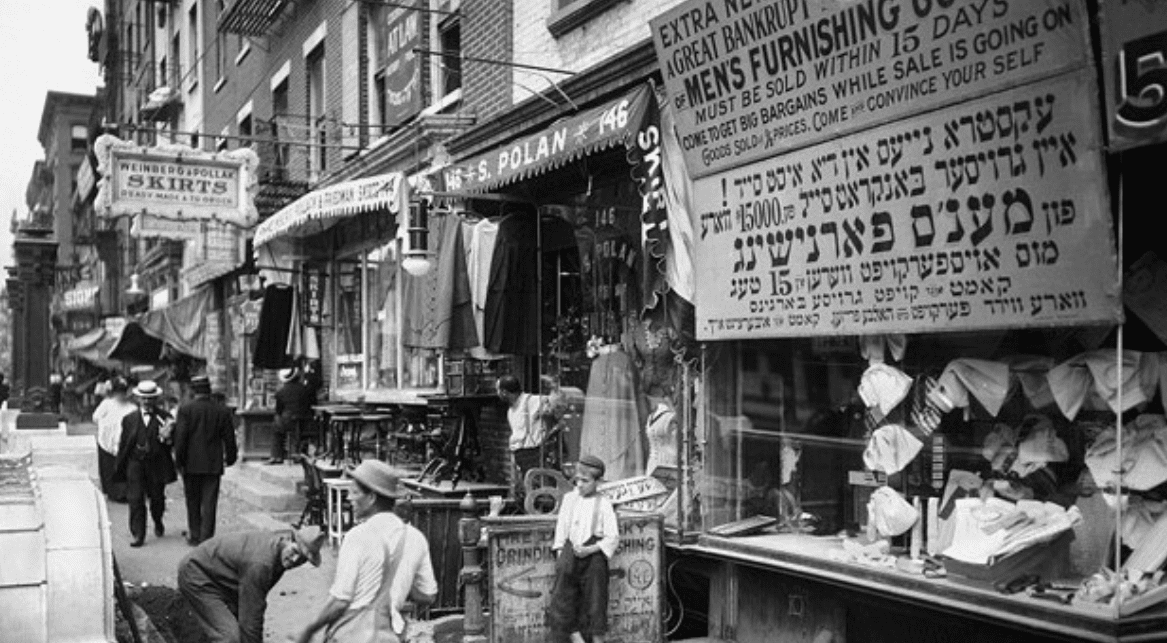

Since it was founded, the city of New York has served as an American multicultural center. For millennia, this city has welcomed visitors from different cultures and ethnicities. They have long contributed to the cultural diversity of the city. Jews were one of the many cultures and ethnicities who contributed to the city’s development and construction. Since the 17th century, Jews from all over the world have moved to the city, bringing their culture, customs and religion with them. All of this has had a major impact on New York’s cultural life. For example, in the twenty-first century, New York has the world’s largest Jewish community, and Judaism is the second-largest religion in the city. Learn more at i-new-york.com.
The first Jewish settlements
The historical origins of the first Jewish settlements in New York date back to the 17th century, specifically 1654. Then one of the first Jewish settlers, Jacob Barsimson, arrived on the shores of New Amsterdam. He was the one who fought for the right to stay in New Amsterdam alongside other Jewish immigrants. These immigrants traveled from Recife, Brazil, which Portugal recaptured from the Dutch Republic. Therefore, Spanish and Portuguese Jews were forced to flee to New Amsterdam.
The first Jews had a difficult time in New Amsterdam since people did not want to accept them.
Asser Levy was another of the first Jewish settlers in New Amsterdam. He specifically fought for Jewish rights by helping to write and submit petitions that ultimately allowed the first Jewish immigrants to remain in New Amsterdam. The name Asser Levy was first mentioned in 1654 as a defender of Jews and a plaintiff against the discriminatory treatment of Jewish immigrants. Asser Levy later protested against the conscription of Jews into the army, instead offering to pay an extra tax.
Significant cultural and ethnographic changes
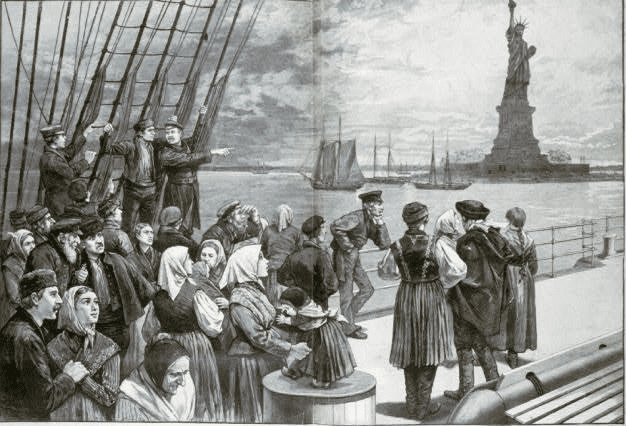
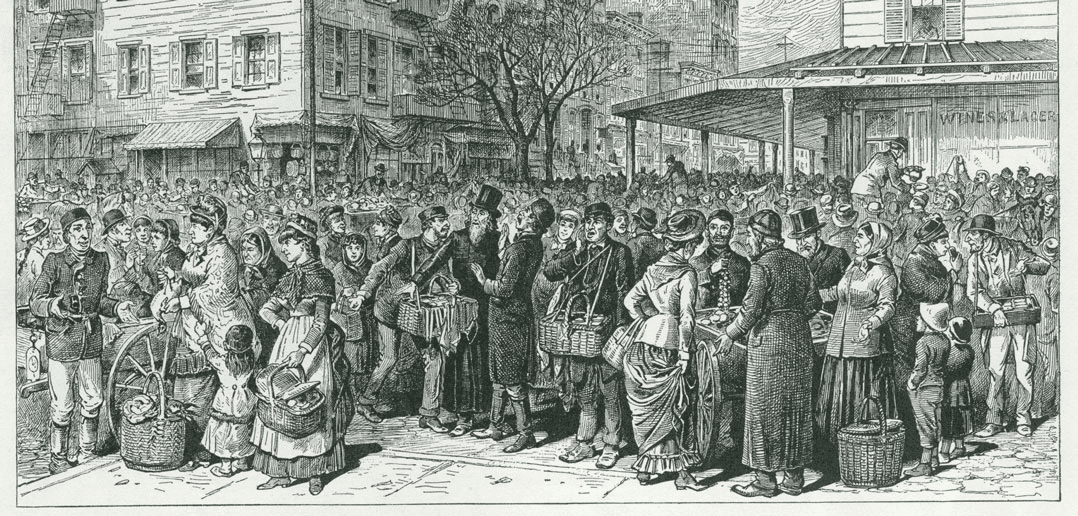
The Jewish community and culture in New York City have been taking shape over the years. However, New York saw significant ethnographic changes in the nineteenth century. During this time, Jews from European countries began to arrive in large numbers on the shores of America, notably New York. Many of them fled pogroms, oppression and discrimination in their homeland in search of a better life and shelter. As a result, from the 1830s to the 1880s, many German Jews who faced discrimination in their homeland arrived in New York. These immigrants largely settled on the Lower East Side of Manhattan. As a result, the area quickly became a bustling center of Jewish life. As New York City grew and developed so did its Jewish population. As a result, in 1848, Jewish immigrants in New York established B’nai B’rith. It was the first official large secular Jewish organization.
As of 1880, the Jewish population of New York City was about 80 thousand people, and by the beginning of the twentieth century, it had grown to 1 million Jews. At the time, this represented 25% of New York’s total population. Specifically, the greatest wave of Jewish immigration to New York occurred following Alexander II’s assassination in the Russian Empire.
More Jewish immigrants arrived in New York in the twentieth century. The poor people were fleeing from the oppression and pogroms that were organized in the Russian Empire, followed by the Second World War and the mass genocide of the Jewish people in Europe.
In 1940, there were more than 2 million Jews living in New York City.
The development of Jewish culture and its impact on New York
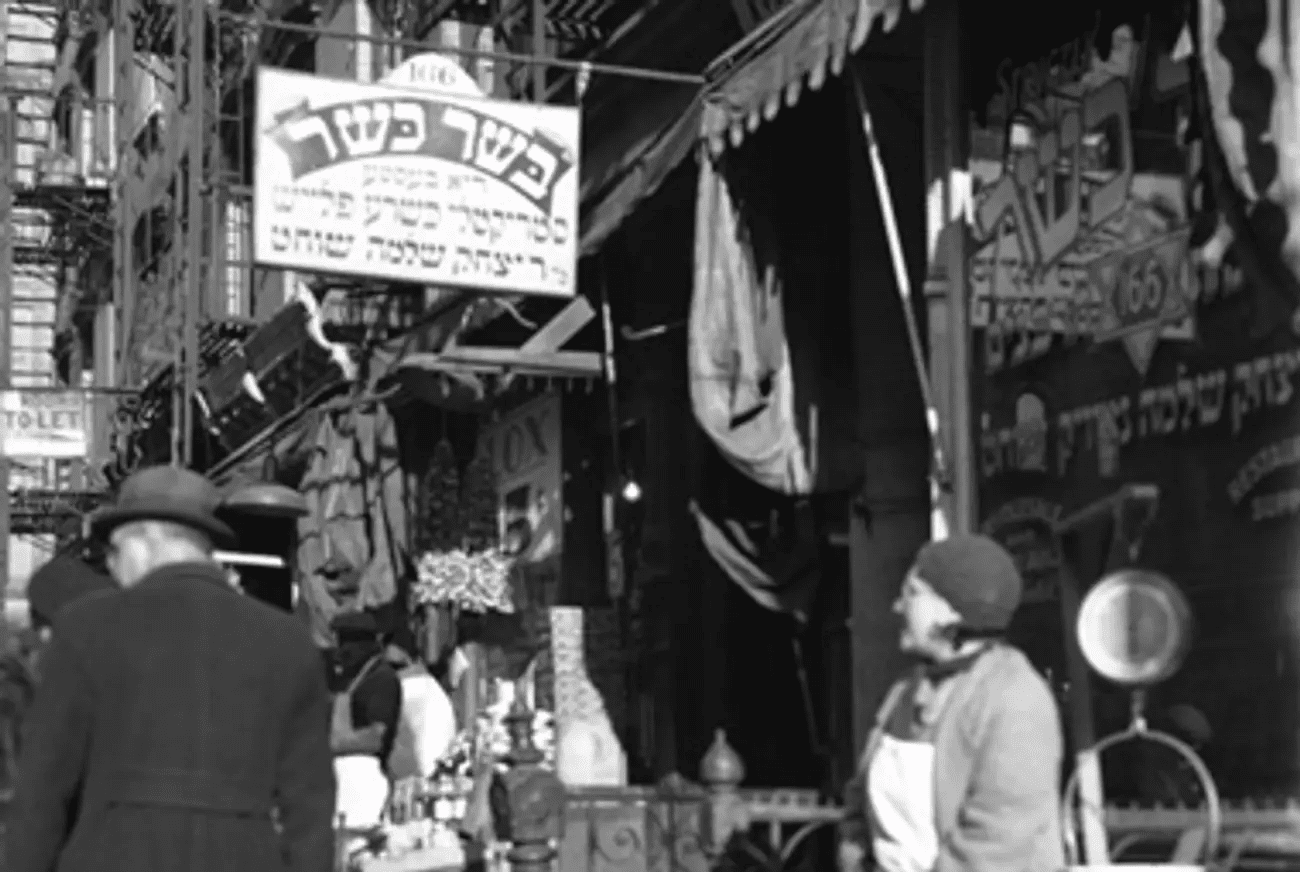
From the late nineteenth century to the early twentieth century, Jewish culture in New York began to develop rapidly. During this historical period, cultural and religious institutions, different establishments, cafes and restaurants began to sprout in the city one after the other. Educational institutions appeared as well. Meanwhile, there was also a cultural integration of the Jewish population in New York. Many Jews have achieved notable success in the city’s cultural scene, literature, entrepreneurship and politics.
The Jewish community in New York City grew so much over the twentieth century that it is now considered the largest in the world. It is greater than the combined Jewish communities of Tel Aviv and Jerusalem. All of this points to a significant cultural impact on the city. In the twenty-first century, Judaism is the second most popular religion among New Yorkers. This, in turn, indicates that New York is home to the world’s largest Jewish community.
The development and impact of Jewish culture on the city of New York is extremely important. From a small community of a few Jews in the era of New Amsterdam to the world’s largest Jewish population, Jewish culture has gone through a long stage of growth and development within these territories. Jews have made significant contributions to the advancement of several aspects of urban life, including culture, politics and economics. We may be certain that the Jewish community left an everlasting influence on the identity of the city. The history of Jewish culture in New York is an integral page in the history of the city. This page of New York City’s history talks about its diversity and multiculturalism.