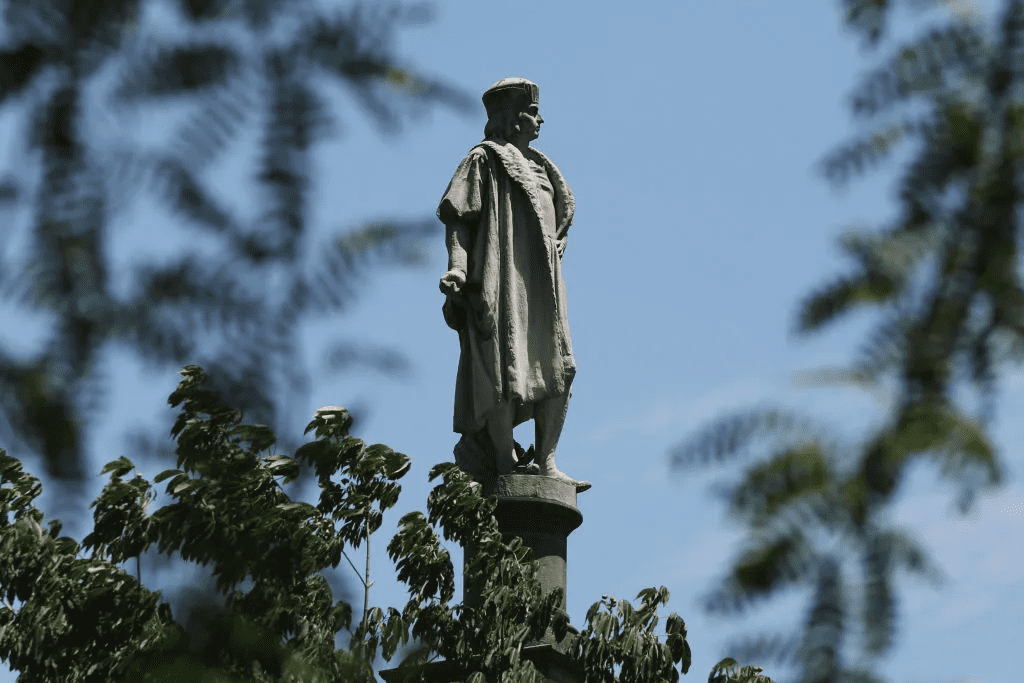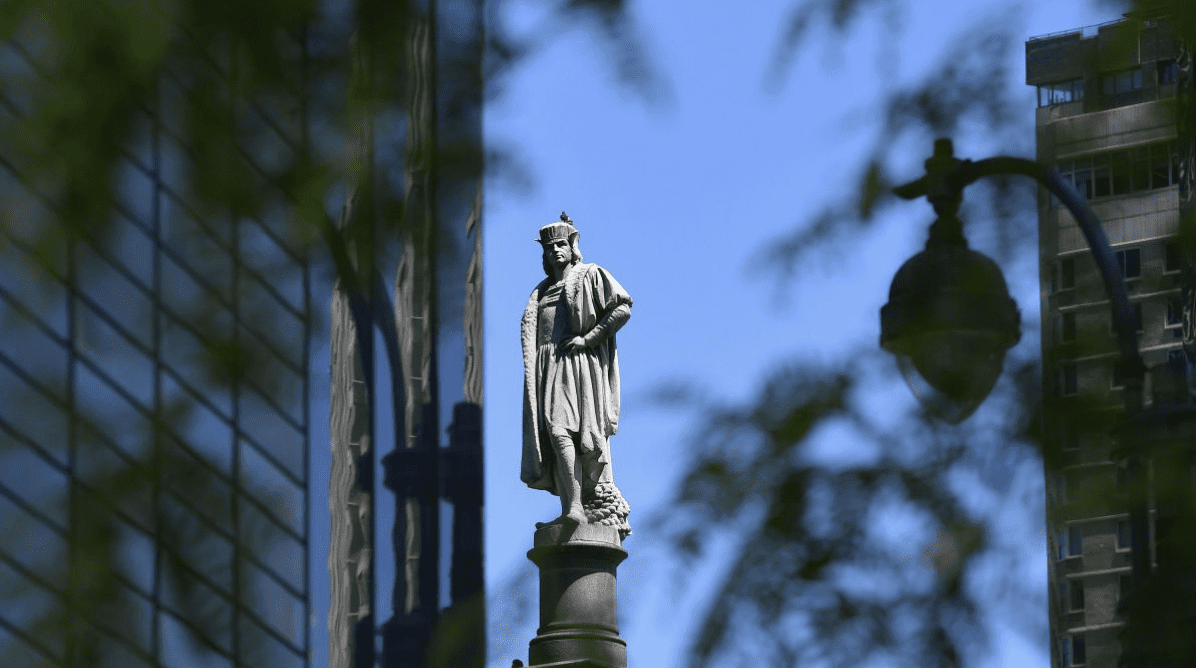

New York is a megacity known for more than just its yellow taxis and large billboards. There are numerous architectural structures in the city center that can provide you with a variety of experiences. The monument to Christopher Columbus is one of New York’s most iconic landmarks. Erected in 1892, this monument celebrates the achievements of the explorer who discovered America. However, as time passed, attitudes toward Columbus shifted, and the monument started to arouse conflicting feelings among the city’s authorities and citizens. In this article, i-new-york will tell you more about the monument’s history and its significance to New York City.
Who is Christopher Columbus?
Christopher Columbus was born in 1451. Columbus was a great Spanish navigator of Italian descent who led four transatlantic expeditions.
As you are aware, Columbus was the first known traveler to cross the Atlantic Ocean in the northern hemisphere’s subtropical and tropical zones, as well as the first European to set foot in the Caribbean Sea. The Spanish explorer discovered and began exploring South and Central America, encompassing their continents and surrounding archipelagos: the Greater Antilles (Cuba, Haiti, Jamaica and Puerto Rico), the Lesser Antilles (from Dominica to the Virgin Islands, as well as Trinidad) and the Bahamas.
Unfortunately, after returning from the fourth expedition seriously ill, Columbus died in Seville, where he was buried without any special honors. Europeans at the time knew little about the navigator. The significance of his voyages was recognized only half a century later when ships carrying precious metals began to arrive in Spain from conquered Mexico and Peru.
The fate of Columbus’ remains stays unknown. After the Spanish were driven out of Haiti, the ashes were taken to Havana, Cuba, where he had requested to be buried. Political changes impacted the situation once again, and the remains were returned to Santa Domingo before being transported to Seville.
What does the monument look like?
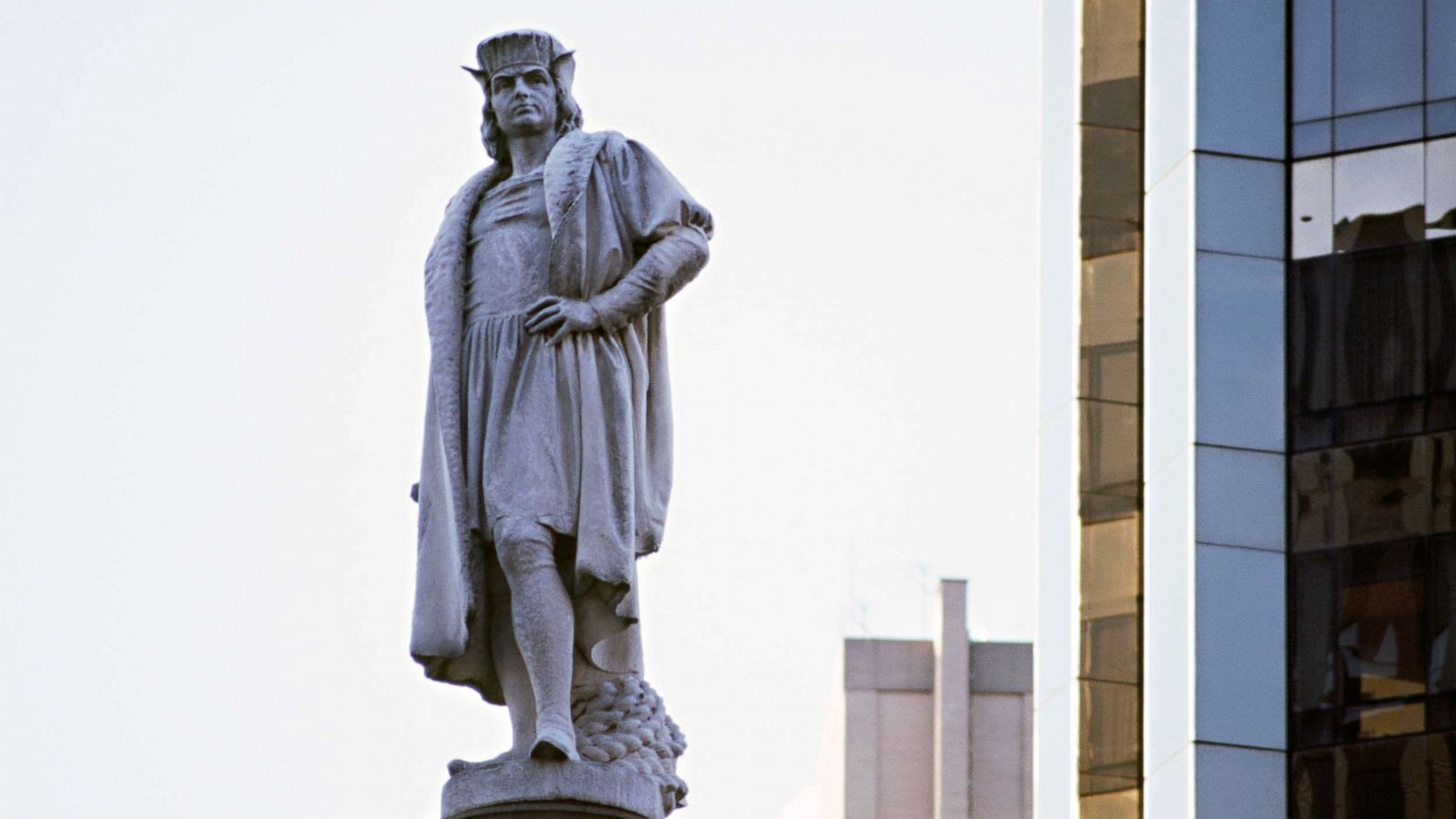
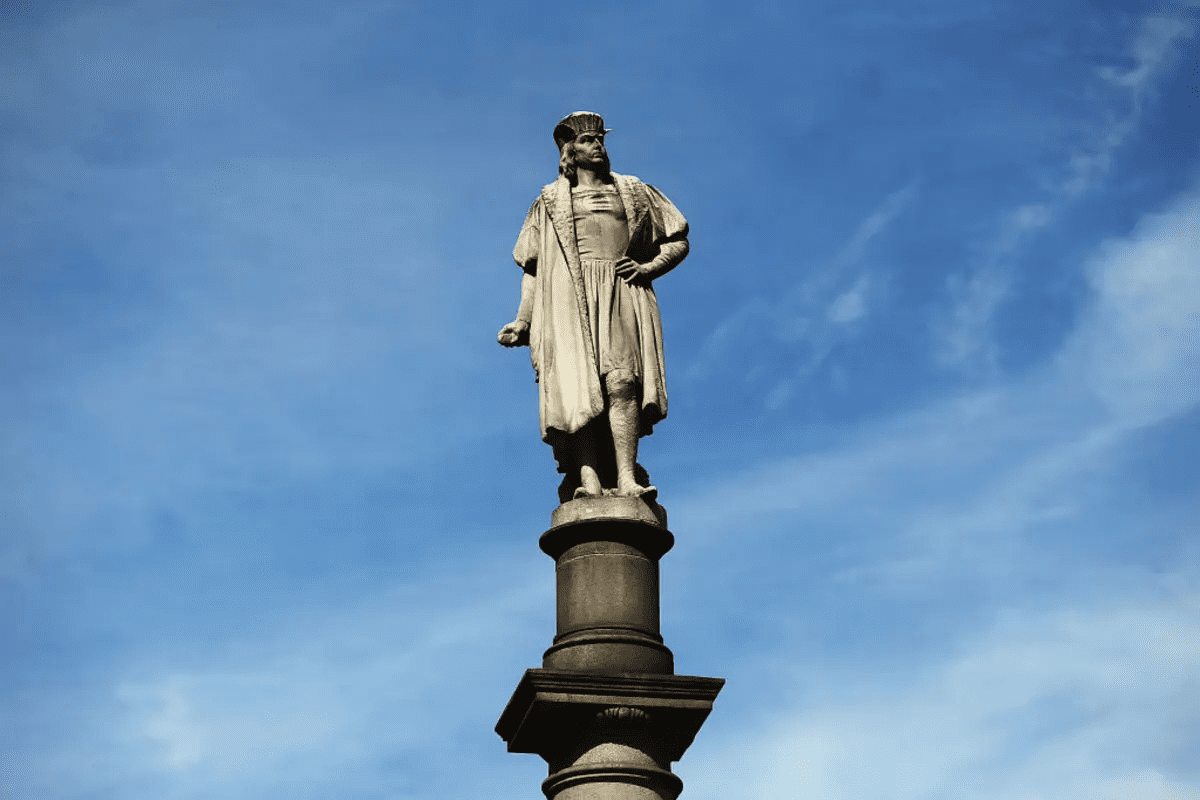
A 14-foot marble statue of Christopher Columbus is the centerpiece of the monument. It is supported by a 27.5-foot (8.4-meter) granite column that is raised on a granite pedestal with four steps. The column is embellished with bronze figures that depict Columbus’ ships. They are not caravels, though. The pedestal features an angel holding a globe.
History of the monument’s construction
The monument was one of three planned to commemorate the 400th anniversary of Columbus’ arrival in America in 1892. Originally, the monument was supposed to be installed in Bowling Green or elsewhere in Lower Manhattan. The construction was carried out by the Italian sculptor Gaetano Russo.
By the time Russo’s project was approved in 1890, a commission of Italian businessmen from the United States had provided $12,000 of the 20,000 needed to erect the statue. The statue was built with funds raised by the New York Italian-language newspaper II Progresso.
Russo worked on components of Columbus’ column in his Roman and other Italian workshops, while the bronze elements were cast at the Nelli Foundry. The completed column was shipped to the United States in September 1892 for installation. As soon as the statue arrived in Manhattan, it was swiftly transported to its intended location. On October 12, 1892, the monument was officially unveiled during a solemn ceremony commemorating the 400th anniversary of the city.
Less than ten years later, when subway construction started in 1901, 59th Street Station on the Broadway-Seventh Avenue line was one of the first structurally finished stations, even though specific architectural support was needed to preserve the monument.
It is known that the statue of Columbus was reinforced with temporary supports during the construction of the New York City subway line on Eighth Avenue (trains A, B, C and D) in order to prevent accidents. However, the supports were of little assistance as the statue moved two inches to the north of where it had been and its top tilted 1.5 inches (3.8 cm). Consequently, in 1934, the statue underwent restoration and cleaning.
The monument was renovated in 1992 to commemorate the 500th anniversary of Columbus’ expedition, as well as the monument’s 100th anniversary. In the same year, it was re-consecrated.
Monument under threat of dismantling
In 2017, the monument became a hot topic during monument debates in the United States. In August of that year, Mayor Bill de Blasio ordered the city’s monuments. as well as the Columbus monument, to be inspected for 90 days in order to determine whether or not to dismantle any that would have been deemed “hateful.”
In a unanimous vote on September 20, 2018, the New York State Board of Historic Preservation voted to add it to the state historical register and nominate the monument to the National Register of Historic Places (NRHP). Two months later, the monument was submitted to the NRHP by the National Park Service.
On September 19, 2023, Italian Prime Minister Giorgia Meloni visited the monument and laid a wreath in honor of Columbus during the ceremony. The issue of the monument’s existence was thereafter never brought up by the authorities.