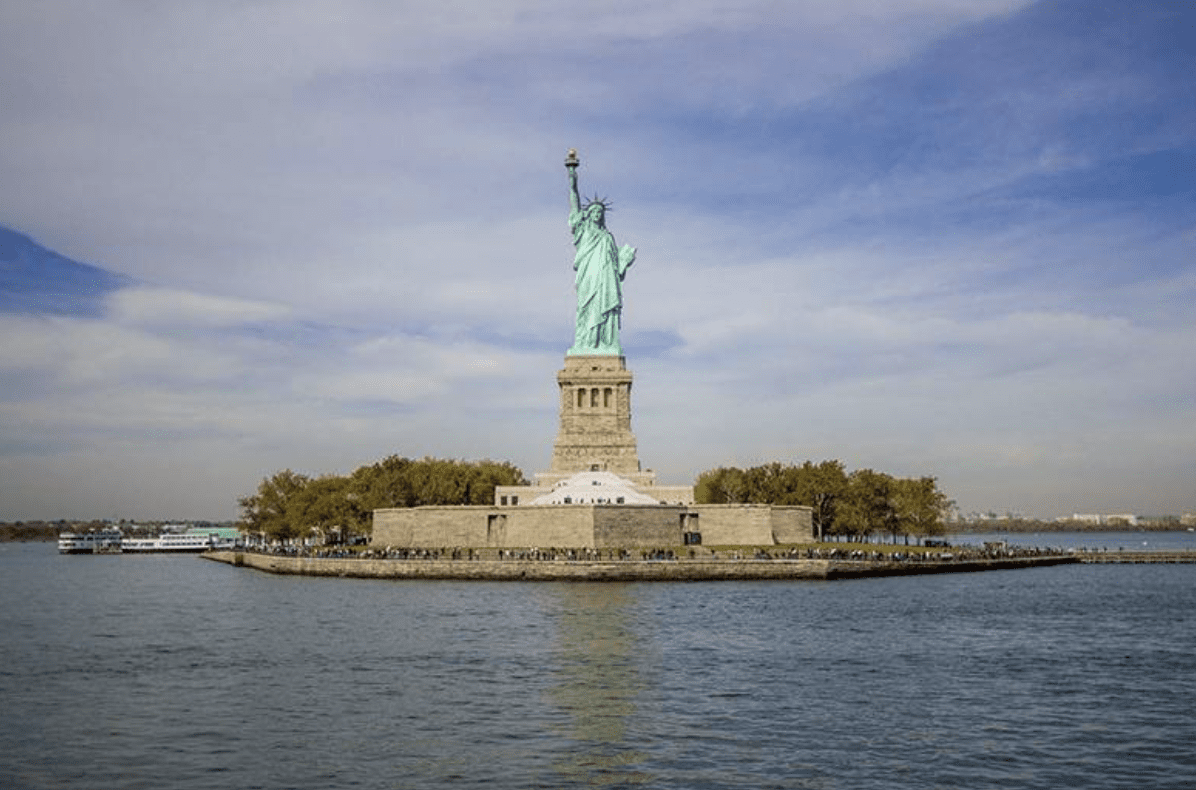

The Statue of Liberty, located on a small island near Manhattan, is a well-known symbol of New York and a source of pride for Americans. The island where the monument is located was formally known as Bedloe’s Island until 1956, however, as you know, it was renamed Liberty Island in recognition of this remarkable artwork. Read more about the history of the architectural monument and other interesting facts at i-new-york.
History of the statue’s appearance
The history of the Statue of Liberty began with a concept proposed to the United States on behalf of the French people by Édouard René de Laboulaye, president of the French Anti-Slavery Society and a famous political thinker of the time. The monument was designed by sculptor Frédéric Auguste Bartholdi, and the metal frame was made by Alexandre Gustave Eiffel.
The Statue of Liberty has a complex history, as it was a gift from the people of France to the people of the United States to erect a memorial in celebration of the Declaration of Independence. The statue depicts Libertas, the Roman goddess of freedom, clothed in a drape. The great lady of America holds a torch over her head with her right hand, and in her left hand is something resembling a plate on which Roman numerals mark the date America officially gained independence. In addition, the statue features broken shackles and chains at its feet as it moves forward, symbolizing the national liberation of slavery. The statue was erected on October 28, 1886, and since then it has served as a beacon of freedom and a welcome symbol of the United States for immigrants arriving by sea.
During construction, the sculptor Bartholdi required the assistance of a skilled engineer in order to address the structural issues related to the design of such a massive copper structure. The sculptor then hired Alexandre Gustave Eiffel to create a large iron pylon and a secondary frame for the future landmark. Due to a lack of funding on both sides of the ocean, massive fundraising efforts were launched in both France and America to build the Statue of Liberty. Americans were hesitant to contribute money for construction, so Joseph Pulitzer (known for the Pulitzer Prize) strongly criticized US citizens. It is worth noting that his newspaper articles pushing for the allocation of funds for construction had a favorable impact. It is also known that both countries raised money for the statue’s construction in a variety of ways, such as through organizing art exhibitions, auctions and so on.
Thanks to both countries’ collaborative efforts, the Statue of Liberty was completed in July 1884 and arrived in New York Harbor in June 1885 on board a French frigate. For shipment, it had to be disassembled into 350 different sections and packed into 214 craters. It took four months to place the statue on its new pedestal.
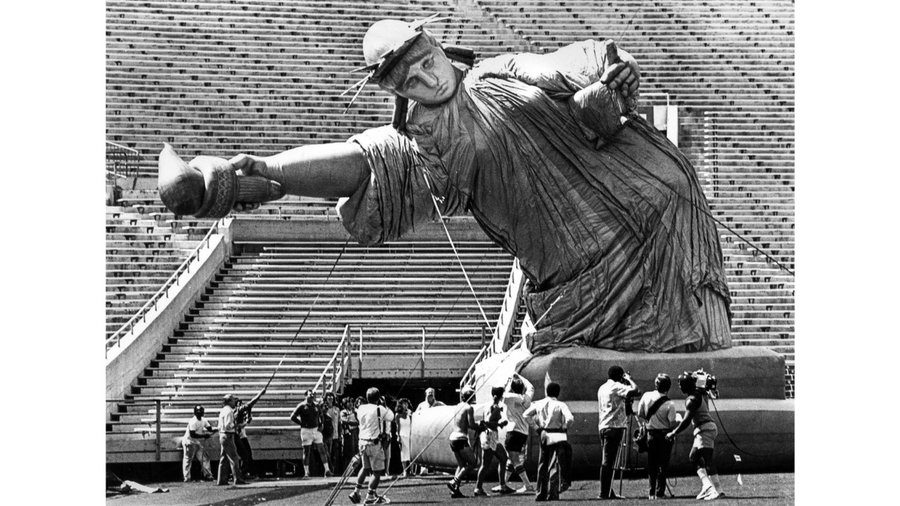
How long did the construction take?
Construction of the Statue of Liberty began in 1876 when French craftsmen and artisans began working on it in France under Bartholdi’s leadership. Within ten years, sections of the statue were finished in both countries. The hand holding the torch was completed the same year and displayed at the Centennial Exposition in Philadelphia. The head and shoulders were finished in 1876 and exhibited at the World’s Fair in Paris. The Statue of Liberty was finished in Paris between 1881 and 1884, and construction on the pedestal began in the United States in 1884.
After being presented to the US minister in France on July 4, 1884, in Paris, the statue was disassembled and shipped to the United States. The statue arrived in New York Harbor on June 17, 1885. However, the statue’s pedestal had not yet been built, and the whole structure was not erected on the island until 1886.
When the pedestal was finished in 1886, the statue’s assembly began at a rapid pace thanks to a large construction team, many of whom were new immigrants. Alexandre Gustave Eiffel created the iron frame that served as the foundation for the statue’s construction. Scaffolding wasn’t employed in the subsequent steps of constructing the statue, instead, cranes and towers were used to raise each element. Eiffel sculpted the statue’s skin using a special technique developed by Eugene Viollet-le-Duc. It involved hammering the statue frame with a hammer to create light copper sheets.
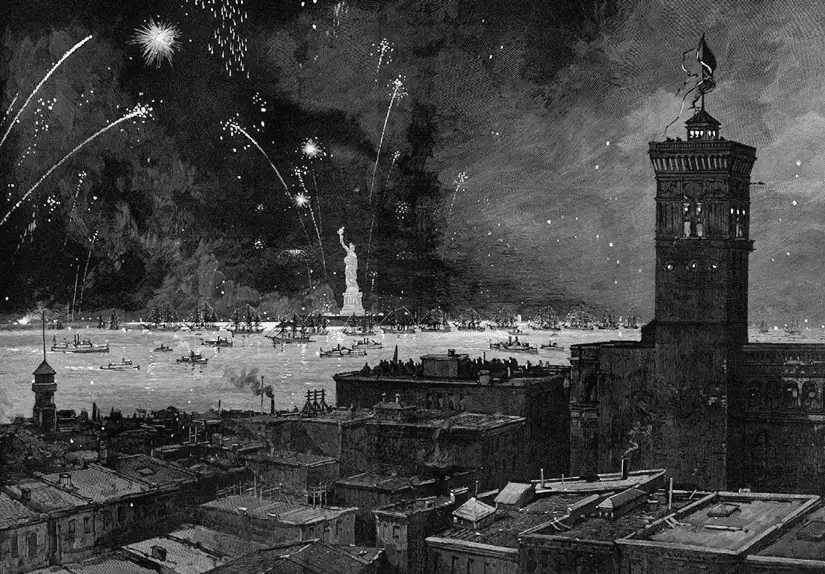
The statue’s face was the final piece to be completed, and it remained veiled until it was consecrated. On October 28, 1886, the statue was unveiled to the public.
Interesting facts about the monument:
- The statue’s official name is “The Statue of Liberty Enlightening the World”, while “Statue of Liberty” is kind of its nickname. According to the “Everybody’s Gal” encyclopedia, the monument has many more creative nicknames such as America’s Freedom, Great Lady of America, Aunt Liberty, Daughter of Bartholdi, Green Athena, Lady of the Harbor, Guardian of Migrants and Spirit of American Independence.
- The statue stands 93 meters tall and weighs 204 tons.
- Visitors must climb 354 stairs to reach the statue’s crown. The crown features 25 windows.
- Over 4.2 million people visited the statue each year between 2014 and 2019.
- The crown’s seven spikes represent the world’s seven continents and oceans, signifying the global idea of freedom.
- The statue’s original torch was replaced in 1984 with a new copper torch adorned with 24-karat gold leaf.
- Freedom stands amidst broken shackles and chains, right leg elevated, symbolizing its liberation from oppression and slavery.
- On windy days, winds of up to fifty miles per hour can cause the monument to swing three inches.