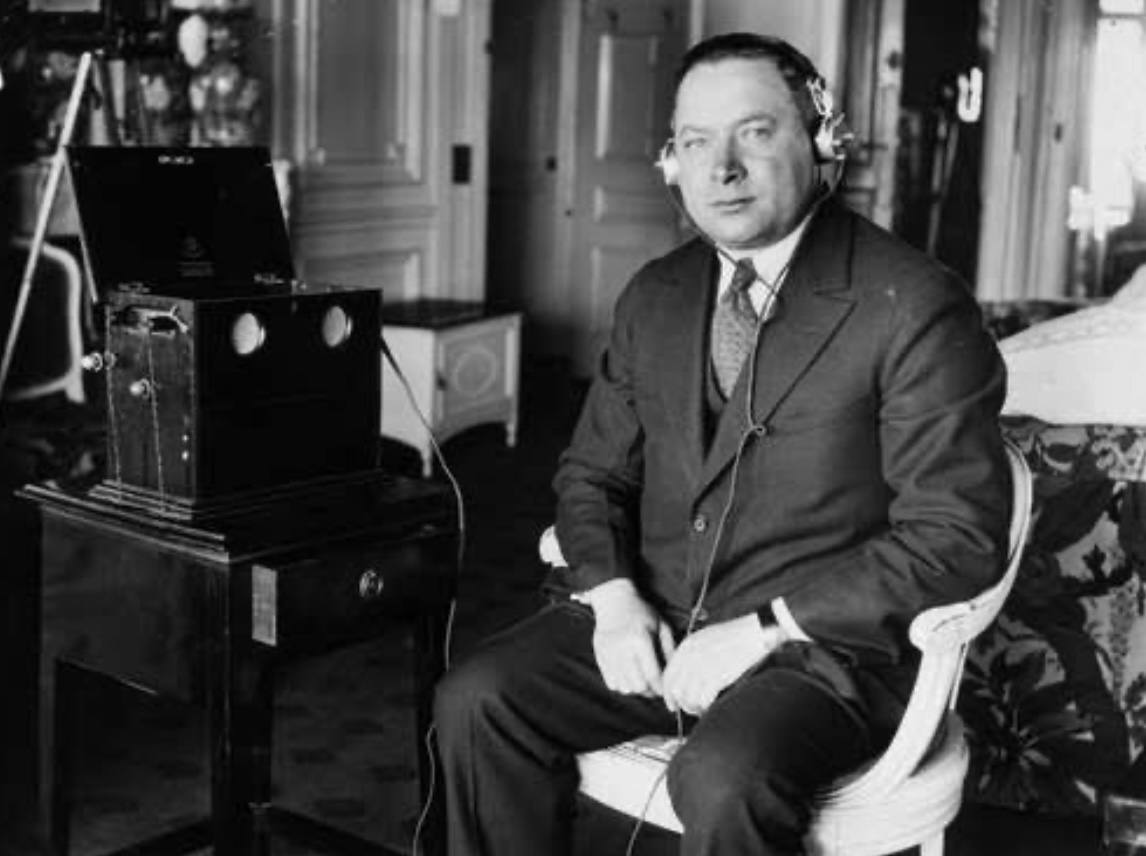

He journeyed from a newspaper boy to a General of the Airwaves, from the son of a Belarusian commoner to a symbol of American innovation. An American entrepreneur, engineer, and media visionary, he is known as the “Father of Broadcasting.” Read on i-new-york.com to find out how he transformed radio and television from technical novelties into a full-fledged communications industry, making New York the center of global media.
From a Newsstand to the Airwaves
David Sarnoff was born on February 27, 1891, in the small Jewish village of Uzlyany near Minsk—into the family of painter Abraham Sarnoff and his wife, Leah. Like many Eastern European Jews in the late 19th century, his family dreamed of a better life overseas. His father was the first to leave for the United States, working hard for several years to save up $144—the cost of the ticket for the rest of the family.
While Abraham settled in America, five-year-old David was sent to a yeshiva in Borisov. There, day after day, he studied the Talmud and the Torah, preparing for a career as a religious scholar. But life had other plans for him. In 1900, when enough money was finally saved, his mother and children made the journey across the ocean. Thus, the nine-year-old boy found himself on the bustling streets of New York’s Lower East Side.
“I was thrown into the confusing whirlpool of the city’s slums—swim or sink,” he recalled later.
And he swam. David first sold Yiddish newspapers, and after his father fell ill, he became the family’s main breadwinner. He eventually even took out a $200 loan to buy his own newsstand on the corner of 10th Avenue and 46th Street.
But the young Sarnoff was attracted less by trade than by news—the very spirit of communication. In 1906, after his father’s death, he decided it was better to write the news than just sell it. The boy went looking for a job at the New York Herald but accidentally walked into the wrong door—the office of the Commercial Cable Company. The manager, without much deliberation, hired him as a messenger. That chance encounter determined his fate. Fifteen-year-old Sarnoff found himself at the very heart of a new era of communication. Humanity had already mastered the telegraph, but now a technology that would change everything was emerging: wireless communication.
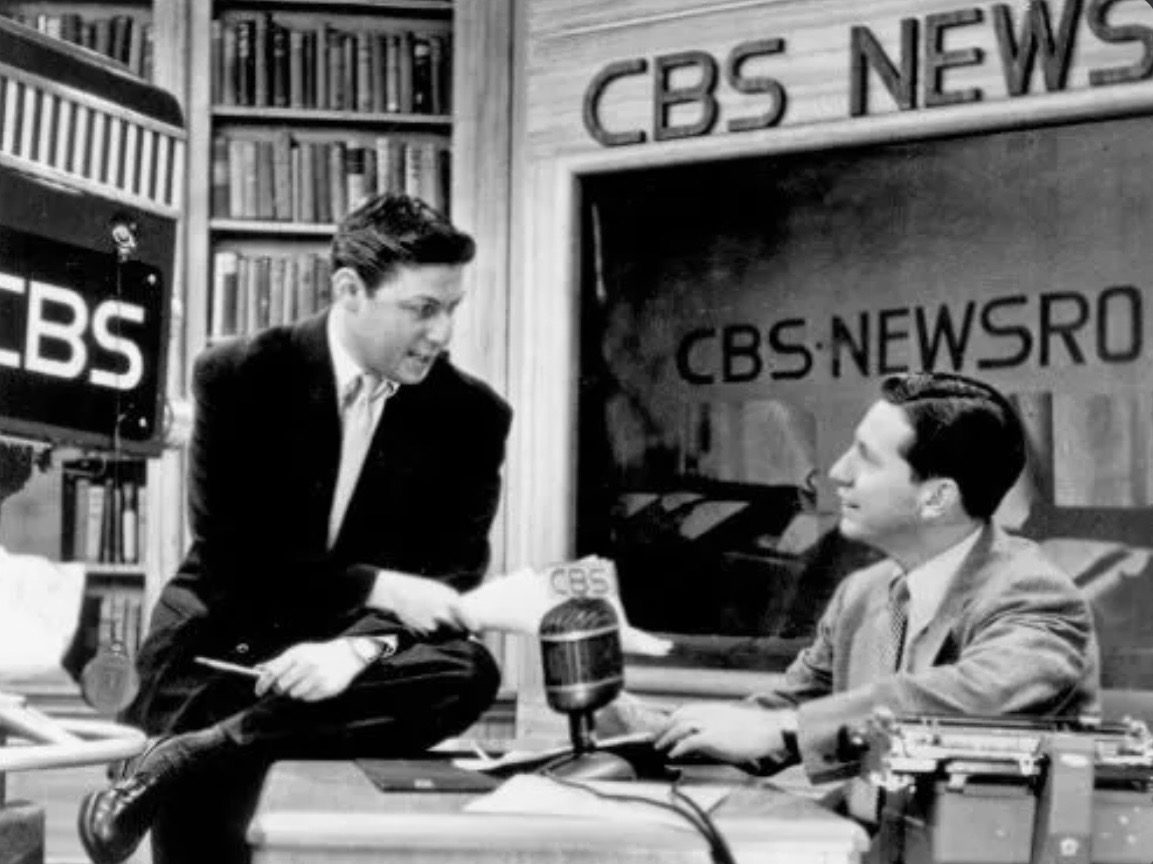
Working as a messenger for five dollars a week, David taught himself Morse code and bought his own telegraph apparatus. He later asked for a few days off to attend synagogue for the holiday of Rosh Hashanah—and was fired for it. However, the setback turned into an opportunity; he soon got a job as an office assistant at the Marconi Wireless Telegraph Company of America.
It was there, on September 30, 1906, that his true sixty-year career began, making David Sarnoff a symbol of the age of radio and television.
The Birth of the Radio Era
In 1908, seventeen-year-old David Sarnoff was sent to work at the Marconi station on Nantucket—then considered the “edge of the world.” The salary was $70 a month, but there was a library nearby. He eagerly studied how wireless communication worked, and he was so hungry for knowledge that he covered shifts for colleagues so they could play tennis.
Returning to New York, Sarnoff continued his self-education in libraries and took electrical engineering courses at the Pratt Institute. He was soon appointed manager of the Marconi radio station on the roof of the Wanamaker department store in Manhattan. It was there, on April 14, 1912, that David received the distress signal from the Titanic. Sarnoff remained at the telegraph key, listening to fragments of news from the rescue ships. He later confessed:
“The Titanic disaster brought radio to the front, and me with it.”
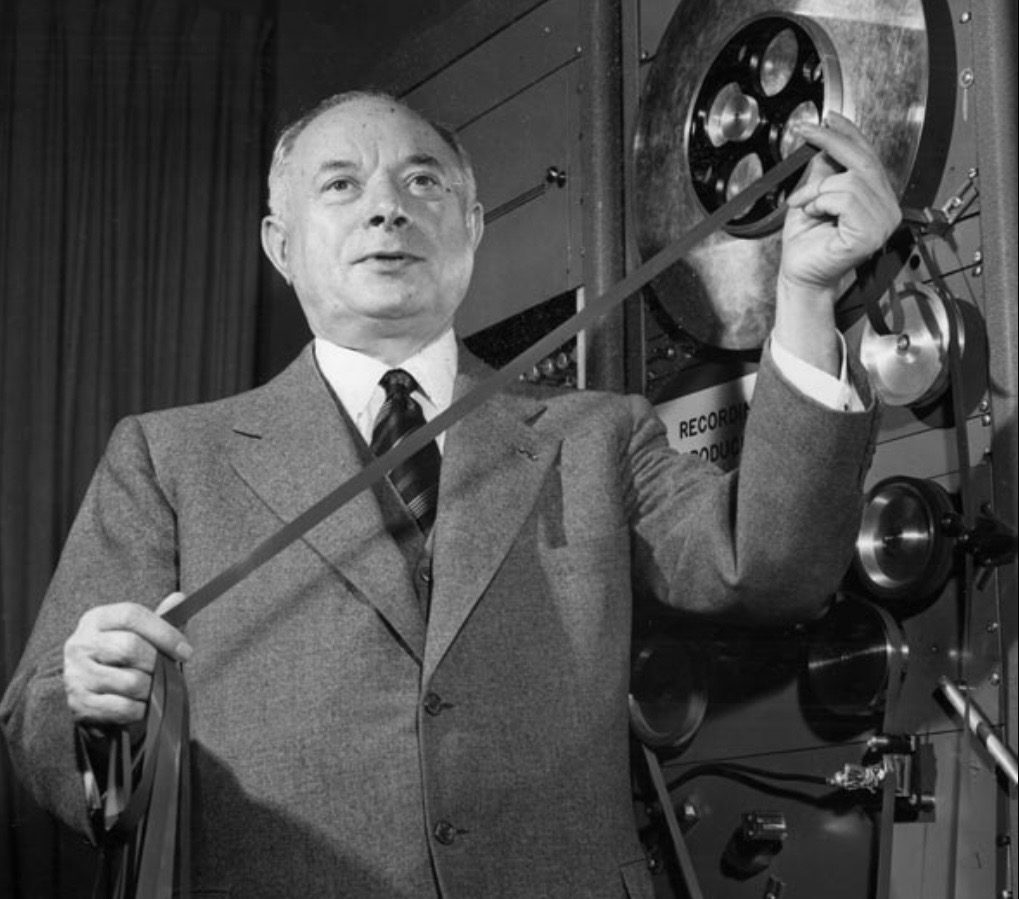
Although Sarnoff was a brilliant technician, he was increasingly drawn to radio’s business potential. He gradually became not just an operator but a manager searching for ways to make radio a mass-market product.
In 1915, he wrote a famous memo to his superiors:
“I have in mind a plan of development which would make radio a household utility in the same sense as the piano or phonograph… The idea is to bring music into the house wirelessly.”
The Marconi leadership did not act on it then. But the war that began shortly thereafter only delayed the moment when Sarnoff’s idea would change the world. After World War I, the U.S. government pushed for the British company American Marconi to be transferred to American control. Thus, the Radio Corporation of America (RCA) was born in 1919, with Sarnoff becoming its commercial manager. He once again submitted his idea, this time as a detailed business plan, complete with figures and forecasts.
In 1920, General Electric approved the investment for creating a prototype. In July 1921, Sarnoff organized the broadcast of the boxing match between Jack Dempsey and Georges Carpentier. It was a sensation—about 400,000 people listened to the live broadcast, and radio sales soared. In just three years, RCA sold over $80 million worth of equipment.
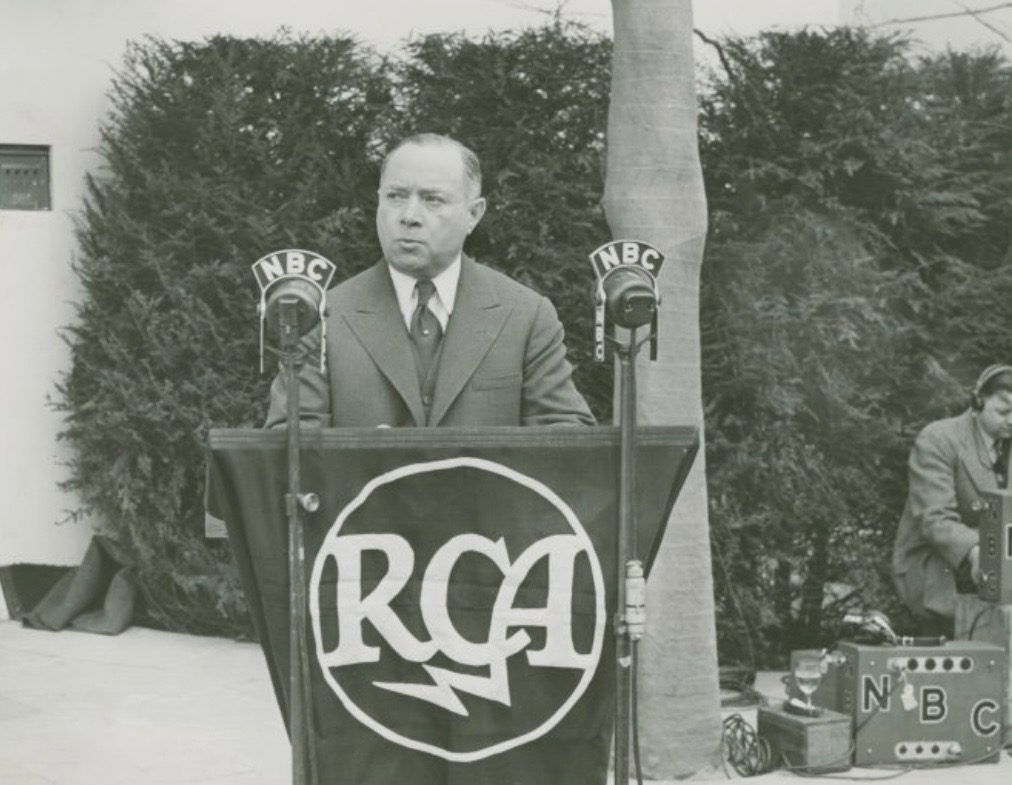
It was from this point that radio became mainstream. By 1923, over 500 stations were operating in the U.S., and when New York’s WEAF aired its first commercial advertisement in 1922, commercial radio was born.
In 1926, RCA created the National Broadcasting Company (NBC)—America’s first national radio network. Now, a single program recorded in a New York studio could be heard simultaneously in California, Texas, and Maine.
For Sarnoff, this was more than just business:
“Radio is not an invention like the automobile or the airplane; it is a new dimension of human life.”
Introducing Television to America
When David Sarnoff was running radio broadcasting at RCA, he was the first to see the future of global communications in television. The idea had existed long before World War I but remained only on paper. Sarnoff decided that his company should be the pioneer in this field.
It took seven years and about $50 million before RCA was able to demonstrate results to the world. On April 24, 1936, the company showed the press the working iconoscope and kinescope—the two main parts of the future television set.
In 1939, after years of research, legal disputes, and persistence, RCA launched electronic television under the brand of its subsidiary—the NBC (National Broadcasting Company).
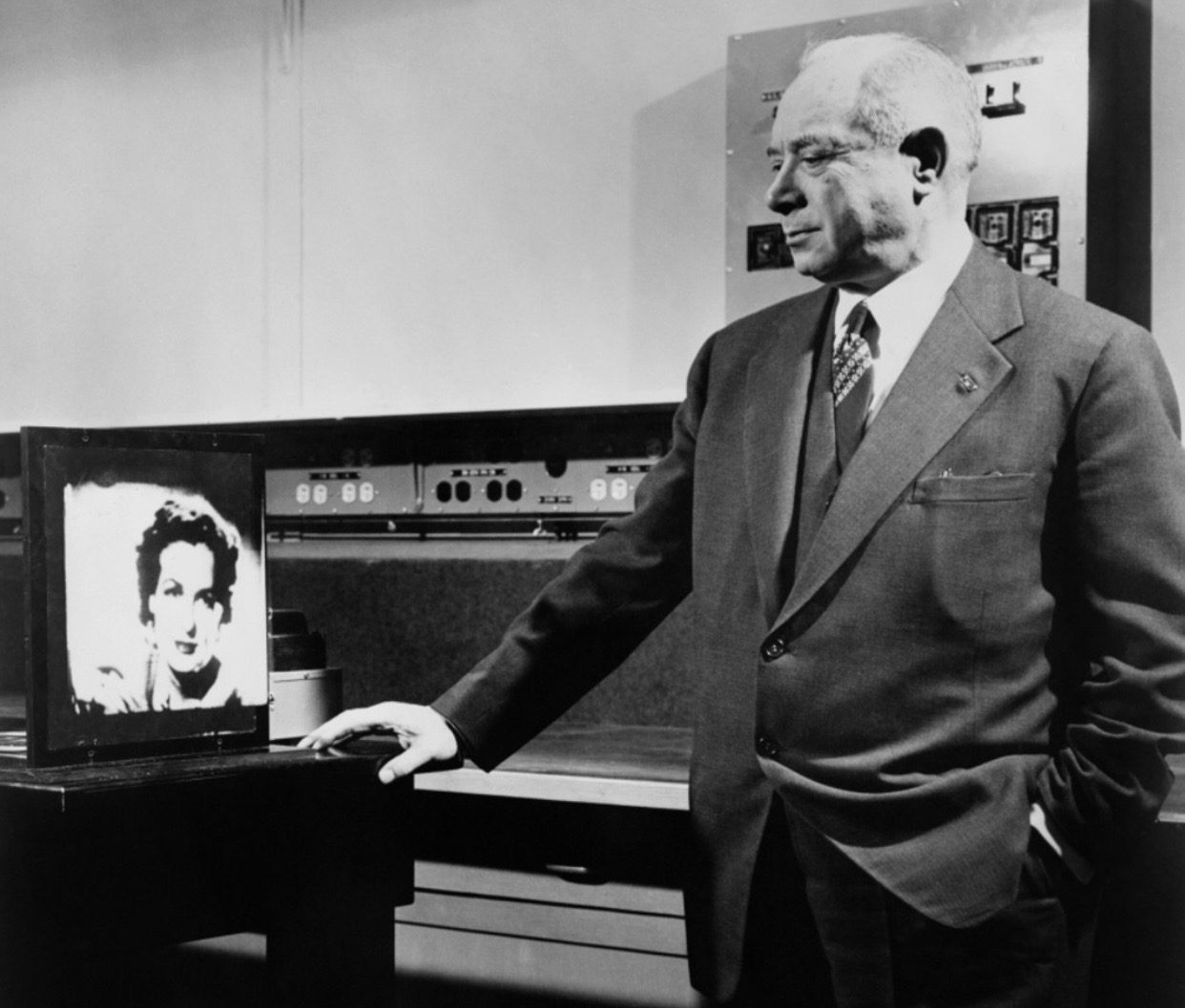
The first official broadcast—the opening of the RCA pavilion at the New York World’s Fair—was a historic event. It was hosted by Sarnoff himself, and viewers saw a speech by President Franklin Roosevelt—the first American leader to appear on a television screen.
At that moment, there were only about 200 television sets in New York, but a new era had begun. In 1941, the National Television System Committee (NTSC) approved a single broadcasting standard. RCA quickly became a leader among television manufacturers, and NBC was the first network to link several stations for simultaneous broadcasts.
In 1947, 175,000 television sets were sold, and by 1950, that number reached seven million, half of which were manufactured by RCA. People watched baseball, political conventions, and concerts—everything they had previously only heard on the radio. NBC, a division of RCA, quickly became the leading national network, with over 200 affiliated stations.
The next challenge was the advent of color television. In 1950, the Federal Communications Commission (FCC) approved a CBS system that was incompatible with RCA’s black-and-white televisions. Sarnoff took this as a challenge. He assured his team:
“We may have lost the battle, but we will win the war.”
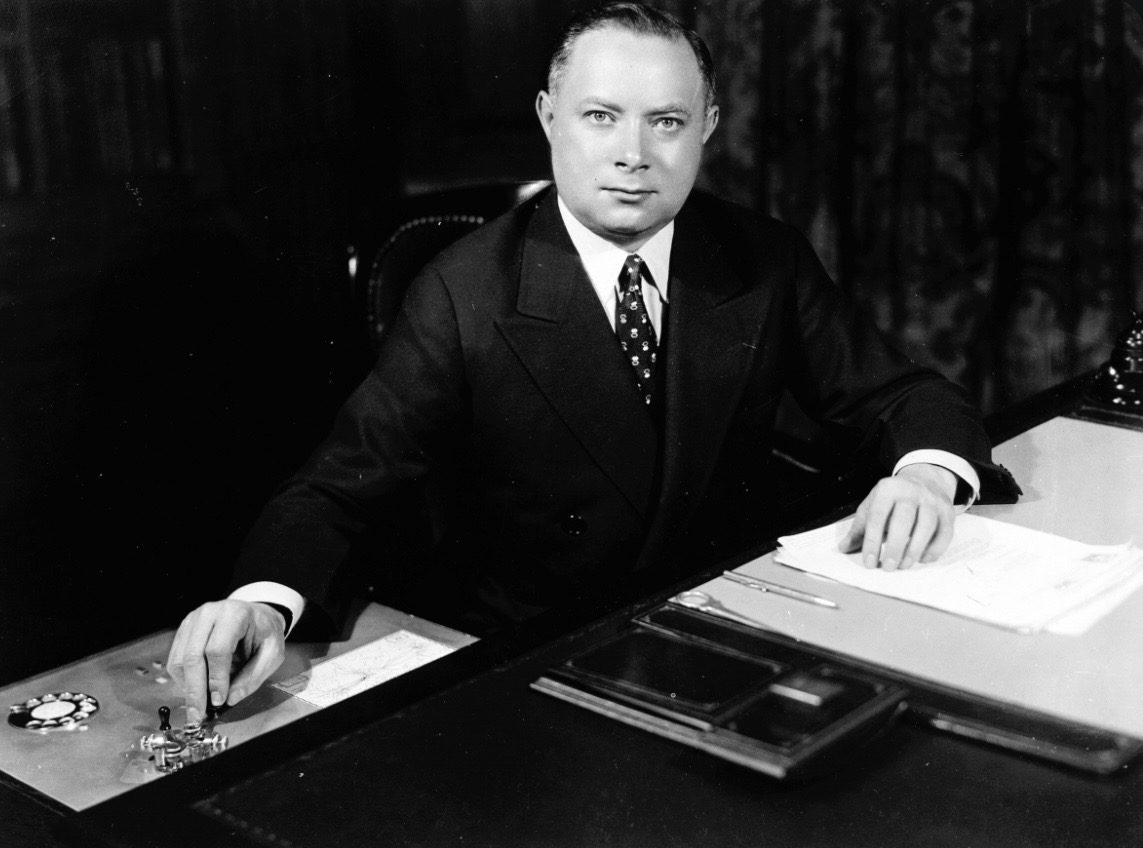
And he won. In 1953, the FCC officially adopted the RCA system as the national standard for color television. The following year, the company released a 21-inch color TV set, and NBC became the first to begin color broadcasting. Although color television was initially slow to catch on, the situation changed by 1960. NBC attracted programs like The Wonderful World of Disney, which specifically switched to color format. By the early 1960s, RCA controlled over 70% of the American TV market, and the company entered the top thirty largest in the U.S.
End of an Era
On July 4, 1917, Sarnoff married Lizette Hermant, the daughter of French Jewish immigrants who lived near the Sarnoff family in the Bronx. Their marriage lasted 54 years—Lizette was not only his wife but also a confidante, the first listener for all his new ideas.
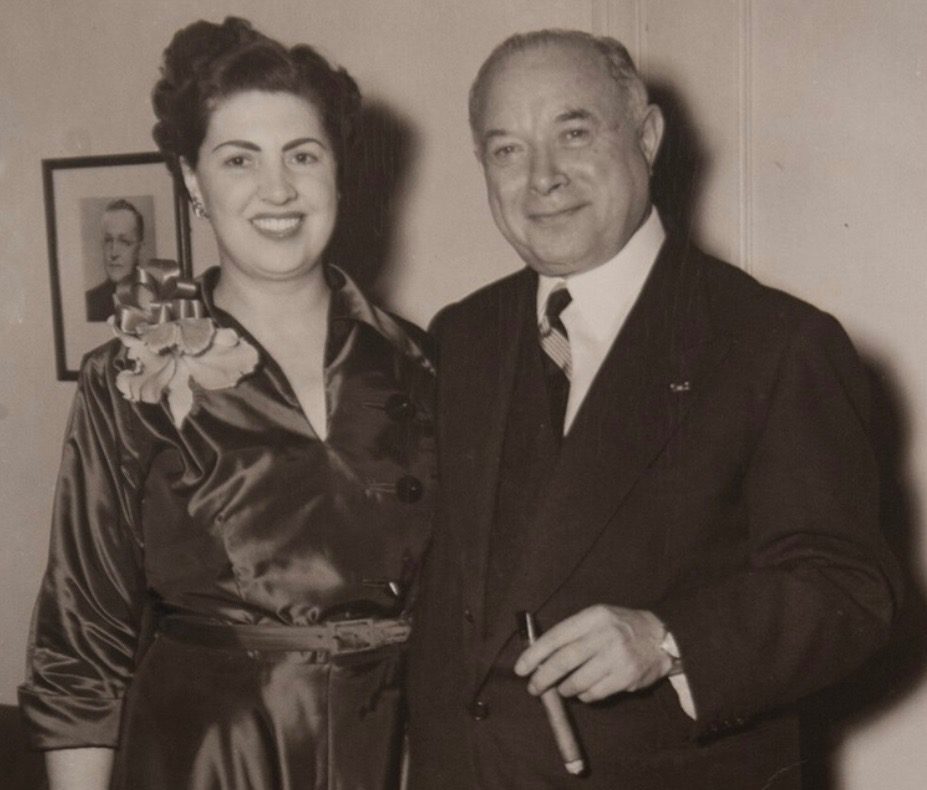
The couple had three sons: Robert (who continued his father’s work and headed RCA in 1970), Edward (who managed Fleet Services of New York), and Thomas (who became president of the Western Division of NBC).
During his lifetime, David Sarnoff received dozens of honorary awards. Posthumously, his name was inducted into the Television Hall of Fame (1984), the Radio Hall of Fame (1989), and the New Jersey Hall of Fame (2014).
Sarnoff dedicated his final years to watching his boldest dreams come true. In 1969, when Neil Armstrong took his first steps on the Moon, it was made possible by the wireless communication Sarnoff had once helped perfect. As he said in one interview:
“The greatest achievement of 20th-century engineering is not radio or television, but the human mind that created them.”
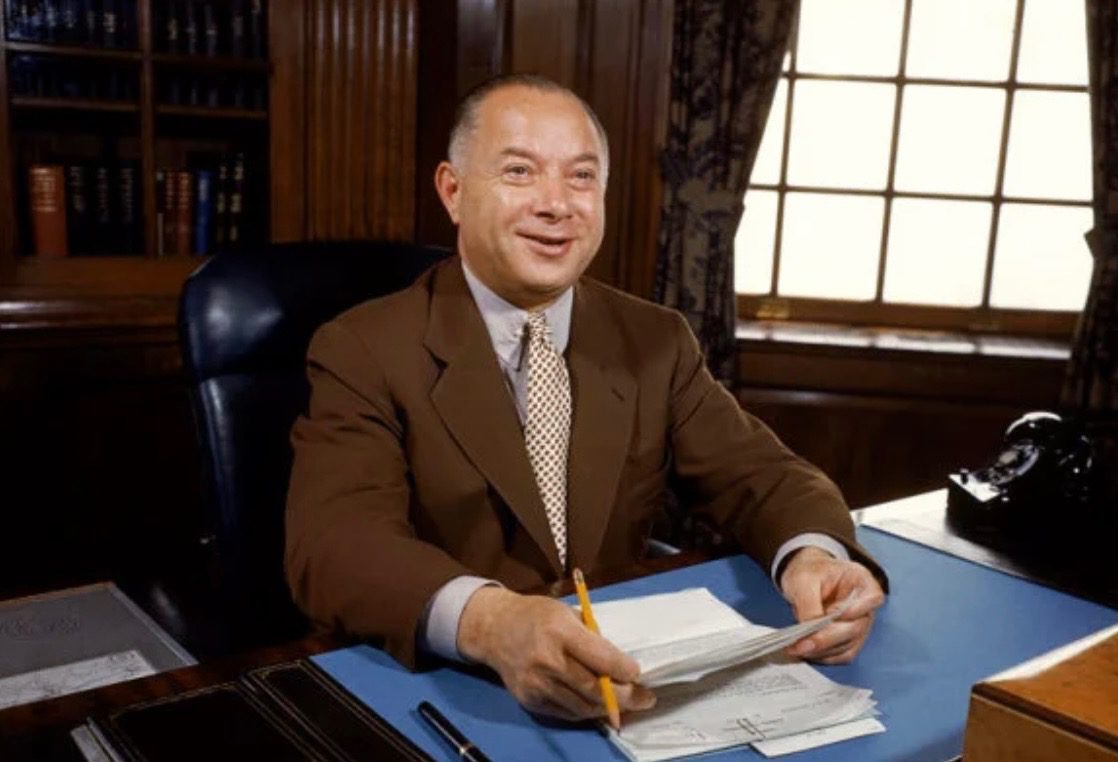
In 1970, after more than sixty years of work, David Sarnoff retired. He died on December 12, 1971, leaving behind an estate valued at over one million dollars, which he left to his wife, Lizette. He is buried in a mausoleum at Kensico Cemetery in Valhalla, New York. Embedded in the crypt is a stained-glass vacuum tube—a symbol of his life spent amidst light, waves, and electrons.