
This is the story of a hospital where safety, top-tier medical care, and a family’s emotional comfort come together in a single healing philosophy. In this article on i-new-york.com, we explore the impact of the Hassenfeld family’s massive philanthropy, next-generation tech like the MyWall system, and the Sala Institute’s educational and support program, which turns parents into active participants in their child’s recovery.
From Toys to Saving Lives
The Hassenfeld family’s story is a rare example of the entertainment industry becoming a powerful force for humanitarian change. Globally known for their connection to the gaming giant Hasbro, they gradually built a reputation not just as business leaders, but as dedicated philanthropists in children’s health.
Sylvia Hassenfeld, a member of the NYU Langone Health Board of Trustees, played a pivotal role in this process. She spent decades developing child support programs worldwide. Her approach went beyond traditional philanthropy: she wanted to create an environment where childhood doesn’t stop at the hospital doors. At the core of her vision was a simple yet profound idea: the “power of play” as a vital part of the healing process.
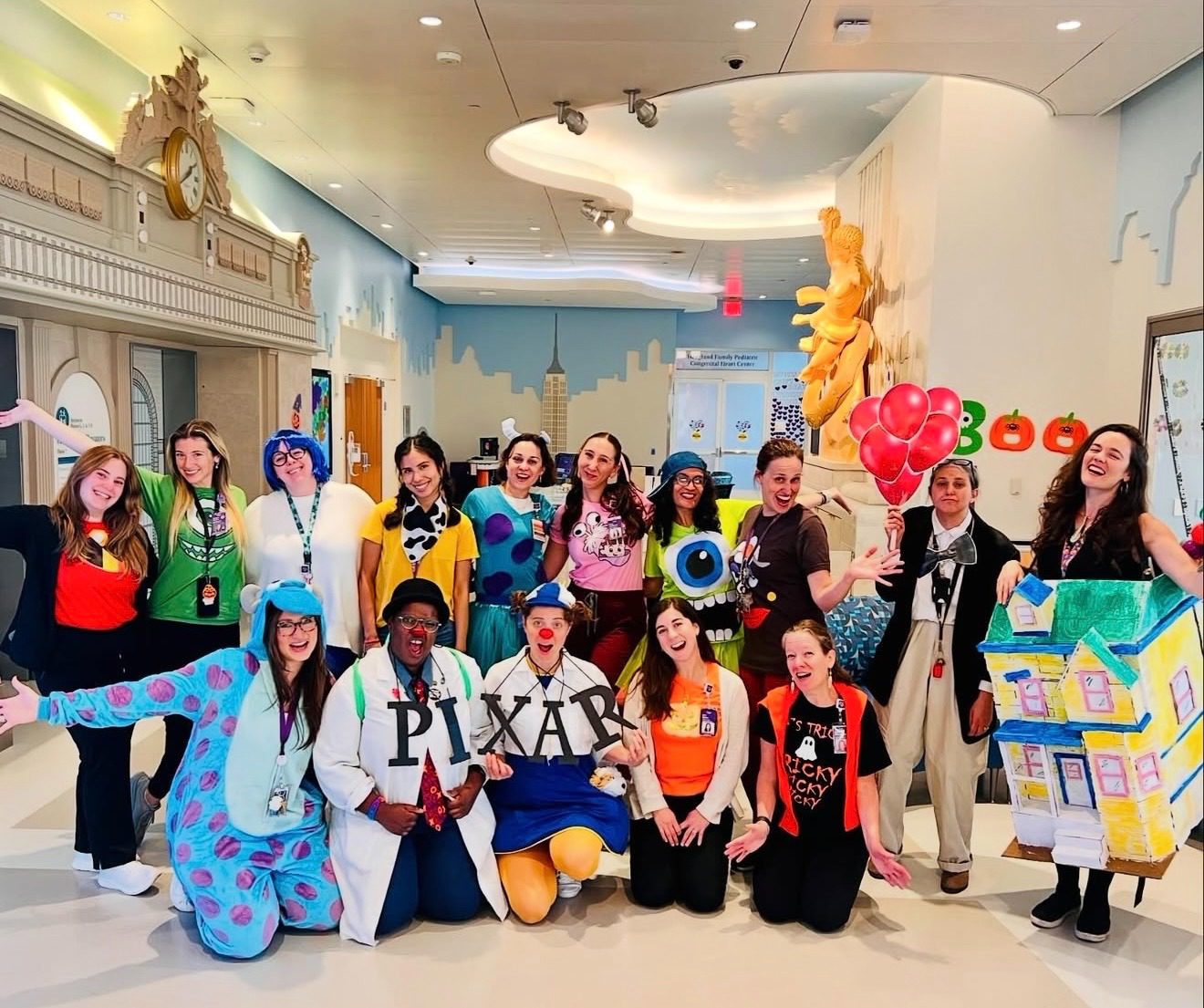
These very principles laid the foundation for Hassenfeld Children’s Hospital, which officially opened its doors on June 24, 2018. This ambitious project was made possible by a $50 million donation from the Hassenfeld family.
The facility’s mission is clear and bold: to provide cutting-edge inpatient and outpatient care for kids facing everything from common illnesses to the most complex, rare diseases.
Healing Architecture: New York Through a Child’s Eyes
At Hassenfeld Children’s Hospital, the architecture isn’t just a shell for medical care; it becomes part of the therapy itself.
The interiors were designed by the architectural firms SKOLNICK and Ennead Architects. But the real game-changer wasn’t just professional expertise—it was the inclusion of youth and family advisory councils. Their insights helped shape a space where medicine speaks the language of children, not clinical manuals.
The central design theme is New York City as seen by kids. It’s not the fast-paced, noisy metropolis, but a playground of imagination and discovery.
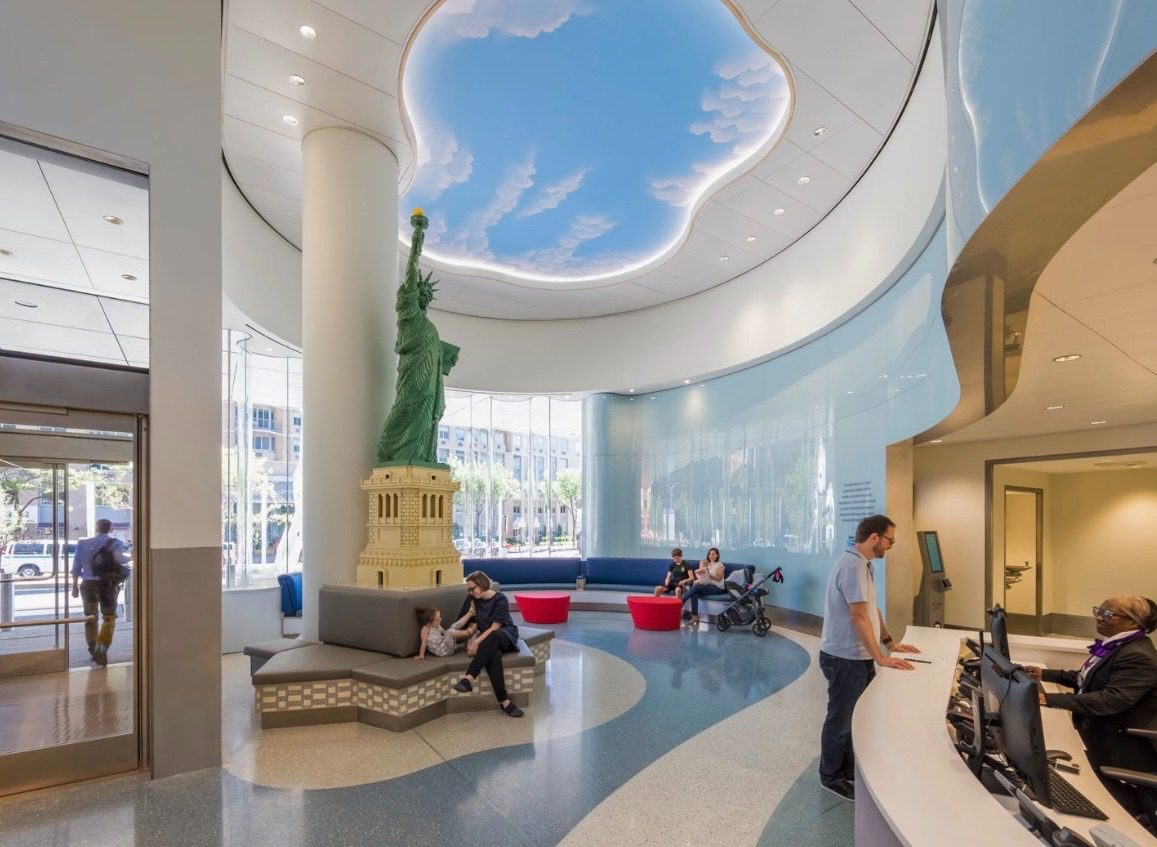
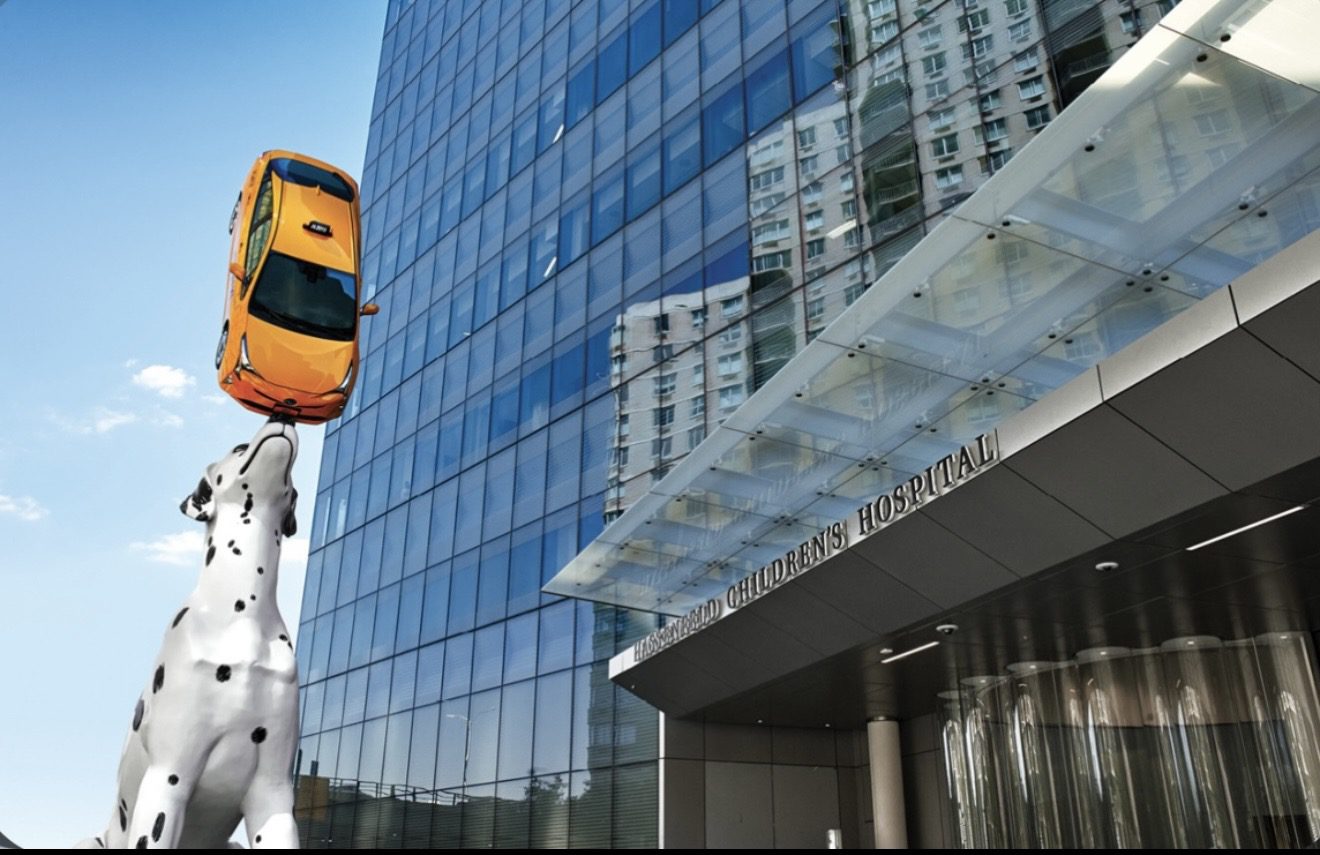
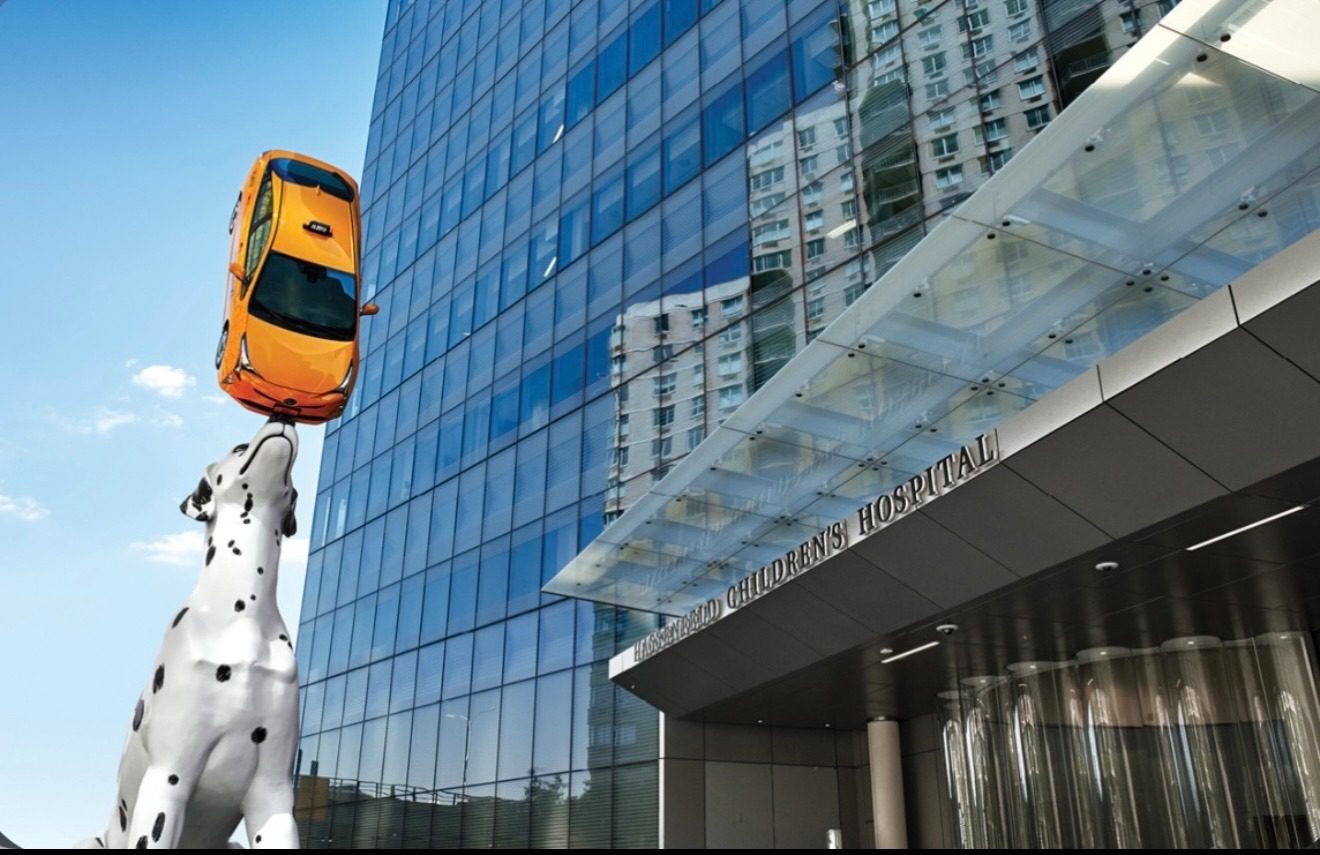
Right at the entrance, visitors are greeted by “Spot”—a massive 38-foot sculpture of a Dalmatian balancing a real yellow cab on its nose. It serves as an immediate, emotional touchpoint, replacing a cold hospital lobby with a bright, almost magical welcome. Inside the lobby, another iconic city symbol awaits: a Statue of Liberty built entirely out of LEGOs, turning a national monument into an inspiring piece of play.
Spaces Designed Down to the Last Detail
The hospital’s architecture is built on several key principles that directly impact the healing experience:
- Private rooms only. This is the only pediatric inpatient facility in Manhattan where all 68 rooms are private. This approach ensures privacy, significantly reduces infection risks, and allows a parent to comfortably stay overnight with their child.
- Themed floors. Every level has its own visual identity, from elevators designed to look like the steel cables of the Brooklyn Bridge to wall murals inspired by Central Park.
- The Children’s Terrace. Located on the seventh floor, this outdoor rooftop garden gives kids a place to play, get fresh air, and take in panoramic views of the Empire State Building.
- Specialized play and development zones. Beyond clinical rooms, the hospital features teen lounges, multisensory playrooms, and the Skyline Studio—a creative broadcast hub where patients can produce their own multimedia content. This isn’t just entertainment; it’s a crucial outlet for psychological rehab and self-expression.

Sala Institute: The Heart of Family-Centered Care
The Sala Institute for Child and Family Centered Care holds a special place within the hospital. It’s a conceptual center that completely rethinks the core logic of pediatric medicine.
Its philosophy is built on partnership. The staff openly acknowledges a fundamental truth: the medical team has the clinical expertise, but parents know their child best. This isn’t just lip service; it’s woven into daily practice.
“My mother, Sylvia Hassenfeld, always believed that a hospital shouldn’t be a place where a child stops being a child. Our goal was simple: to build a space where the magic of play helps conquer the fear of illness.” — Alan Hassenfeld, former Hasbro CEO and philanthropist.
The Sala Institute’s work covers several interconnected areas:
- Psychological support. Child psychologists, social workers, and chaplains work closely with patients and families. This multi-layered support system addresses the emotional heavy lifting of a diagnosis, not just the physical symptoms.
- Art therapy. Music and art therapy are actively used as practical tools to reduce pain and stress. Here, it’s not an optional perk, but a core part of recovery—a way to give kids back a sense of control and self-expression.
- Safety and quality through family involvement. Two key innovations stand out: Family-Centered Rounds, where families are actively involved in medical decision-making, and bedside shift reports, where nurses hand off shifts right in the patient’s room. Both practices break down traditional medical hierarchies, making care more transparent and collaborative.
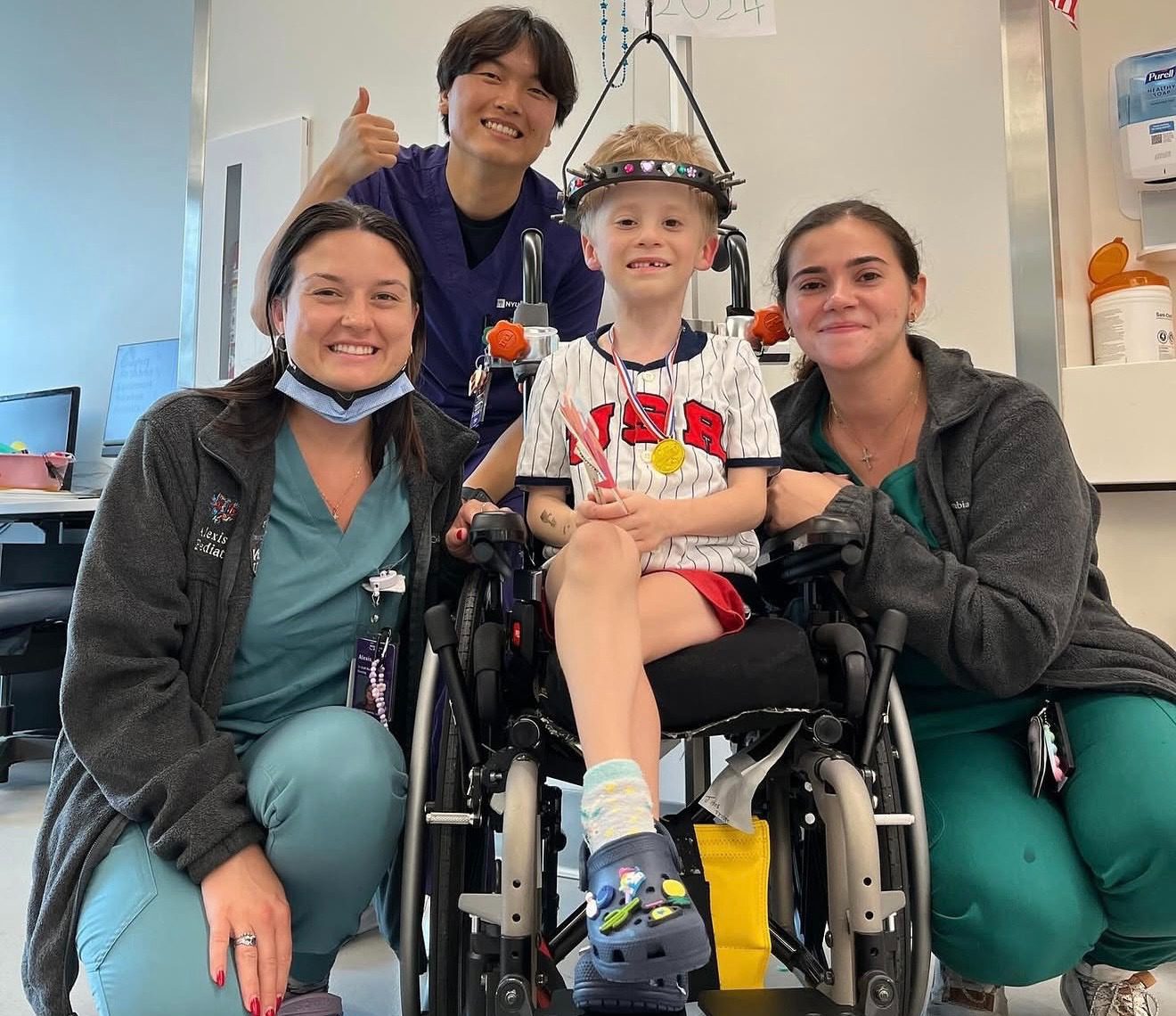
The results of this care model are evident not just in emotional well-being, but in hard medical data. Thanks to the Sala Institute’s approach, the hospital boasts one of the lowest observed-to-expected length of stay ratios—0.90. This means that, on average, children recover and go home faster than standard clinical models predict.
Future Tech Serving Patients
Technology at Hassenfeld isn’t treated as separate infrastructure; it’s deeply integrated into the patient experience. Every room is equipped with MyWall—a massive 75-inch interactive screen paired with a bedside tablet that turns the hospital room into a customized digital hub.
The system’s capabilities go far beyond basic entertainment:
- Environment control: Kids can adjust the lighting, temperature, and window shades themselves, restoring a much-needed sense of control in a clinical setting.
- Communication and education: Patients can access easy-to-understand educational materials about their health, as well as video-chat with family or their school, helping them stay connected to normal life.
- Entertainment: Built-in gaming platforms (including PlayStation), movies, and internet access offer vital psychological relief.
- Room service: Families can order personalized meals directly from the screen, complete with vegan and kosher options.
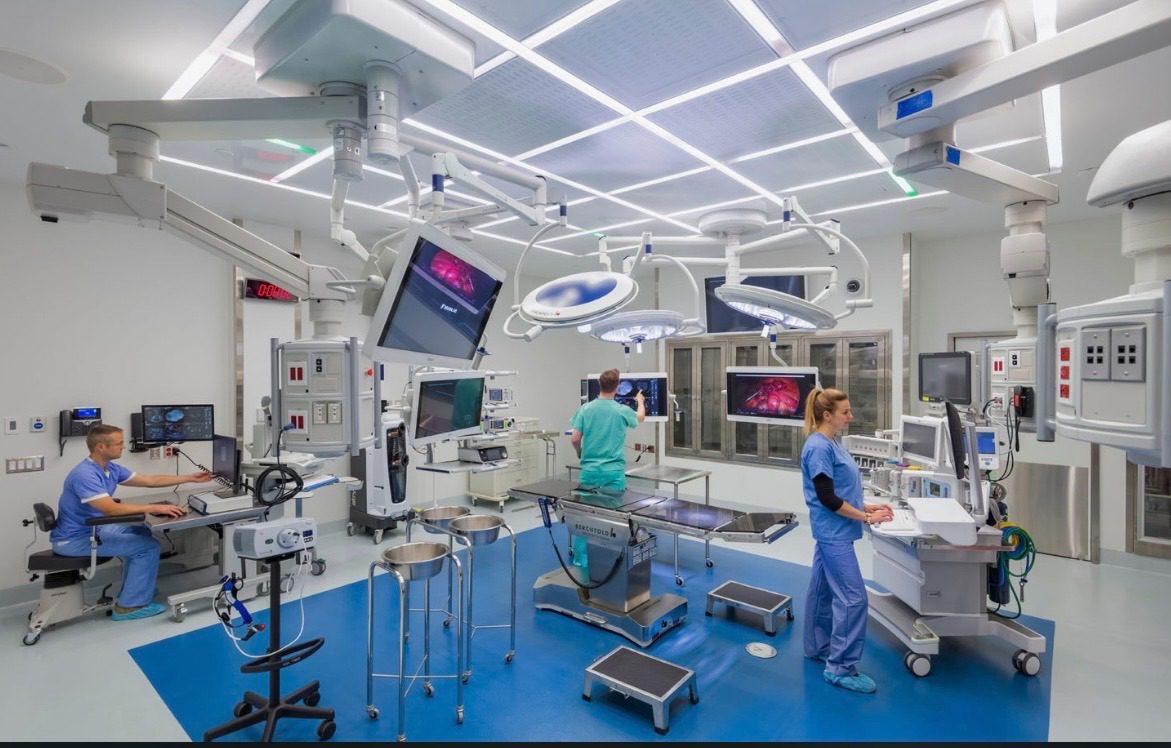
Behind the scenes, the hospital heavily relies on automation. A fleet of 31 robots handles routine logistics—from delivering supplies to transporting linens—freeing up doctors and nurses to focus entirely on direct patient care.
Powering this entire ecosystem is BigPurple—a massive computing platform. In the medical field, it serves as a premier data analysis tool, leveraging artificial intelligence to predict treatment outcomes and optimize clinical decisions.
Medical Leadership
Clinically, the hospital brings together over 400 doctors across 35 specialties. According to the authoritative U.S. News & World Report (2023–2024), the facility ranks #1 in New York for pediatric cardiology and heart surgery.
“Success in pediatric cardiac surgery is measured not just by the hours spent in the operating room, but by how the child grows after discharge. Our integrated model allows us to care for a little heart from its very first beat in the womb all the way into adulthood.” — Dr. Ralph Mosca, Chief of Pediatric and Adult Congenital Cardiac Surgery at NYU Langone.
In 2021, the hospital opened the 5,500-square-foot Comprehensive Congenital Heart Center, ensuring seamless, lifelong medical care.
Another crucial pillar is the pediatric hematology-oncology department. They treat a wide spectrum of cancers and blood disorders, actively spearheading modern clinical trials and cutting-edge gene therapies. Special attention is given to rare diagnoses, such as HPDL deficiency, utilizing experimental approaches and novel pharmacological compounds.
The hospital is also a training ground for future medical leaders in pediatric cardiology, neurosurgery, and oncology. In this environment, students learn more than just treatment techniques; they learn how to navigate the complex intersection of science, ethics, and human compassion.
The experience of Hassenfeld Children’s Hospital proves that modern pediatrics moved past the simple technological race a long time ago. Lasers, robots, and AI are just tools. True innovation lies elsewhere: in building a holistic ecosystem where a child is shielded from unnecessary stress, and their family becomes a full, empowered partner on the journey to healing.