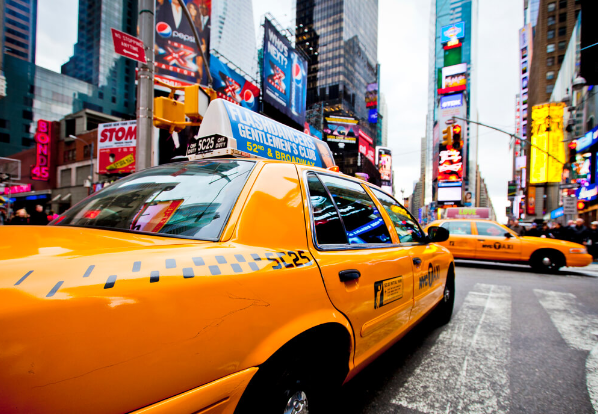

Apart from New York, there is no other city in the world with so many yellow taxis. You can easily spot them on every street. Sometimes, there are traffic jams of yellow cars on the roads. This is due to the high demand for them. They have been a public transportation system in New York for many years. It turns out that riding a yellow taxi is cheaper than using a private car. But how did it all start? How did this means of transportation become popular and win the title of city symbol? Find out on i-new-york.
The history of yellow taxis in New York
They first appeared on the roads of New York in the last century. Back then, the city authorities were implementing promising ideas to develop the public transportation system. In 1898, by their decision, electric taxi cabs began to run on the streets of Manhattan. They transported New Yorkers over long distances and quickly became popular. Soon, the taxi cabs were replaced by gasoline taxis. They went down in history as the first taxis in New York.
In 1907, the first taxi company, the Yellow Cab Company, appeared in the city. It was owned by entrepreneur John D. Hertz. He believed in the success of his business and dreamed of having a large taxi fleet. In the same year, on his initiative, 600 gasoline-powered cars were imported from France. Initially, they were painted red and green, but later they were replaced with yellow. John had read information that yellow was more visible over a long distance, so he decided to choose it.
After that, several more companies appeared in New York over the course of a decade and started the same business. Thus, yellow taxis began to travel throughout the city. Initially, the fare was 50 cents per 1 km. It was expensive at the time. For several years, only wealthy people could afford to ride in a taxi quickly and comfortably.
But by the 1920s, the situation had changed. The taxi market began to develop rapidly. New companies were opened that produced these cars and provided everyone with the opportunity to ride a taxi at an affordable price.
In 2005, some conventional yellow taxis were replaced by modern electric vehicles. In May 2007, New York City Mayor Michael Bloomberg proposed adding fuel-efficient taxis to the public transportation system.
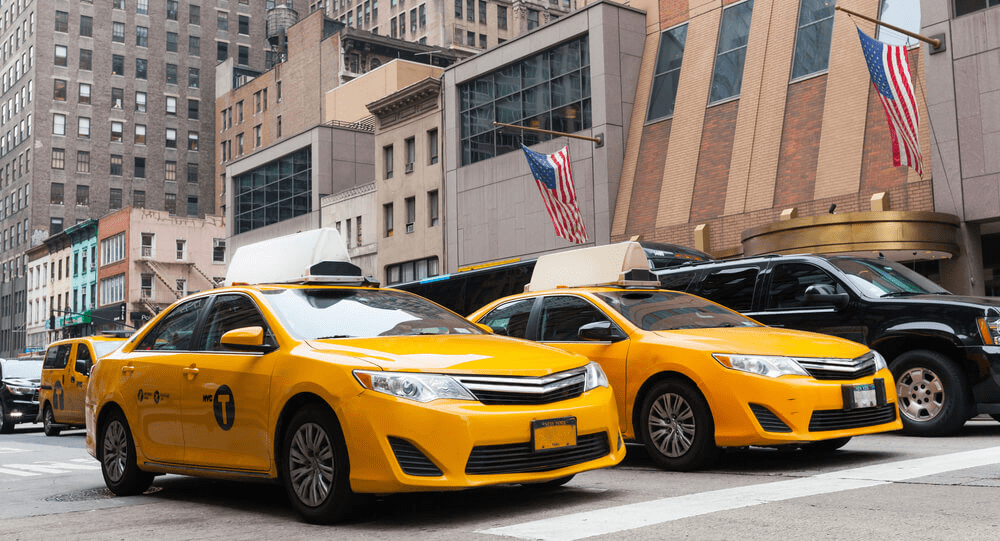
Interesting facts about yellow taxis for tourists
- At the beginning of the 20th century, taxis were of different colors, depending on which company owned them. It was only 60 years later that a decision was made to make them yellow.
- Fares are paid through the screen. Every New York taxi has a plastic wall that separates the back seat from the front. Fares are paid through a display built into the partition – the passenger chooses the payment method and the amount.
- Every taxi has a fare meter. You need to pay a certain amount for 1 km in a taxi. It depends only on the duration of the trip, and 1 or more people can ride in a taxi.
- Most yellow cab drivers are foreigners who have moved to New York. They have the right to work in a taxi after proving their good knowledge of English and obtaining a license.
- The medallion on the hood is a license to drive a taxi. Drivers rent them from a government agency that issues licenses. The medallion allows them to transport passengers.
- There are over 13,000 yellow taxis on the roads of NYC. According to statistics, about 90.3% of trips are made in Manhattan.
- Yellow taxis only drive on city roads. There are also green ones. They transport passengers outside of New York, for example, from airports.