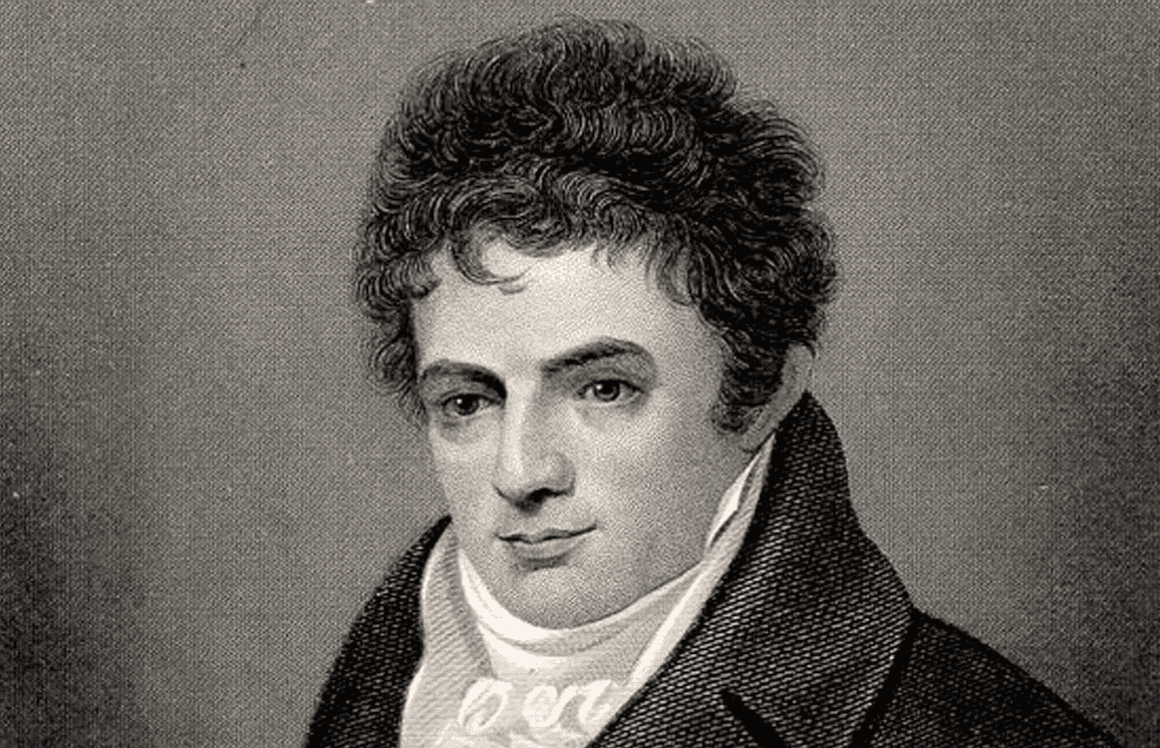

Robert Fulton became famous in New York and throughout the country for his contributions to the steamship service. He gained popularity due to the creation of the world’s first commercially successful steamboat. In the 21st century, it is considered a common way to move. However, it became a real revolution for New Yorkers at that time. Do you know the fascinating story of Fulton’s life and his groundbreaking invention? Read more about it on i-new-york.
Fulton’s life story: from painter to innovator
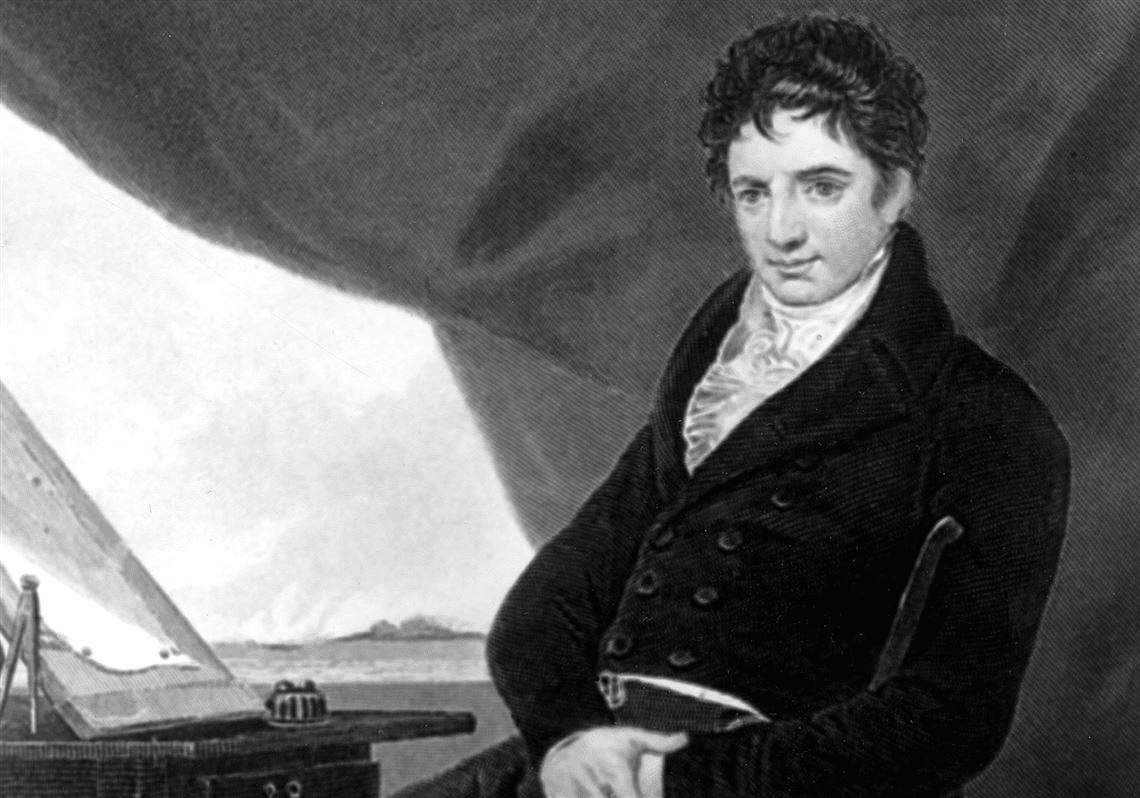
Robert was born in 1765 in the state of Pennsylvania. He grew up and was brought up in a fairly well-off family together with three sisters and a younger brother. He spent his childhood and youth in Philadelphia, where he developed his creative abilities. He skillfully transferred local landscapes and portraits of residents to the canvas. He also really enjoyed drawing houses and cars. Therefore, he decided to devote his future life to painting.
At the age of 21, our hero was diagnosed with tuberculosis. One of the legendary doctors advised him to move to the sea to improve his health. Following the doctor’s recommendations, he went to Europe and stayed there for twenty years.
There, he not only improved his health but also actively studied painting. His formation as a professional artist took place in Europe. He regularly received many orders for various paintings. Thanks to this, he not only gained invaluable experience but was also able to secure a life in Europe.
In addition to painting, while living in Europe, he was fascinated by experiments with mechanical inventions. He developed the idea of towing channels with inclined planes instead of locks and even patented it. He was also interested in steam power usage for boats.
Coming back to the US and the breakthrough with steamships
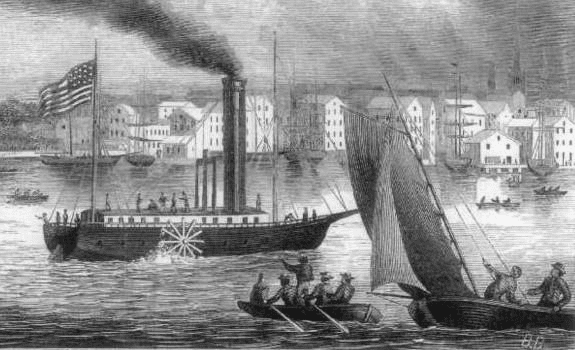
Realizing the attractiveness of the idea of steamship navigation, our hero decided to return to his native land and continue his investigations there. He settled in New York, where he worked and lived until the end of his life. Together with Robert R. Livingston, he managed to create the world’s first North River Steamboat. It was utilized for regular passenger service from New York to Albany State and back.
The boat had sails and a steam engine. At each end of the craft stood a short mast with a small square sail that could be furled if required. The engine was located in the center of the steamer, wrapped by cord wood. Above the engine, there was a tall and thin smoke pipe and a large paddle wheel was on each side.
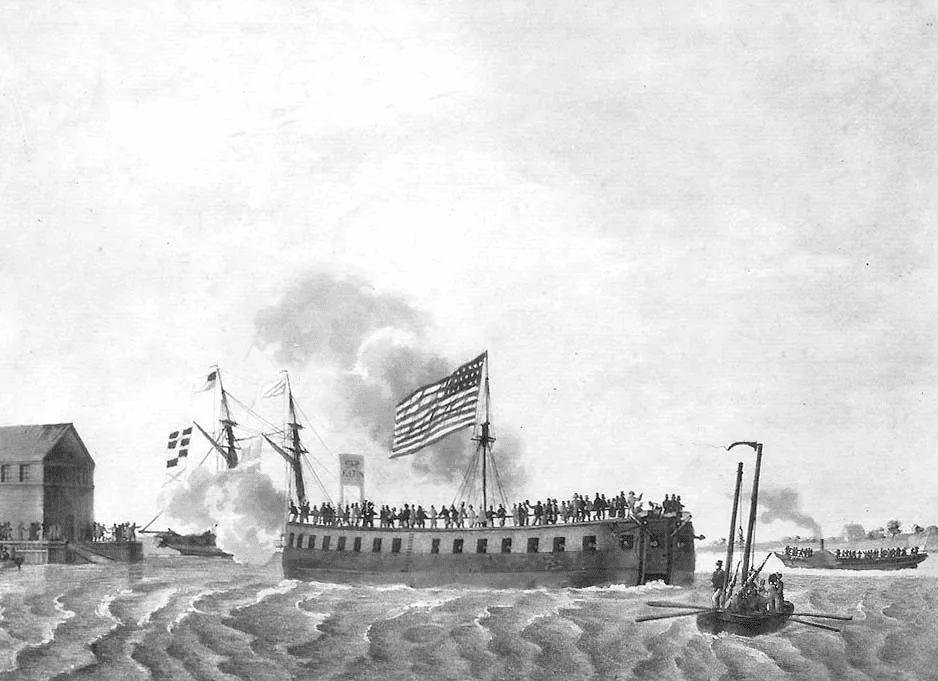
The first voyage took place in 1807. It sailed up the Hudson River from New York to Albany, covering a distance of 150 miles in 32 hours. It was a real revolution in steam power because it offered mankind many advantages compared to traditional sailing vessels. The steamboat sailed many times faster and was more reliable. In addition, Fulton’s steamer had a high ability to sail against strong currents and headwinds.
Our hero became a real discoverer, revolutionary and innovator. Thanks to his invention of steamboats, trade and commerce began to expand rapidly in New York, as well as in other cities of the US. Steamboats connected the most distant ports and opened new markets. All this contributed to technical progress, economic growth and prosperity of the region.
Further life, legacy and honors
Until the end of his days, Fulton lived and worked in New York. He devoted his entire life to innovations in the field of steamship communication and steam power. The heart of the outstanding inventor stopped beating in 1815. Tuberculosis was the cause of his death.
Fulton got ill as a result of complications from pneumonia he contracted while rescuing a friend who had fallen through the ice. He was only 49 years old at the time of his death.
Fulton’s achievements not only revolutionized transportation but also laid the foundation for the development of the modern shipping industry. His innovative steamship design and propulsion began to be adopted as the standard for future ship production worldwide. The success of the North River Steamboat paved the way for the widespread adoption of steam power in shipping. This affected the development of world trade and commerce at the global level.
Many places in New York were named after him:
- Fulton County
- Village of Fulton
- Fulton Chain Lakes
- Fulton Park
- Fulton Street
- much more.
In addition, he was posthumously honored for developing innovative technology at the Hudson-Fulton Celebration of the Centennial in New York in 1909. On this occasion, a replica of the first steamboat was reproduced.