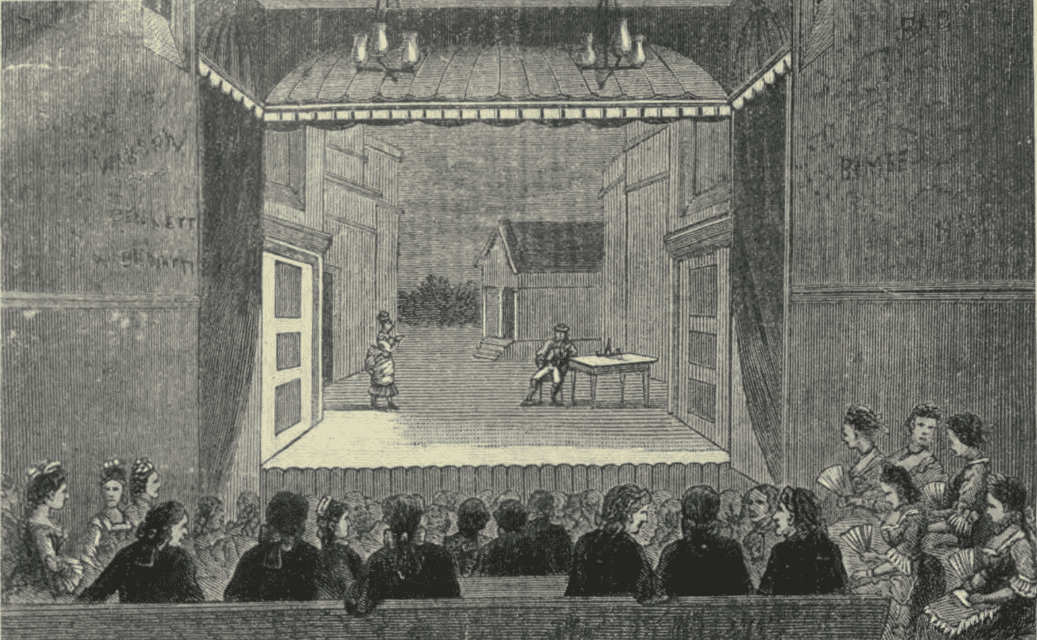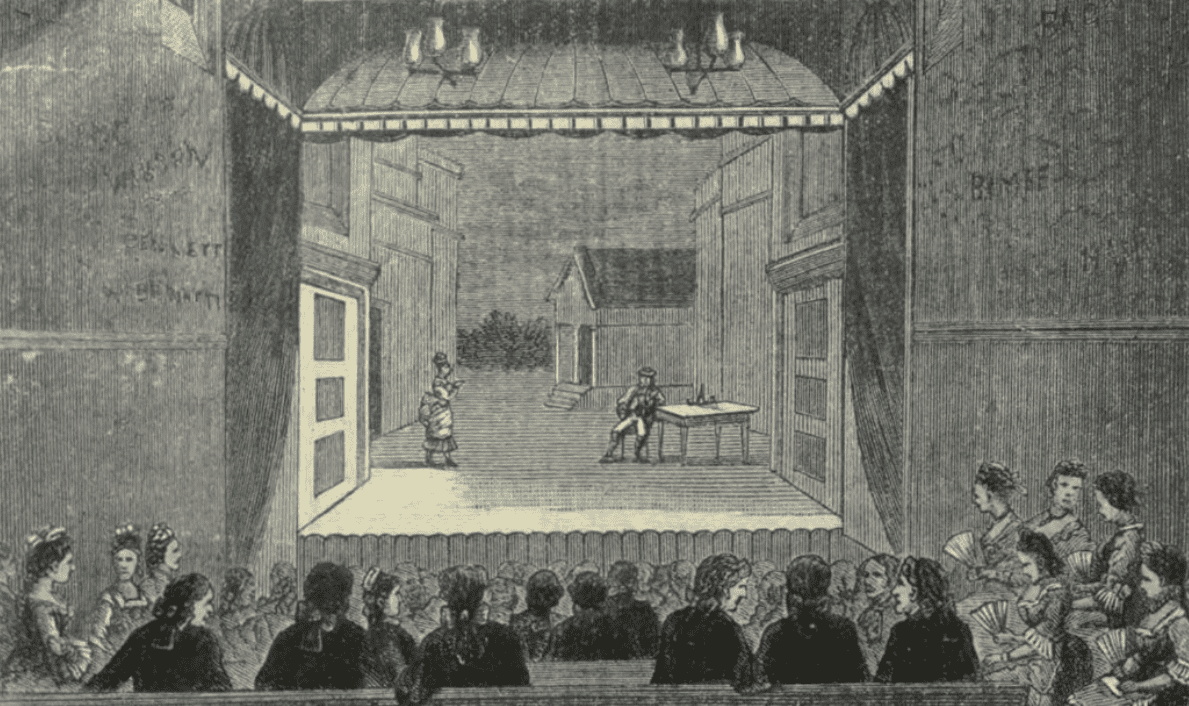

The John Street Theatre has a short but very curious history. This theater was considered the first in New York to work permanently in the 18th century. It was named after the street on which it was built. Although the opening of a permanent theater was regarded as a very grand event, it operated for about 30 years. Learn more on i-new-york.com.
How did the first permanent theater appear in New York?
The story of the first permanent theater in New York begins with an actor from England, Douglass. In the mid-18th century, he decided to move to Jamaica in search of a better life. There he made new connections with an English actor named Hallam. For a long time, he was engaged in the leadership of a theater troupe and was their director. Douglass joined the group and toured with them in different cities. They created temporary theaters and gave theatrical performances. This is what the first theaters in America looked like.
But in 1756, Hallam, a talented actor and leader of a touring troupe, died. He left a gifted wife, an actress who was married to his friend and colleague from England, Douglass.
The new married couple managed to organize a new group, which included almost all the old actors who performed with Hallam. They continued to tour America and built temporary theaters for performances. Two such temporary theaters were built in New York, but Douglass decided to make a third one permanent.
The Douglass Theater became the first permanent theater in New York. It was opened to the public in 1767 on John Street. The first theater was far from majestic architecture. It was a regular wooden building that was simply painted bright red. The capacity of the theater hall was almost 750 people. In the mid-18th century, it was the only theater located in Manhattan.
What was shown at New York’s first theater?
In the second half of the 18th century, the first theater in New York hosted performances based on plays by William Shakespeare and Ben Jonson. Also, in this theater, the performance “blackface” was first introduced in the United States. In particular, a special form of makeup was used during the play: white people were painted dark to depict a caricature of a black person.
Short-term difficulties in the work of the theater
In 1774, the American colonies passed a ban on theatrical performances because they believed this type of activity to be excessive. New York’s first permanent theater was compelled to close its doors to visitors.
Three years later, the British troops arrived in New York, and a huge struggle for American independence began. Then British troops captured the first permanent theater and renamed it “Theatre Royal”. During the occupation of New York, the British troops used the theater to stage plays and performances that encouraged the soldiers’ fighting spirit.
After the British troops left America, former actors returned to the theater. They gradually started to restore the cultural life of the city. The theater began to show performances there again based on plays by William Shakespeare, Richard Sheridan, Royall Tyler and others.
The last play in the theater was shown in the winter of 1798. After that, the first permanent theater building was sold to a nearby shop owner. Over time, the theater building was utilized for business expansion. But at the end of the same year, the house was demolished.
In the 21st century, a local French restaurant is located instead of the city’s first permanent theater.