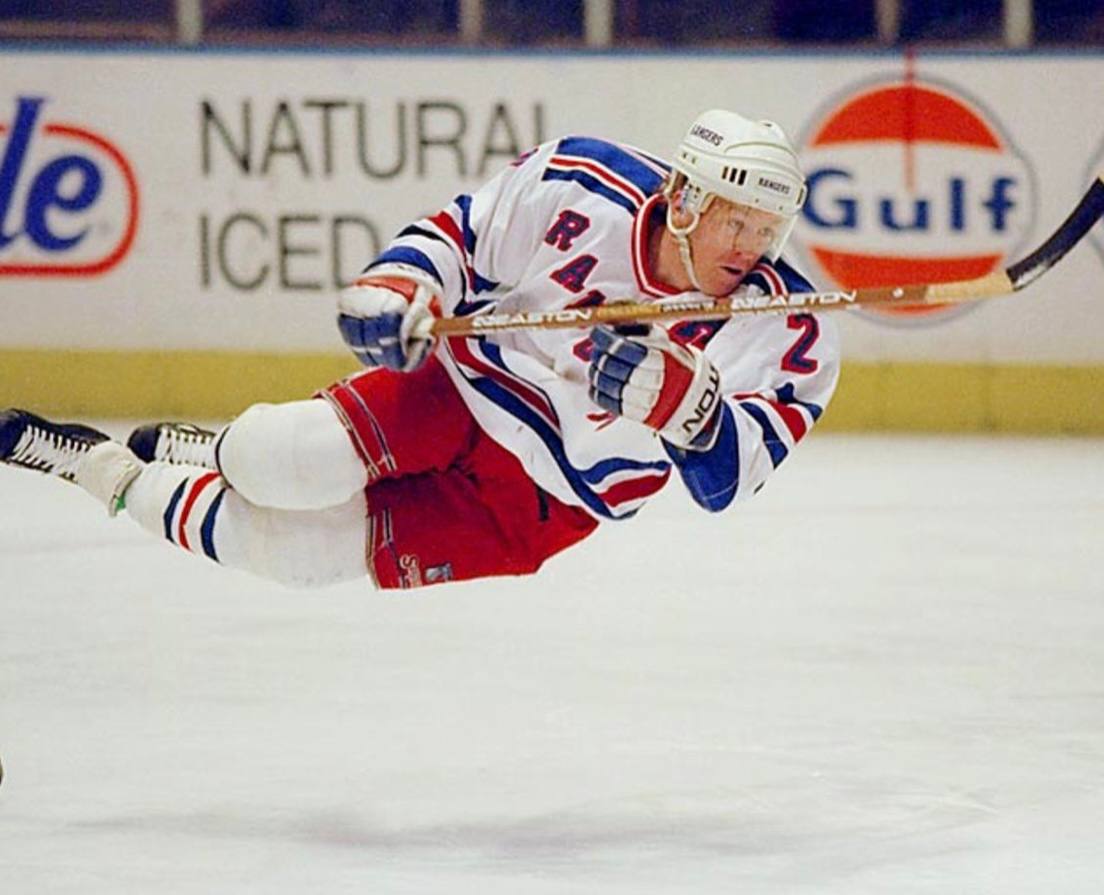

This is the story of one of the greatest American hockey players of all time—Brian Leetch, the legendary defenseman for the New York Rangers, who transformed the game into an art of precision, intellect, and grace. Read it on i-new-york.com.
The Athlete’s Development
Brian Leetch was born in Corpus Christi, Texas, but his real childhood was spent far from the southern shores—in the quiet town of Cheshire, Connecticut. His family moved there when the boy was only three months old. His first steps on the ice took place right at the local rink managed by his father, Jack. It was there that little Brian first felt the magic of hockey.
Despite his love for the ice, he was a versatile athlete during his school years, playing both baseball and hockey. Initially, he played for Cheshire High School, and later continued his education at the prestigious Avon Old Farms. His baseball talent was no less significant. As a sophomore, he threw a fastball at 90 miles per hour and helped the Cheshire Rams win a state championship title. In his senior year, Brian even set a school record with 19 strikeouts in a game.
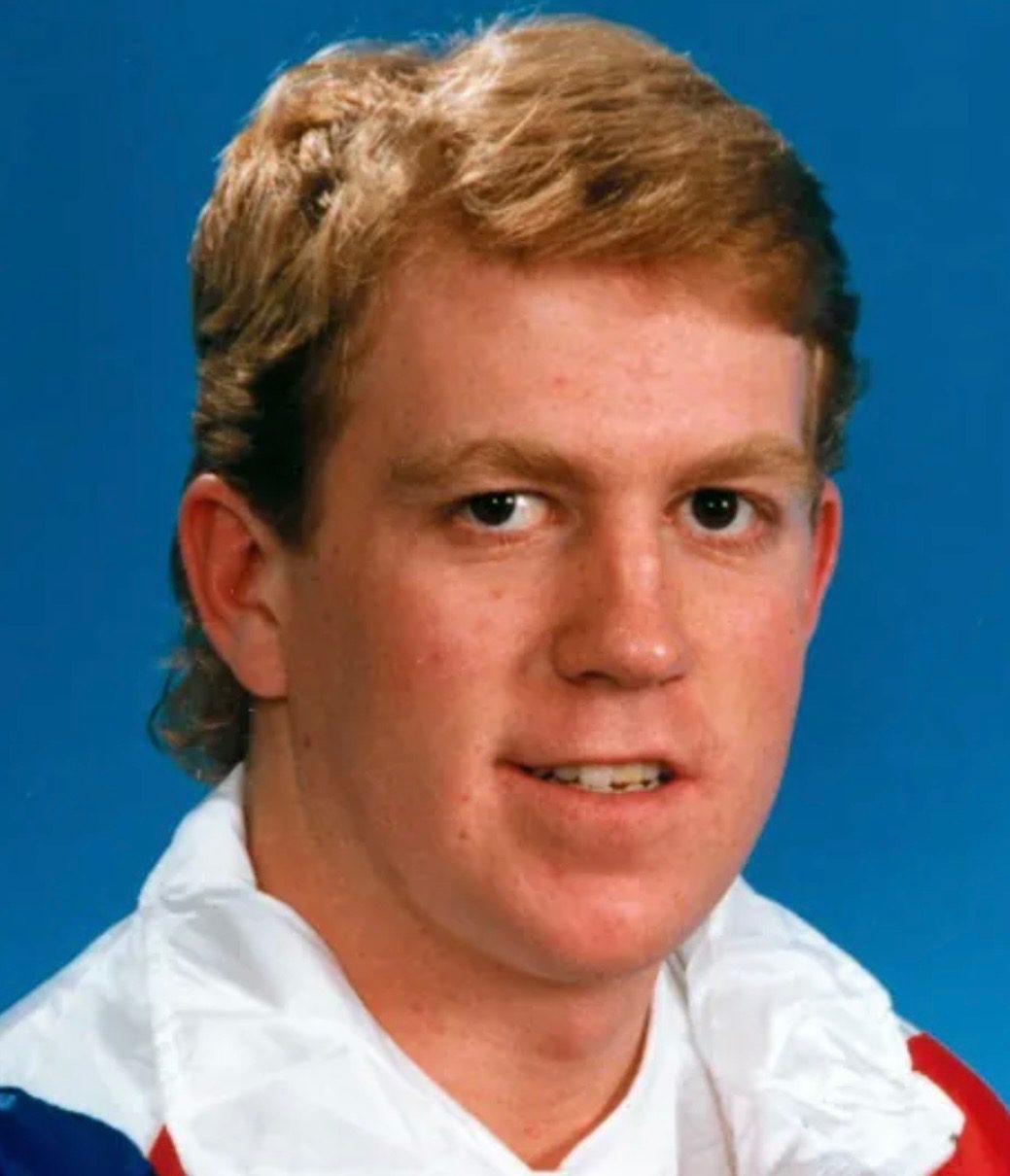
Still, his true calling was hockey. In his sophomore season, Leetch racked up a phenomenal 53 goals and 50 assists. After moving to Avon Old Farms, Leetch only solidified his status as a future star: in two seasons, he scored 70 goals and made 90 assists in 54 games—numbers that seemed incredible for a defenseman.
It’s no surprise that NHL scouts took notice of the young hockey player. In 1986, the New York Rangers selected him ninth overall in the draft—making him the first player that year who hadn’t played in a major junior league. Following his father, a former player, Brian enrolled at Boston College, where he quickly confirmed his talent.
A Stellar Playing Career
After one year at Boston College, young Brian Leetch earned the honor of representing the U.S. at the 1988 Olympic Games in Calgary. Just a few days after the tournament ended, he took the ice for the New York Rangers for the first time. In his debut game on February 29, 1988, against the St. Louis Blues, Brian recorded his first point—an assist. Thus began the legendary story of one of the greatest defensemen in NHL history.
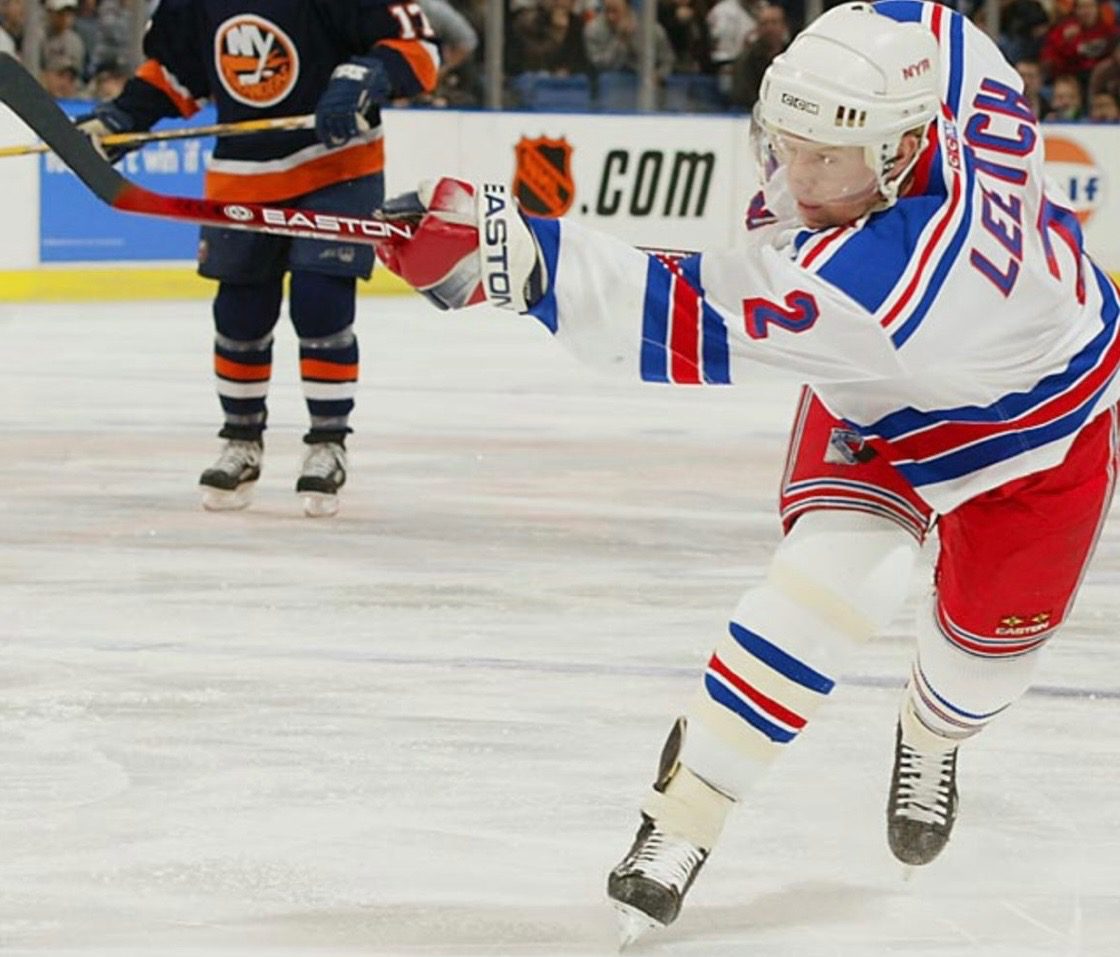
The 1987–1988 season was just a warm-up; he recorded 14 points in 17 games. But the next year, the world saw the real Leetch. In the 1988–1989 season, he scored 23 goals, tallied 71 points, and won the Calder Memorial Trophy as the NHL’s Rookie of the Year—the first Rangers player to receive the award in over 15 years. In the early 1990s, the Rangers gradually became a championship-caliber team, and Leetch was their backbone. In the 1991–1992 season, Leetch had a breakthrough—102 points for the season, making him the fifth defenseman in NHL history and the first American to achieve it. For this, he won the Norris Trophy as the league’s best defenseman. An ankle injury temporarily sidelined the athlete the following year, but in 1994, Brian returned with brilliance.
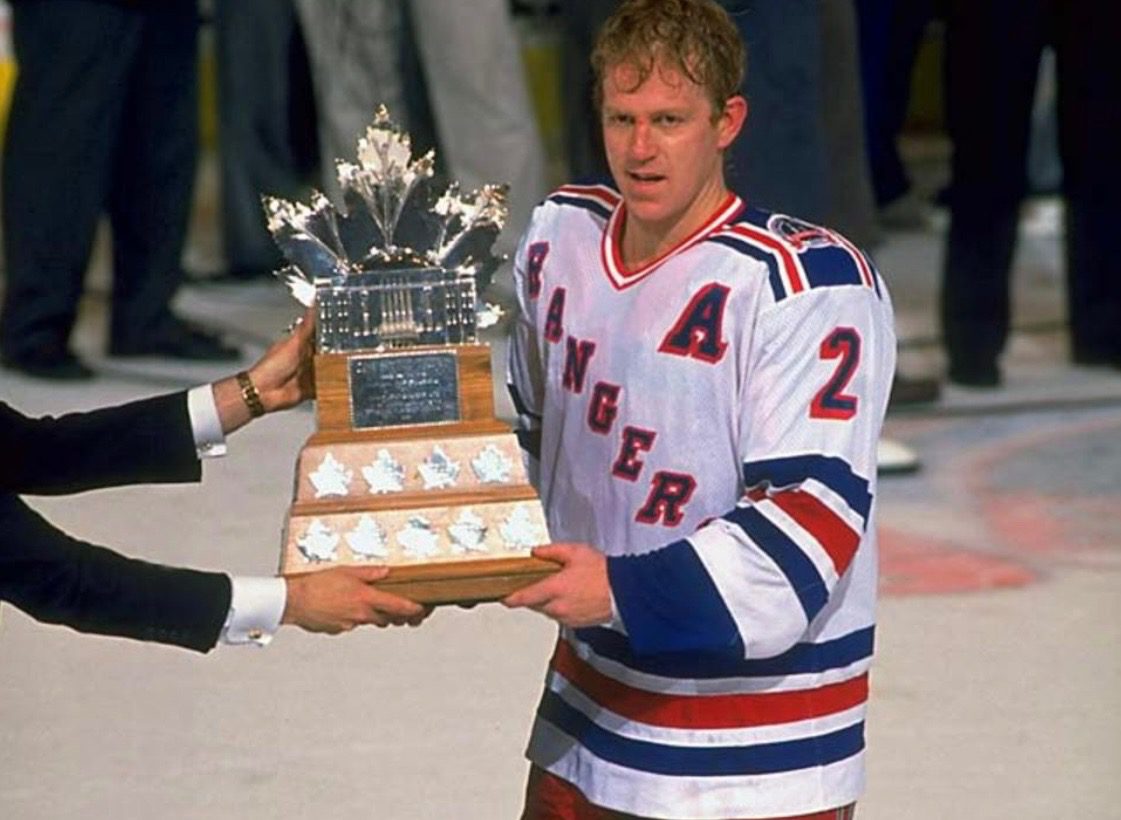
1994 became the peak of his career. Under the leadership of Mark Messier, the Rangers won the Stanley Cup—for the first time in 54 years. In the playoffs, Leetch was incredible: 11 goals, 23 assists, and 34 points in 23 games—all while playing with a shoulder injury. For his courage and skill, he became the first American to win the Conn Smythe Trophy as the most valuable player of the playoffs. His name is forever etched in the history of the “Blueshirts.”
Brian became only the second player after the legendary Bobby Orr to win all three major awards for defensemen—the Calder, Norris, and Conn Smythe Trophies. Only Cale Makar has achieved this feat since.
In 1996, Leetch wore the captain’s “C” not only in New York but also for Team USA, which sensationally defeated Canada in the first World Cup of Hockey. Throughout his career, he played over 1,200 games, scoring over 1,000 points—a milestone achieved by only a handful of defensemen.
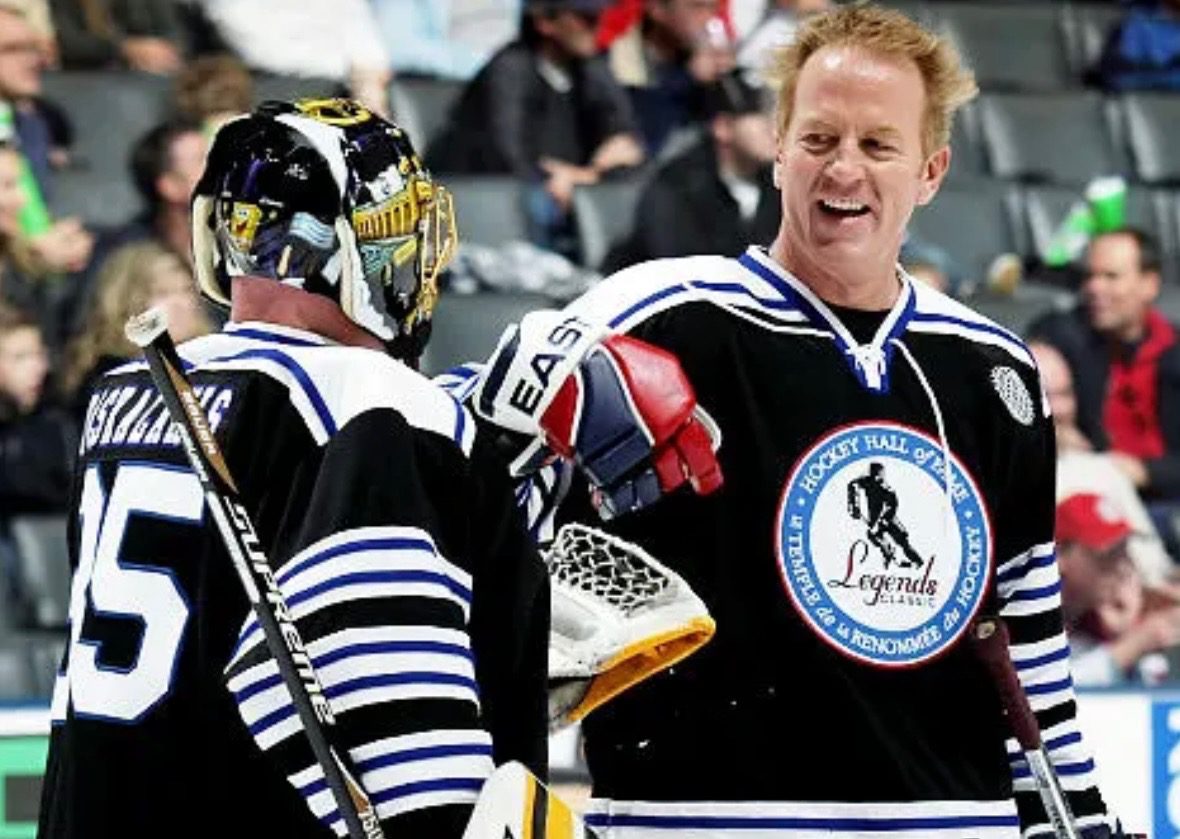
On the international stage, Leetch also left his mark: gold at the 1987 World Junior Championship, participation in the 1988 Olympics, victory at the 1996 World Cup, and silver at the 2002 Salt Lake City Olympics.
The Distinctive Style and Character of Brian Leetch’s Game
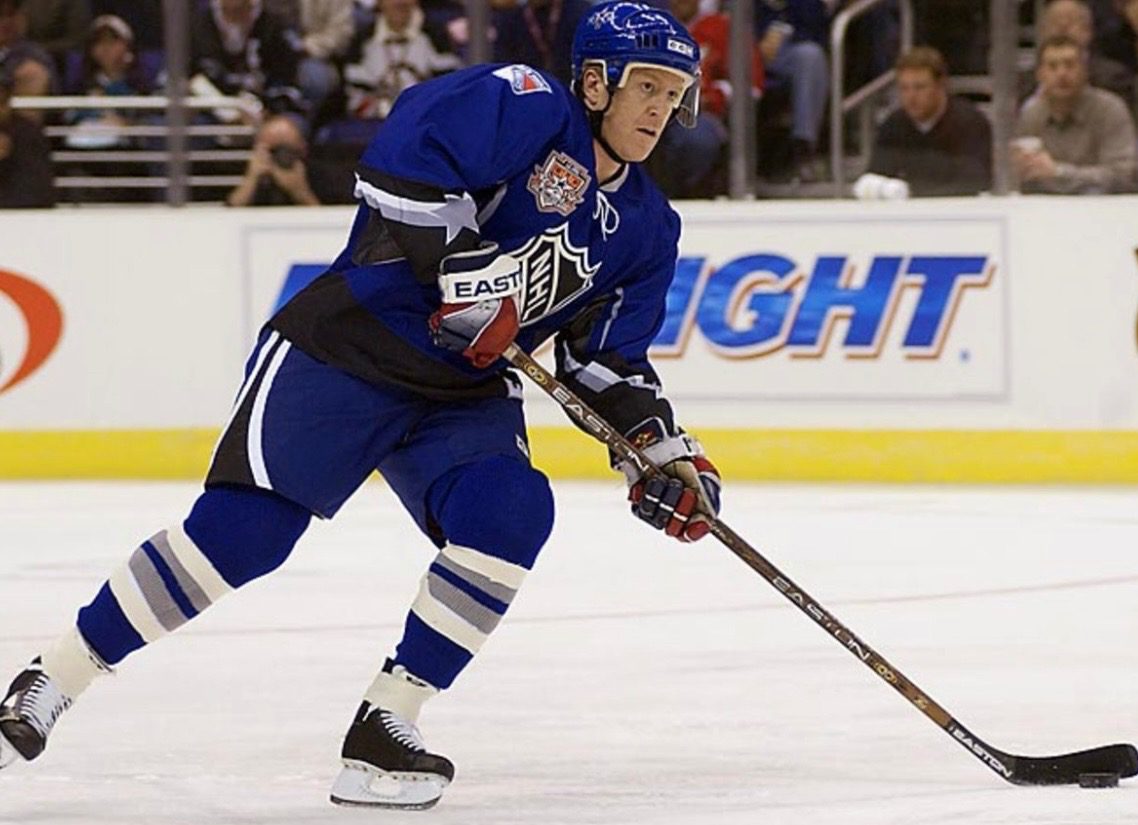
Brian Leetch was more than just a defenseman—he was a composer of motion who created music out of skating, passing, and subtle body shifts. His style was not about strength or aggression, but about intellect and rhythm.
“His skating was just ridiculous—it was so natural,” recalled Leetch’s Team USA partner, Bill Guerin. “He could move in multiple directions at once, and his passes were laser-accurate.”
On the ice, Brian was the brain of the defense—cool-headed, precise, and calm. He didn’t rush the net with a desperate look in his eyes like Bobby Orr; instead, he directed the play like a chess master who sees several moves ahead.
Leetch was unlike anyone else—and that was his strength. He didn’t copy idols or try to be anyone else. When Rangers manager Neil Smith asked who inspired him, Brian simply replied, “No one.” He created from a blank canvas, building his style based on his own feel for the game.
His “signature” move, a smooth hip-flick and an instantaneous turn, drove opponents crazy.
“When he got the puck, the other team was doomed,” Guerin said. “You just knew: we’re about to break out of the zone and create a scoring chance.”
Former teammates said that Leetch never boasted. He was aware of his talent but didn’t build a cult around it. His power was in his composure, his confidence without loud words.
“He had incredible precision and control,” remembered Jim Johannson. “Even against the Soviet machine with Makarov and Mogilny, he almost took over the game himself. The Soviet players couldn’t take the puck from him; that’s how well he controlled space and time.”
Brian didn’t care about his helmet or socks; he didn’t clean his gear until it shined. All he cared about was the game as a craft. NBC broadcaster Mike Emrick recalled how Leetch analyzed Nicklas Lidstrom’s play: he studied the micro-details that others neglected. Because he was a master of the same school—quiet excellence.
And perhaps that’s why Brian Leetch became the symbol of American hockey in the 1990s. Born in Texas, raised in Connecticut, he proved that an American could be more than just a player—he could be a legend on the blue line of Madison Square Garden.
No defenseman since him has repeated the 102-point season. His skating, vision, and confidence—all of it made Leetch unique. He didn’t shy away from hits or play dirty, but he wasn’t afraid, either. He simply knew where every detail of the game needed to be. And that is the essence of Leetch: composure, mastery, harmony. Hockey as a work of art.
Out of the Game, But Forever on the Ice
After his glorious years with the Rangers, Brian Leetch remained a figure who commanded the attention of the entire hockey world. In 1998, he was included in The Hockey News’ list of the 100 Greatest Hockey Players of All Time—a recognition that only cemented his status among the greats.
However, in 2003, the paths of the legend and New York diverged. When the team began a massive rebuilding effort in 2004, the defensive captain was traded to the Toronto Maple Leafs. Due to the 2004–2005 lockout, he didn’t have time to make his mark in the new uniform, and he later signed with the Boston Bruins. It was there, in the 2005–2006 season, that Leetch reached another milestone—scoring his thousandth career point.
After the 2006–2007 season, he received invitations from several clubs but decided not to continue. In May 2007, Brian Leetch officially announced the end of his 18-year career. Honors no less significant than those he earned on the ice awaited him.
In 2007, he was awarded the prestigious Lester Patrick Trophy for outstanding service to hockey in the U.S. And the following year, the New York Rangers retired his legendary No. 2 to the rafters of Madison Square Garden. At the ceremony, Brian was congratulated on screen by another New York No. 2—Derek Jeter of the Yankees, who said:
“From one number 2 to another—congratulations, legend.”
Subsequently, in 2009, Leetch was officially inducted into the Hockey Hall of Fame, joining giants like Steve Yzerman, Brett Hull, and Luc Robitaille. This marked the symbolic conclusion of a triumphant cycle—Rangers heroes from the 1994 team were inducted into the Hall of Fame three years in a row.
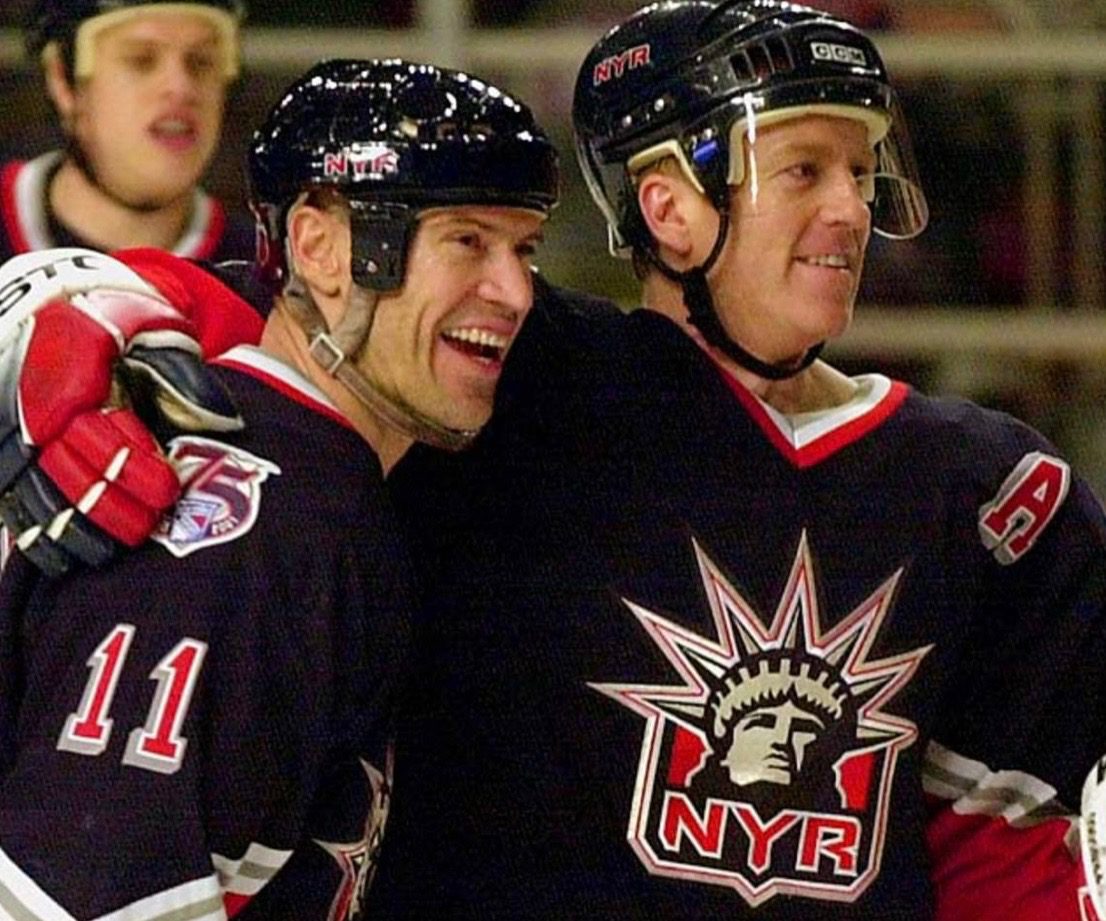
Even after retiring from playing, Leetch did not leave the sport, working briefly in the NHL’s Player Safety department in 2015, continuing to serve the game he so deeply understood.
For New York, he will forever remain more than just a player. He became a symbol of loyalty, intelligence, and the American dream on skates—the man who made the Rangers champions and made himself a legend.