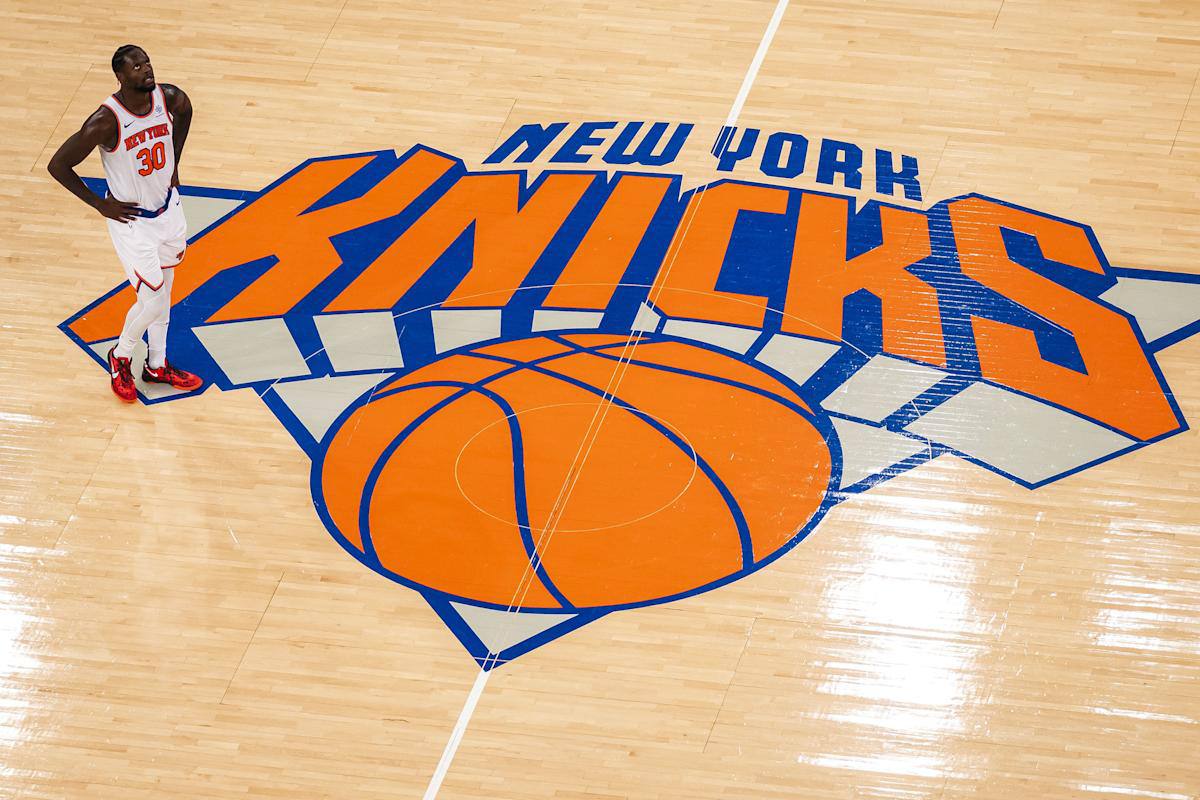

A legendary basketball team that plays in the NBA in the Atlantic Division of the Eastern Conference. After years of highs and disappointments, the team is back in the playoffs, restoring hope and fierce excitement to fans across all five boroughs of New York. Let’s recall their history and the path to their current revival on i-new-york.com.
A History with Character
The name New York Knicks is a shortened version of Knickerbockers, a rather funny and old-fashioned-sounding word that conceals a piece of New York’s history.
Back in the early 19th century, writer Washington Irving, author of the famous The Legend of Sleepy Hollow, created a fictional character named Father Knickerbocker, who became a symbol of Manhattan’s old Dutch settlers. His name quickly stuck and became a nickname for all true New Yorkers—Knickerbockers.
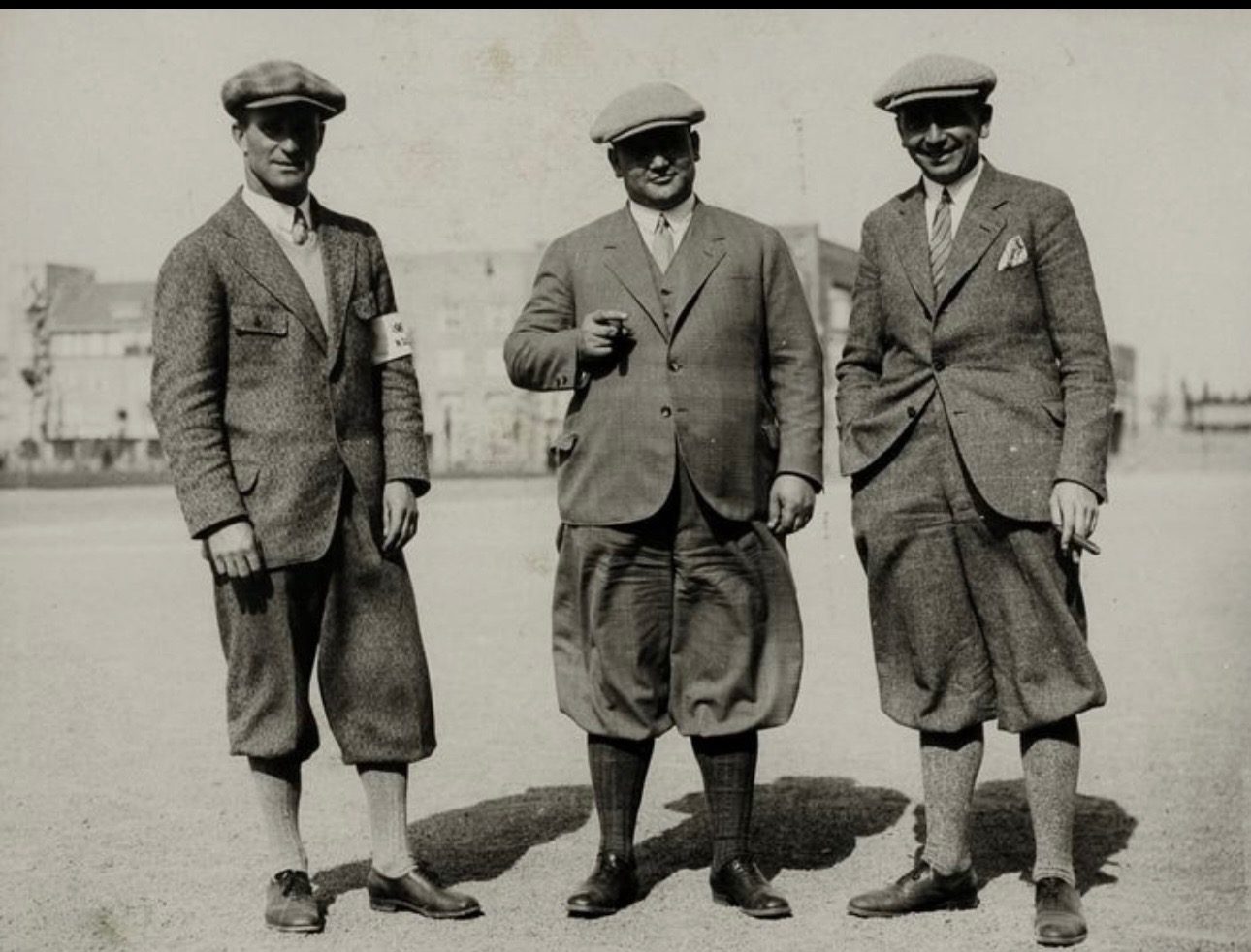
When Ned Irish, the president of the newly formed basketball franchise, was looking for a name for the team in 1946, he wanted it to sound genuinely “New York.” After an internal vote, the staff chose that exact word—vibrant, historical, and full of character. Thus, the New York Knickerbockers, or simply the Knicks, were born—a team that from the very beginning embodied the spirit of the city that never sleeps.
And interestingly, the Knicks are one of only two teams in the NBA that still play in their home city, without changing their address for over half a century. New York changes, but the Knicks remain its heart.
How the Knicks Were Born (1946–1967)
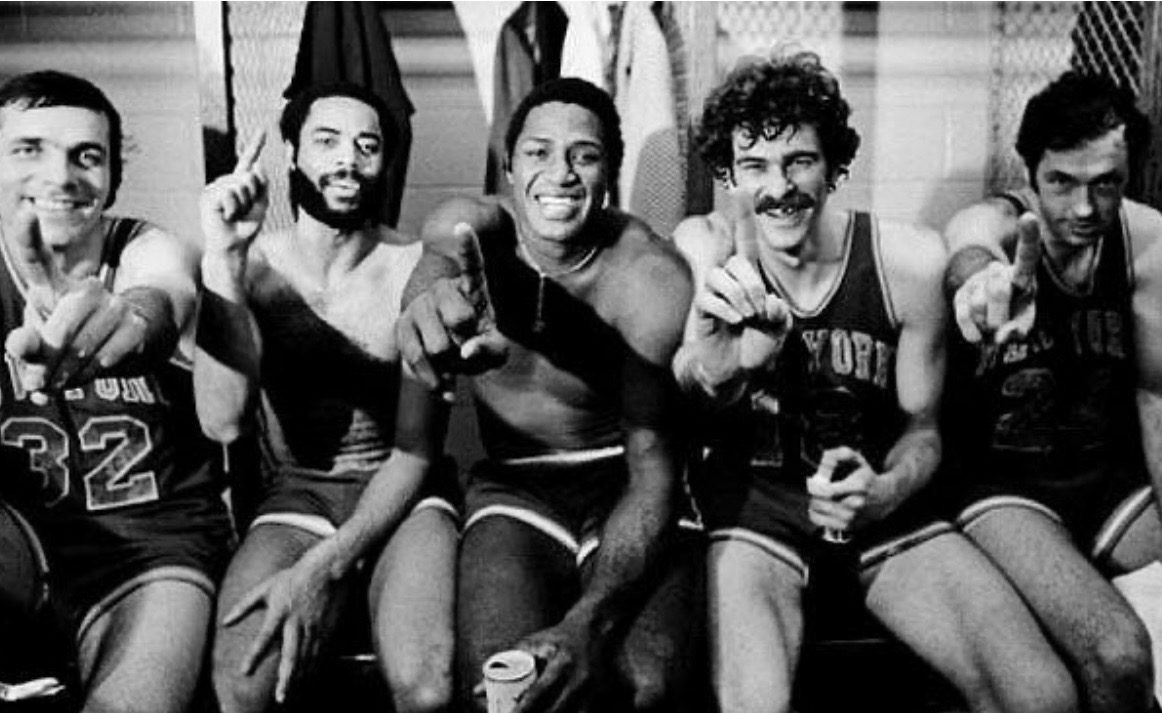
In 1946, when college basketball was gaining immense popularity, sports journalist Max Kase proposed creating a professional league for college graduates—the future NBA. The idea interested Boston Garden owner Walter A. Brown, and on June 6, 1946, a meeting was held at the Commodore Hotel in New York where the Basketball Association of America (BAA) was founded.
Among the participants was Ned Irish, the president of Madison Square Garden.
The team was initially coached by Neil Cohalan, and a year later, he was replaced by the legendary Joe Lapchick. On November 1, 1946, the Knicks played the first game in league history and defeated the Toronto Huskies 68–66.
Under Lapchick’s leadership, the team reached the playoffs nine years in a row, and in 1950, they made history by signing the first African-American player, Nat “Sweetwater” Clifton. In 1952–1953, the Knicks played in the NBA Finals three consecutive times, but the championship slipped away.
After this, a slump occurred. Coaches changed, results worsened, and in 1962, the team allowed a legendary 100 points to Wilt Chamberlain.
The Golden Era of the Knicks (1967–1985)
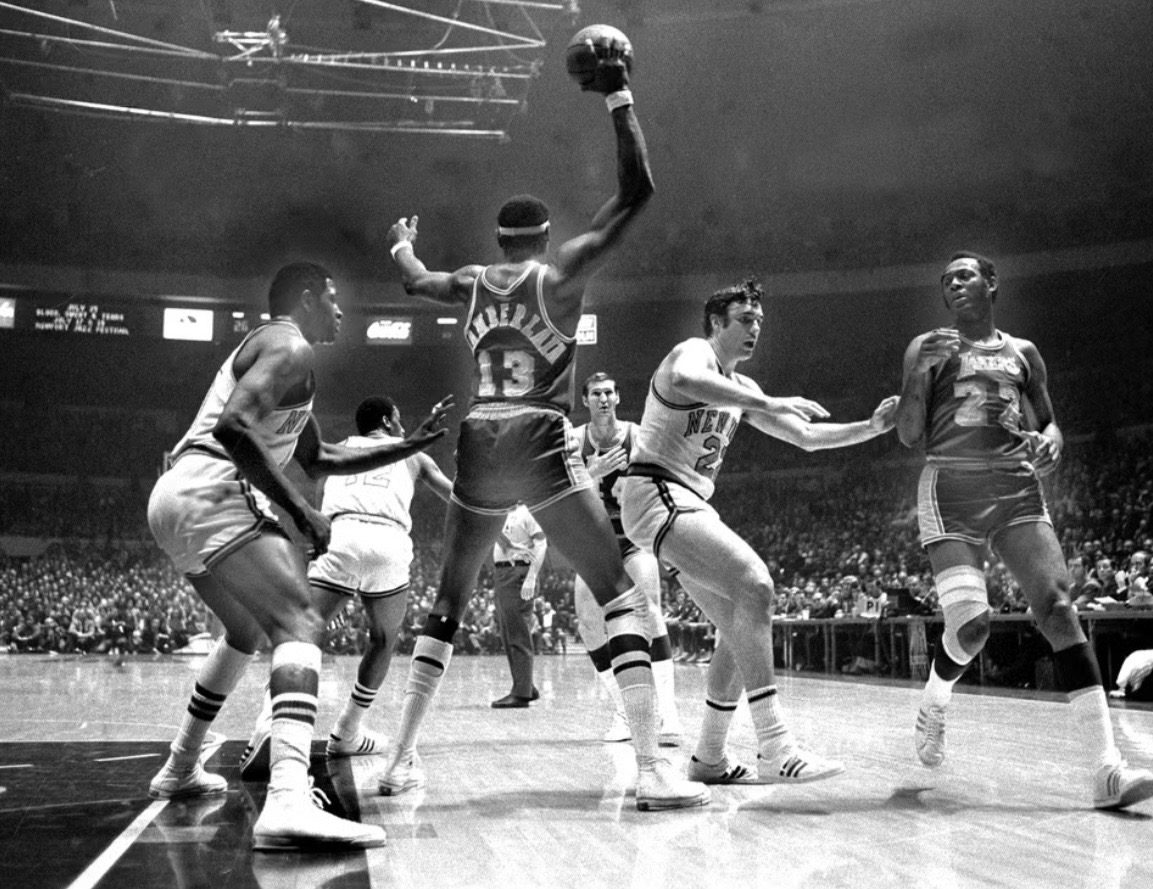
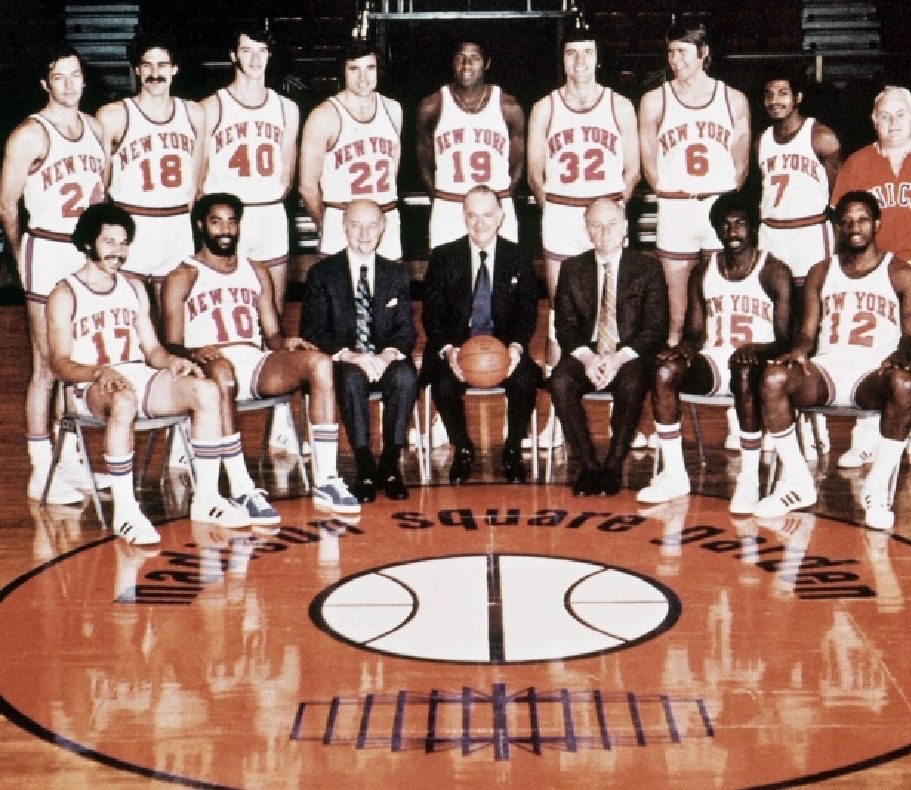
Following a crisis start to the 1967–1968 season, the Knicks experienced a revival under the guidance of Red Holzman, who restored the team’s fighting spirit and discipline. Young stars Willis Reed, Walt Frazier, Phil Jackson, and Dick Barnett laid the foundation for a new dynasty, and with the arrival of Dave DeBusschere, New York once again became a formidable force after many years.
The 1969–1970 season went down in history: 18 consecutive wins, Reed’s legendary walk onto the court while injured in the Finals against the Lakers, and the first NBA title in club history. In 1973, the Knicks repeated the triumph, confirming their status as one of the league’s best teams. This was the Golden Era of Madison Square Garden—a time when New York breathed basketball and believed in its heroes.
The Ewing Era (1985–2000)
In 1985, the Knicks began a new chapter by drafting Patrick Ewing—the future face of the franchise. Under Pat Riley’s leadership, the team became a symbol of tough defense and uncompromising character, consistently reaching the later stages of the playoffs and engaging in epic battles with Michael Jordan’s Bulls.
The 1993–1994 season was the peak, culminating in the NBA Finals against the Houston Rockets. In 1999, the Knicks made a sensational run from the eighth seed to the Finals. However, a championship remained elusive. Ewing’s departure in 2000 ended an era of struggle, drama, and New York grit that Madison Square Garden fans still remember.
From Chaos to New Hope (2000–Present)
The early 2000s were a period of instability for the Knicks. After the arrival of Isiah Thomas, the team became mired in constant coaching changes and scandals, and results remained far below expectations. Only with the arrival of Donnie Walsh and Mike D’Antoni in 2008 did a gradual roster overhaul begin.
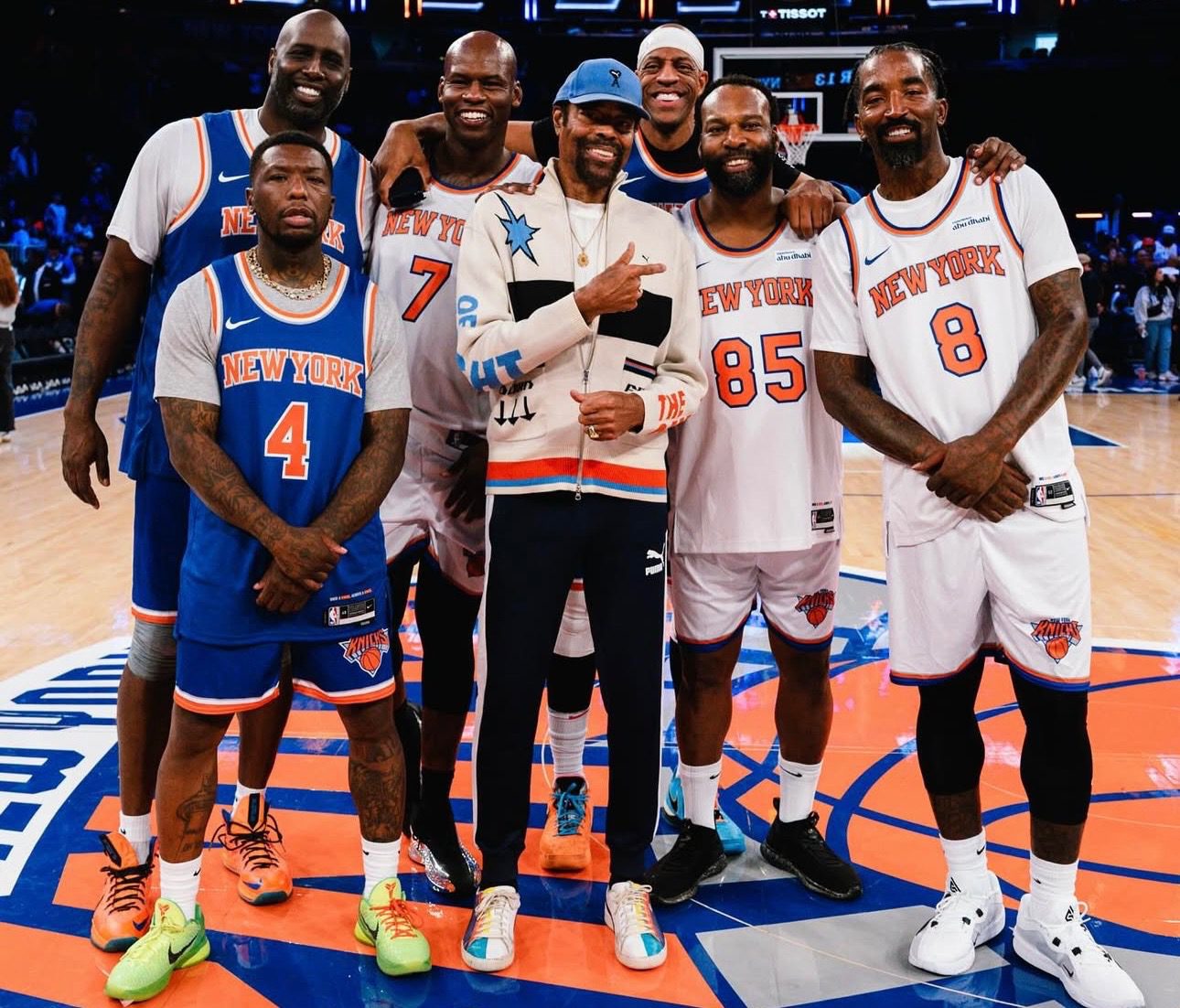
A new era arrived in the 2010s: the signings of Amar’e Stoudemire and Carmelo Anthony returned the team to the playoffs. However, the tenure of Phil Jackson as team president did not bring a breakthrough, and despite the emergence of Kristaps Porziņģis, the Knicks again plunged into a rebuilding period. After the disappointments of the 2021–2022 season, when the Knicks finished eleventh in the East, the club revamped its roster and focused on stability. In the 2022 off-season, a new leader took charge: Jalen Brunson, who quickly became the engine of the revival alongside Julius Randle and RJ Barrett.
In the 2022–2023 season, the Knicks earned 47 wins and won a playoff series for the first time since 2013, defeating Cleveland before falling to Miami. The following year, they took a step forward—50 wins and a trip to the second round, where they lost a grueling series to Indiana. In the summer of 2024, New York made a bold move, trading Randle for star center Karl-Anthony Towns, laying the groundwork for a new era at Madison Square Garden.
The Evolution of the New York Knicks’ Style
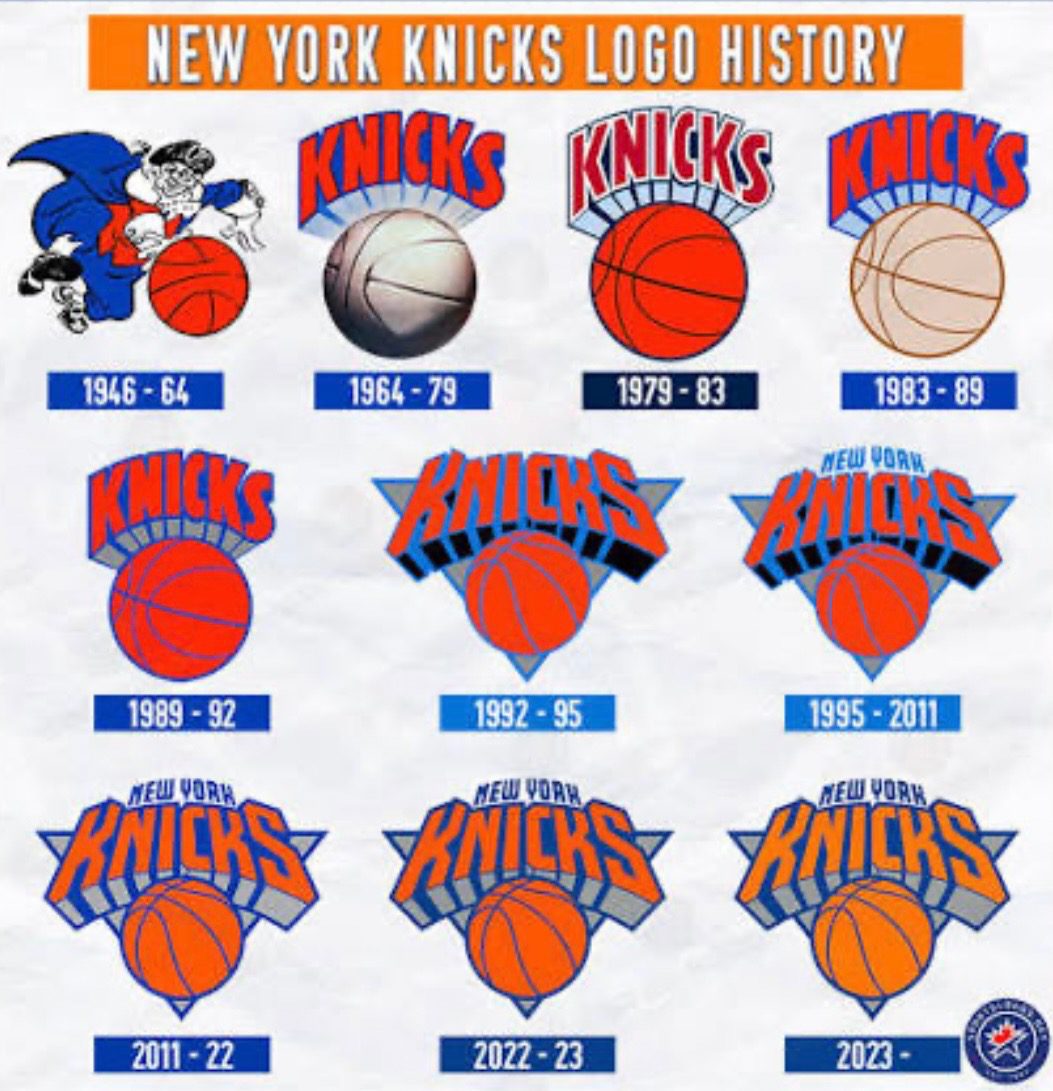
The history of the team’s logo began in 1946 with the charming character “Father Knickerbocker” playing basketball on a blue and orange background. The home uniform was white, the away uniform was blue, with simple lettering and the first experiments with stripes in the 1950s.
In 1964, the Knicks introduced a new logo—the word Knicks on a brown basketball. At the same time, the uniform was updated: arched lettering, colored trim, and stripes on the shorts. This aesthetic accompanied the team for decades.
From 1968 to 1979 and from 1983 to 1997 was the era of championship uniforms. The arched “NEW YORK” inscription on the home and away uniforms became a symbol of the 1970 and 1973 titles. Their style, with a vertical arch and side stripes, influenced the design of many teams in the NHL and MLB.
1979–1983: A time of bold change. Maroon and navy blue uniforms, stylized numbers, and an “NY” logo on the shorts created a vibrant alternative to the classic colors.
Since 2012: The modified triangle and updated championship-era uniform. The slogan “Once A Knick, Always A Knick” was introduced on the collar, gray color was added as an accent, and retro elements from the 1970s uniform were incorporated.
Special uniforms are released for certain holidays (St. Patrick’s Day, Christmas), sometimes featuring orange, blue, or green hues, paying tribute to the culture and traditions of New York.
The New York Knicks’ Fierce Rivalries
- The Boston Celtics
Old rivals since 1946, the Knicks and Celtics reflect the historic rivalry between New York and Boston. The teams have met nine times in the playoffs, most recently in 2013. The Knicks won that series flawlessly, 3-0.
- The Brooklyn Nets
The geographically closest rival: Manhattan versus Brooklyn. They have met three times in the playoffs; the Knicks won two series (1983, 1994), while the Nets celebrated their last victory in 2004.
- The Chicago Bulls
The peak of this rivalry occurred in the late 1980s and early 1990s, when both teams battled in the playoffs with legends like Michael Jordan, Scottie Pippen, Patrick Ewing, and John Starks. After a hiatus in the 2000s, the rivalry was revived with the arrival of Derrick Rose, Amar’e Stoudemire, and Carmelo Anthony.
- The Indiana Pacers
The rivalry began in 1993 and was marked by intense playoff series, especially due to the clash between Reggie Miller and Knicks fan Spike Lee. The 2013 and 2024 series proved that the tension remains to this day.
- The Miami Heat
The Knicks’ fiercest inter-divisional enemies. Every year from 1997 to 2000, they competed in the playoffs, often in maximum-length series. The last series took place in 2012, when the Heat won 4-1 and subsequently won the NBA Finals.
New York Knicks Legends
- Patrick Ewing.
The undisputed symbol of the Knicks of all time. Played from 1985 to 2000, scoring over 23,000 points and grabbing over 10,000 rebounds. Known for his smooth set jump shot and strength.
- Walt “Clyde” Frazier.
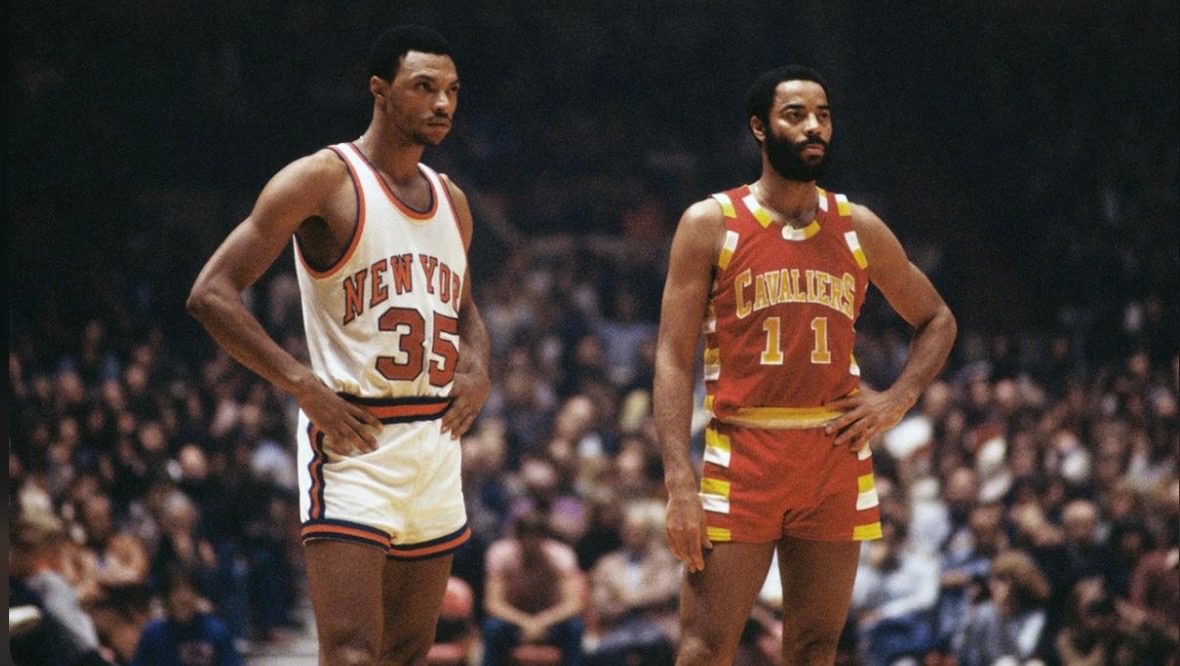
Point guard of the 1960s–1970s and a key figure on the championship teams. In ten years, he scored over 14,000 points and over 4,500 rebounds, and was a formidable opponent on both offense and defense.
- Bill Bradley.
Smart and strategic forward, Frazier’s partner. Known for his accuracy on offense and team spirit. In ten years with the Knicks, he scored over 9,000 points and 2,300 rebounds, and later became a U.S. Senator.
- Willis Reed.
Center and forward of the 1960s–1970s, star of two championship teams. Scored over 12,000 points and over 8,400 rebounds, and was an emotional and physically strong leader.
- Nat Clifton.
One of the first African-American NBA players, played from 1950 to 1957. Made a great contribution to the team’s development, scoring nearly 5,000 points and over 4,000 rebounds.