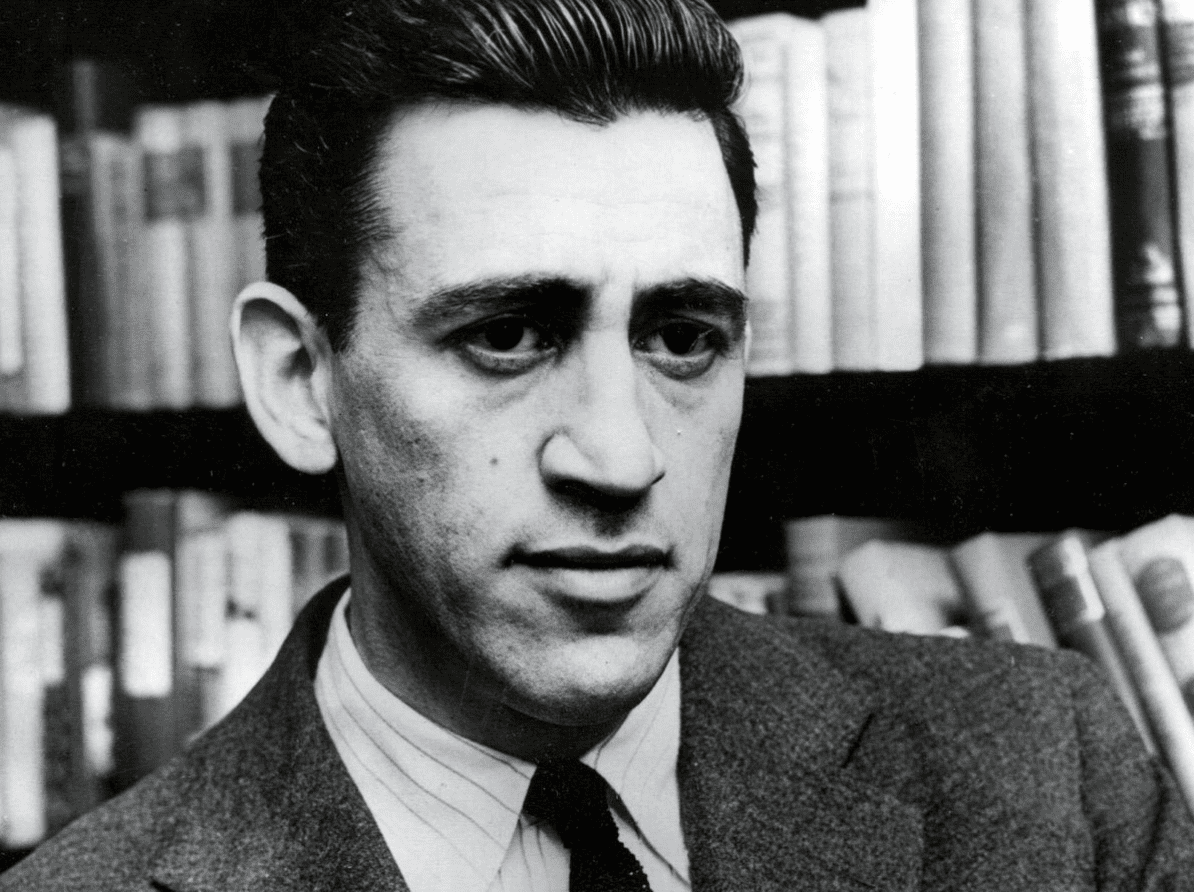

J.D. Salinger earned a reputation not just as a talented writer, but also as a profoundly enigmatic figure. His works stirred up a whirlwind of emotions, his personal life sparked endless rumors, and his reclusive lifestyle kept journalists on their toes. Salinger was often criticized, rejected, and his talent questioned. Yet, as time has shown, he was simply ahead of his time—an absolute genius whom many couldn’t quite grasp. Find out more on i-new-york.
Finding His Way
Jerome David Salinger was born on the first day of 1919 into a wealthy Jewish family in New York City that was involved in the import business. This is where he spent his youth and came of age. While he could have easily been considered part of the city’s “golden youth,” he always stood out. His parents did everything they could to ensure he and his sister lived the best possible life. They had a home in a prestigious neighborhood, attended private schools, traveled, and had access to countless opportunities. The problem was, Jerome saw a different path for himself, and he was determined to take it.
Jerome was a creative soul from an early age, and his talent was evident from childhood. His first passion was drama, and he dreamed of becoming an actor. As a student, he was incredibly active. He performed in plays, captained the fencing team, wrote for the school newspaper, studied multiple languages, composed poetry, and joined numerous clubs. Classmates remember Jerome as a charismatic and sociable person who loved to make people laugh. But there was another side to the story. If he poured himself into extracurricular activities, his academic performance suffered. The young man bounced between many different schools, finding it difficult to adapt to new environments. His father, in particular, didn’t understand his son’s creative pursuits. What’s more, Jerome faced prejudice from his peers because of his Jewish background. His parents tried everything—from public schools to the McBurney School and a military academy—in an attempt to find the right fit.
Amidst his family’s concerns, Salinger held firm to his own beliefs and continued his search for purpose. This quest continued in college, where he would enroll in an institution only to drop out shortly after. His father, Sol, also tried to pull his son into the family business, sending him on trips across Europe to study languages and culture. But this is where the main difference between father and son lay. Jerome had a completely different outlook on life: he had no interest in business, he disregarded material wealth, and his passion was solely creativity. And though his journey was long and difficult, he confidently followed his own path—a path that would eventually lead him to success.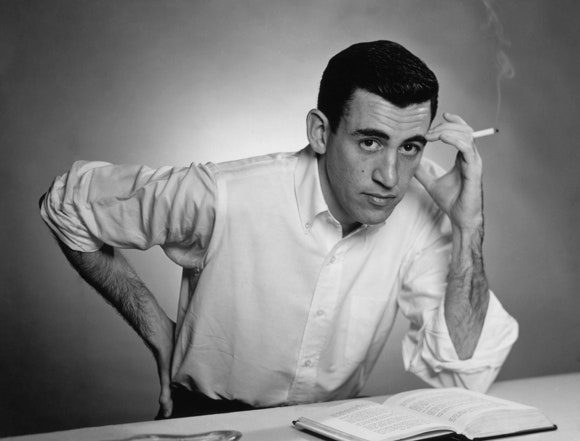
A Writer’s Career
Salinger’s final attempt to find his place in a university was the most successful. At Columbia University, he met his first mentor, Whit Burnett, who taught a writing course and saw the young man’s potential. Burnett, who was also the editor of Story magazine, encouraged Jerome to write. Among the countless works Salinger produced, Burnett published several, and the young writer made his debut in 1940 with the short story The Young Folks. Just a year later, Jerome started knocking on the door of The New Yorker. What followed was a series of rejections and a world war that changed his life. Salinger went to Europe, took part in many famous operations, and continued to write even on the front lines. A few of his pieces were even published during the war, but it wasn’t the kind of success he was hoping for.
After returning from the war, he continued to submit his work to publishers. The turning point came in 1948, when The New Yorker published A Perfect Day for Bananafish. Salinger had worked on the story for a long time with editors who recognized its quality. The magazine offered him a contract, and he finally began to gain recognition. During this period, the writer produced many works, with For Esmé—with Love and Squalor and Uncle Wiggily in Connecticut becoming the most famous. Early in his career, the artist learned the harsh realities of the industry, including intense criticism, professional betrayals, and failed collaborations. But he knew exactly where he was headed.
That peak was The Catcher in the Rye—the manifesto for an entire generation of teens and one of the most controversial works in literary history. Jerome had always known he would write a masterpiece, often telling classmates and acquaintances about it. While many doubted the existence of the book, Salinger finally published his great American novel in 1951. It didn’t reach readers without a fight; before its publication, many editors had their doubts. It was a risk that could either fulfill expectations or ignite a firestorm. With Salinger’s book, it did both, which is likely why it became such a phenomenon. “Profane, immoral, and depraved” were just a few of the words used by those who sought to ban it. For the majority, however, the book was a masterpiece that had an undeniable impact. Salinger was indeed years ahead of his time, as The Catcher in the Rye continues to stir up controversy to this day.
Salinger’s career didn’t end there. He continued to work with The New Yorker, and in 1953, he released another hit: the collection Nine Stories. It included both his previously known stories and some that had been rejected by publishers. This book is often considered to be on par with The Catcher in the Rye, with many even regarding it as his best work. After that, the famous writer only gave his readers a handful of new stories: Franny and Zooey, Raise High the Roof Beam, Carpenters, and Seymour: An Introduction. His final published work was the novella Hapworth 16, 1924. As for the number of unpublished works, we can only guess.
A Contradictory Character
Despite J.D. Salinger’s immense talent and the countless conversations his work inspired, he also captured public attention with his lifestyle. The writer was a man of many contradictions; he wasn’t afraid to speak his mind and only did what he felt was necessary. For this, he earned the reputation of a controversial figure, and everyone wanted to know more about him.
Jerome’s character, like anyone’s, was shaped from childhood, but it evolved over time as events unfolded. From a young age, the writer was incredibly creative and active. He was fascinated by movies, acting, school newspapers, and various clubs and societies. He grew up dreamy, creative, and extremely charismatic. The more his father tried to stifle his passion for creative professions, the more Jerome rebelled. These traits followed Salinger into his college years. It was then that he truly began to unlock his talent and became fully convinced that he would write something legendary. The writer was incredibly ambitious, yet at the same time, a rebel. The paradox was that while he craved the privileges that came with his status, he also despised those very opportunities.
Another pivotal period in Salinger’s life was World War II. He took part in many military operations, worked in counterintelligence, and saw the horrors of the concentration camps firsthand. These events were forever seared into Jerome’s memory, inspiring many of his works. After the war, he turned to spiritual development. He experimented with many different practices, rituals, and religious canons. He would discover something new, explore it, and then move on to the next. And after gaining fame, J.D. Salinger became a well-known recluse in his home in Cornish.
From the moment he left his parents’ home in New York, the writer rarely appeared anywhere. More than anything, Jerome Salinger wanted to be famous for his work, but that very popularity eventually forced him into isolation. He rarely interacted with the townspeople, only left his house when necessary, and actively shut down any attempts to expose his life. For many journalists, an interview with the author was considered the highest measure of success, yet Salinger’s public comments can be counted on one hand. He sued every biographer, publisher, and media outlet that tried to print something about him. He considered any intrusion into his private life the ultimate crime. The author held these convictions for the rest of his life, which ended at the age of 91.
His Impact
J.D. Salinger became an influential writer for countless people. His life is shrouded in mystery, his work is filled with profound meaning, and the scale of his personality is impossible to overstate. The best way to describe the author is that he was a man who sparked endless controversy. And isn’t that a testament to his genius? He was widely criticized yet also sought after; his books were considered immoral but became bestsellers; his reclusive lifestyle was called strange, but his choice was also respected. Most importantly, Salinger managed to become the voice of many generations.
While he didn’t publish many works, he left behind a large number of unpublished pieces. These are eagerly anticipated by writers, critics, and readers alike. The books that were made public have served as a guide for other writers. Haruki Murakami, Stephen Chbosky, John Green, and many other authors have acknowledged Salinger’s influence on their work. Readers around the world continue to be amazed by the meaning behind his stories. And the most interesting thing is that the phenomenon of this writer will never be fully understood. Jerome put many of life’s stories on paper, became the voice of teenagers, and delved into the depths of human emotions. Many books, films, and articles have been dedicated to him. Yet the writer always sought only peace and privacy. This is why he would have considered many of these works an invasion of his personal life. But for the public, he has become such a significant figure that the number of these works only continues to grow. And that means J.D. Salinger not only was ahead of his time—he became timeless.