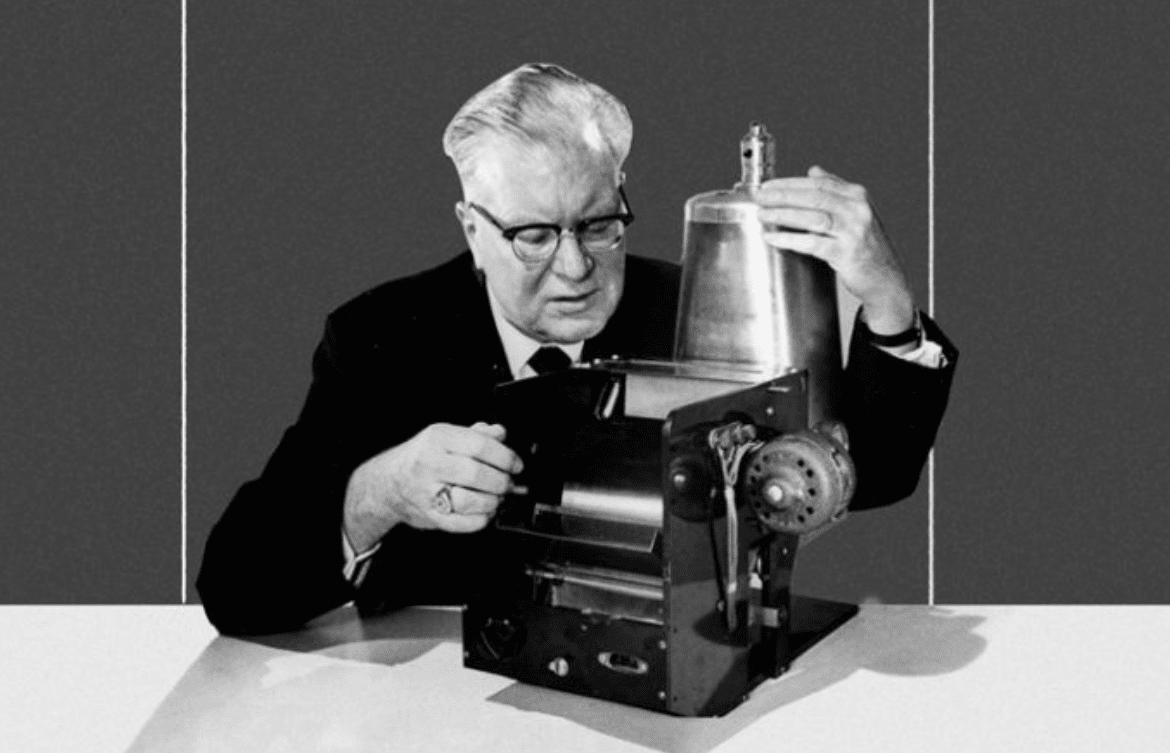

The 21st century is the age of technology and innovation. Every person on the planet lives in comfortable and affordable conditions that would not be possible without the technological process. However, many individuals forget about it and take what they have for granted. After all, convenience, which we now regard as an essential aspect of modern life, was made possible by the groundbreaking inventions of the 20th century. One of these innovative solutions, implemented back in the 20th century, was xerography. Many people are unfamiliar with this term, but it plays an important role in our daily lives. Xerography, a method invented by Chester Carlson, was a groundbreaking technology, followed by the advent of a more current form of photocopying, as well as a well-known gadget for all of us – the copier. Learn more at i-new-york.
The story of Chester Carlson
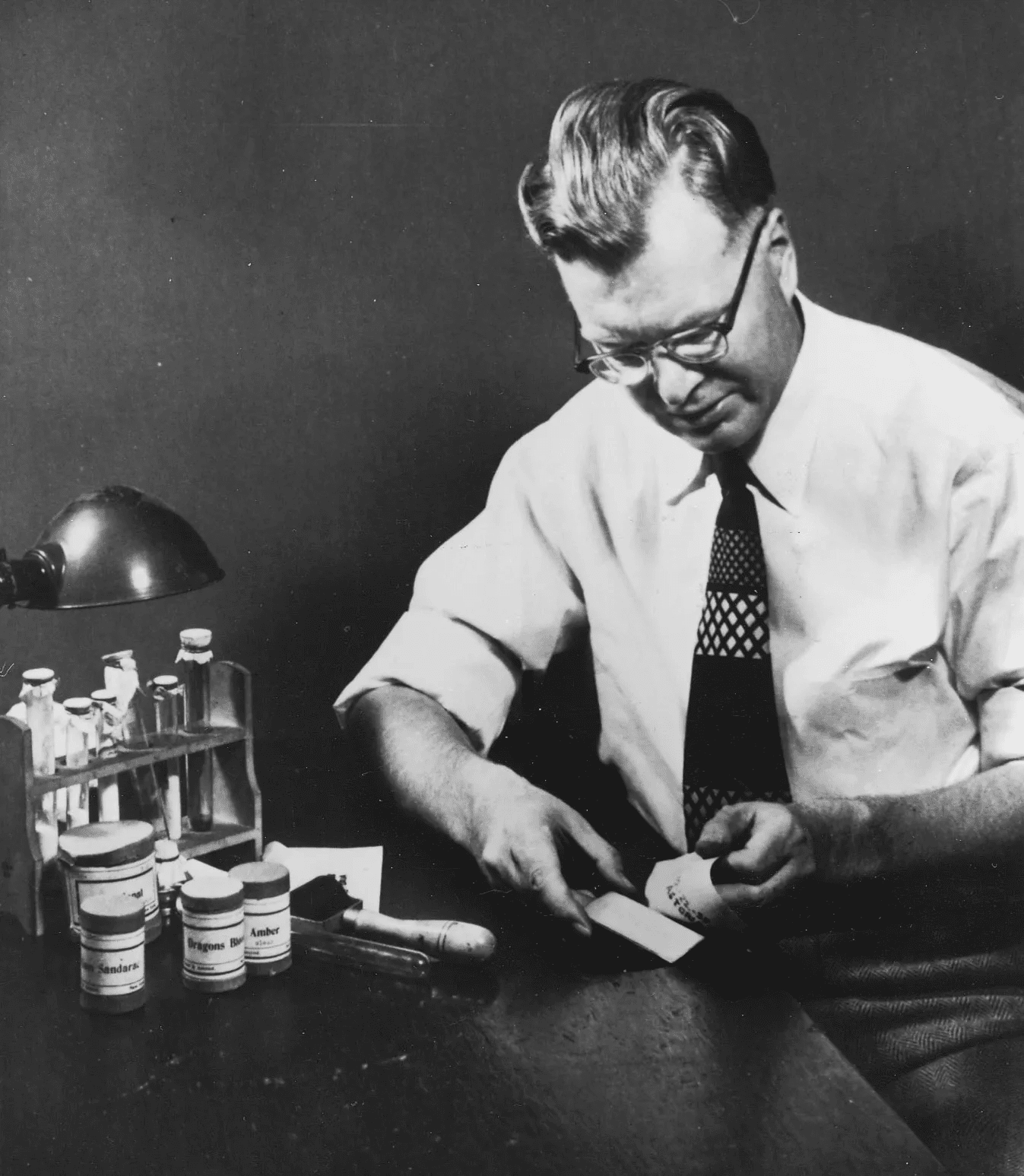
Although Chester Carlson may not be as well-known as Tesla, Edison or Bell, his discovery was nonetheless important.
The future inventor was born in Seattle in 1906. He was an exceptional young man since he was drawn to learning from an early age. While other children played in the yard, Carlson developed his creativity by conducting various experiments. Also, Carlson was fascinated by the work of Thomas Edison and other renowned inventors. He read a lot about their accomplishments, which motivated him to become an inventor, change his financial situation and make a significant contribution to society.
Also, since childhood, Carlson was interested in graphic arts. While the other children dreamed about toys, he dreamed about his own typewriter. At school, he became interested in chemistry. His passion for it motivated him to launch a small school magazine for amateur chemists.
In his spare time, Carlson held a part-time job at a local printing house. During this period, he got his first experience of working with a typewriter. Before that, he created his own font and printed a little newspaper. However, he encountered difficulties with his first work, which required him to copy the text, so typing took a long time. The issue prompted Carlson to consider duplicating processes.
Following graduation from the California Institute of Technology, Carlson relocated to New York City and took a job at Bell Telephone Laboratories. It was in New York that his path to fame began.
The introduction of xerography
After coming up with the notion of duplicating text, Carlson got a notebook in which he decided to record all of his invention ideas. So, while working at Bell Telephone Laboratories in New York, he wrote down over 400 innovative ideas. Nonetheless, he was more committed to his first idea.
While working as a patent attorney at Bell Telephone Laboratories, Carlson became even more dissatisfied with the slow and time-consuming procedure of copying documents. At that time, the primary tool used for copying various papers, texts or documents was carbon paper. The method was extremely messy, time-consuming and unsatisfying. As a result of this issue, Carlson was even more driven to discover a more effective method of document copying. This is how xerography was born.
In particular, in the 1930s, Carlson began to actively research the idea of a novel way of copying papers. He even came up with a name for this method – “electrophotography”. Although his method became known as “xerography” later on. Carlson’s concept of replicating documents was simple but brilliant. Specifically, it included transferring images from one surface to another using static electricity.
The photocopying process and its development
Xerography was based on several key principles. The photosensitive drum needed to be charged with static energy and exposed to light through a document or image. Areas exposed to light lost their charge, resulting in an electrostatic image of the original document. A specific powder was then applied to the drum, which stuck to the charged areas, thus creating an image. After that, it was necessary to transfer this image to a blank sheet of paper and fix it with heat to create an exact copy of the original document.
Despite being a revolutionary discovery, Carlson’s invention was met with various challenges and skeptical remarks. Also, many companies refused to invest in its development.
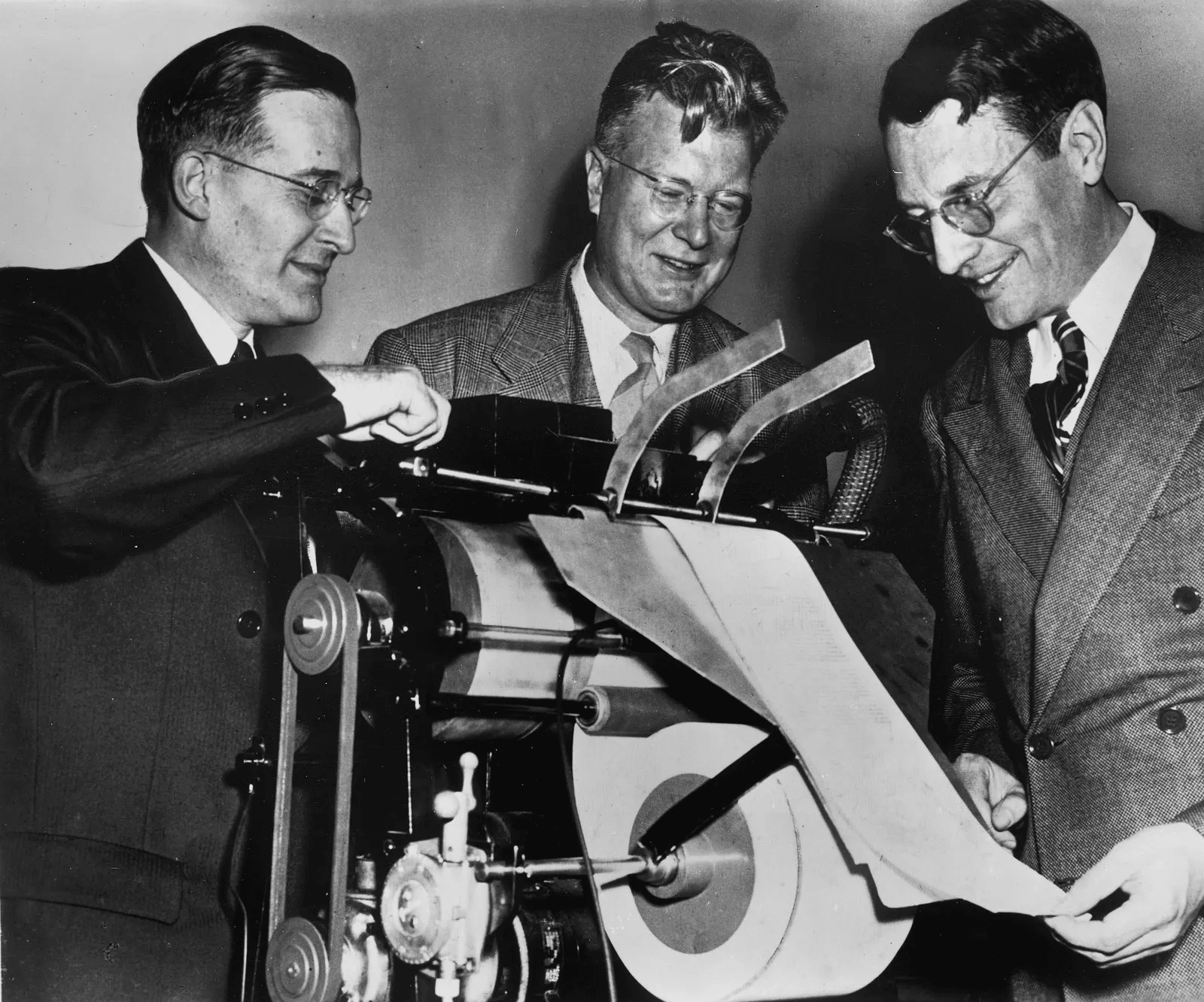
Carlson and his invention did not make a breakthrough until the late 1940s. Then, he became a partner of the well-known Haloid Company (Xerox) and signed a license agreement for his technology. The partnership marked the beginning of the widespread commercialization of xerography. This provided a quick boost to the development of photocopying.
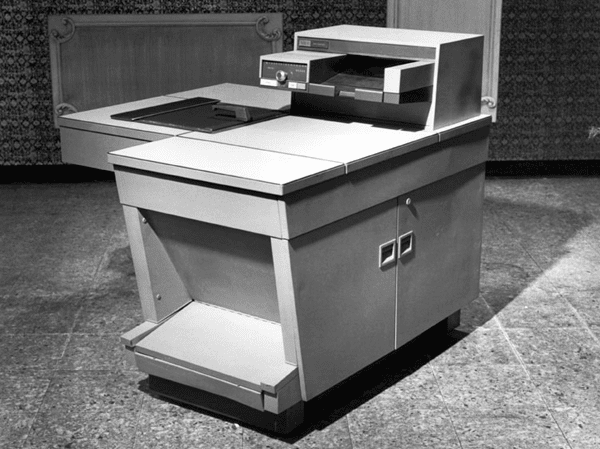
Already in 1949, Haloid introduced the world’s first commercial photocopier, the XeroX Model A Copier. In the 21st century, such devices are known as copiers.
Following the launch of the XeroX Model A Copier, a new and improved model was introduced. It was discovered that xerography is a highly essential and useful method that has the potential to improve the lives of millions of people all over the world.
Chester Carlson’s invention of xerography forever transformed the way papers and images were copied. His aspirations and passion for science and innovation definitely paid off. He made history and rose to become one of the greatest inventors of the 20th century, along with the Edison he admired so much. Carlson’s invention not only made millions of people’s lives easier, but it also started a whole new era for humanity.