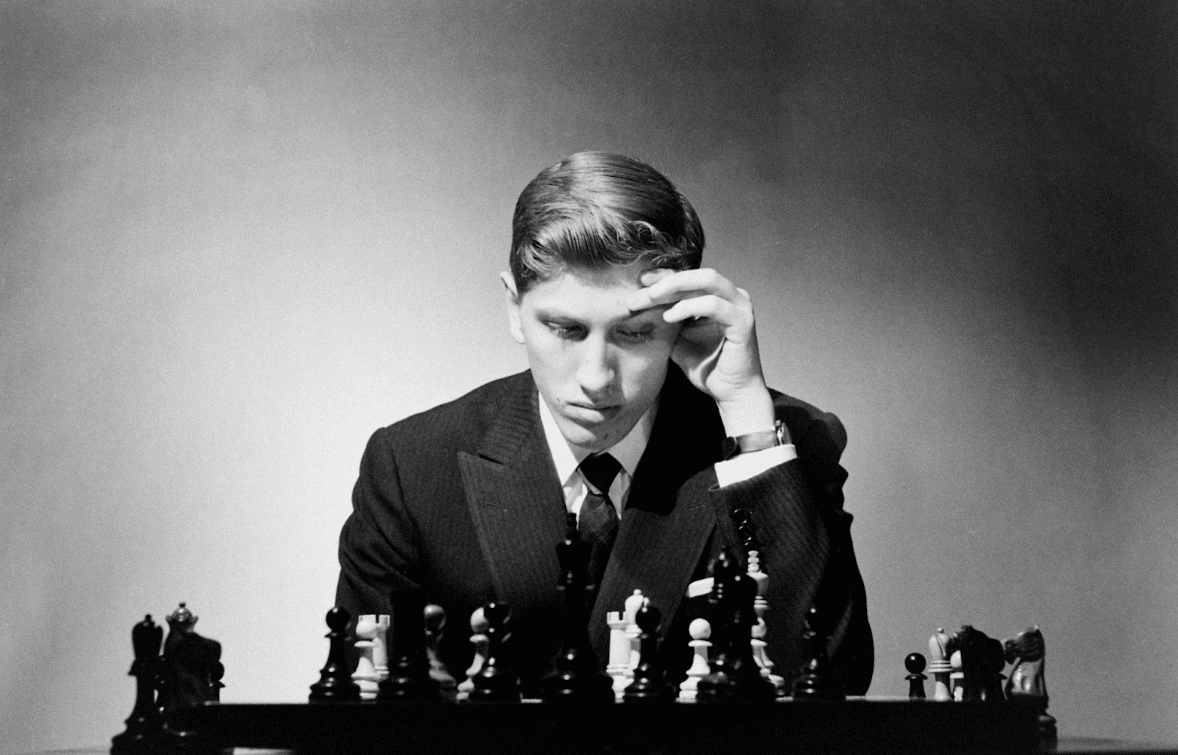

Chess is one of the most ancient strategic board games. Each player controls an “army” of 16 pieces, consisting of a king, queen, two rooks, two knights, two bishops and eight pawns. The goal of the game is to checkmate the opponent’s king while protecting your own. Read more at i-new-york.
It is believed that chess originated in India before the end of the 6th century A.D. Since then, the game has become popular worldwide. People devised ground rules and strategies. Therefore, there have been countless prominent chess players throughout the world, one of whom was a native of New York. This story will be about Bobby Fischer, a true chess genius of the 20th century.
The story of a chess prodigy
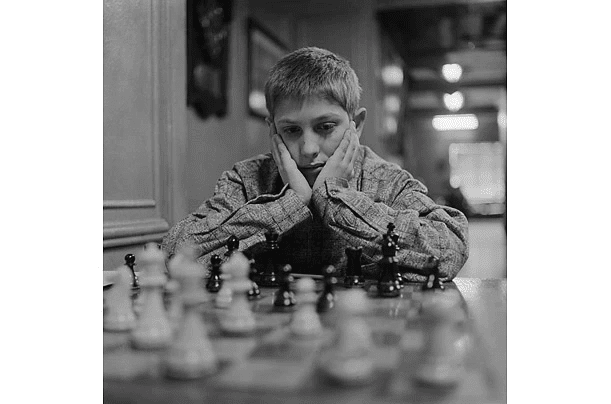
The future chess player Fischer was born in Chicago in 1943. His family moved to Brooklyn, NY, when he was a kid. Growing up in Brooklyn, Fischer was introduced to the diverse culture and vibrant energy of the city. Little did anyone suspect back then that the chess legend would develop particularly in this place.
One day, Fischer’s family bought a set of chess at a local store and played with each other for a long while. Eventually, only Fischer preserved his interest in chess. He had to play many of his first games against himself. This is how Fischer’s innate passion for chess arose. One summer, his whole family went on vacation to Patchogue, Long Island, NY. On that trip, the young boy came across a book of old chess games. This became the impetus for his intensive study of the game.
Development of chess skills
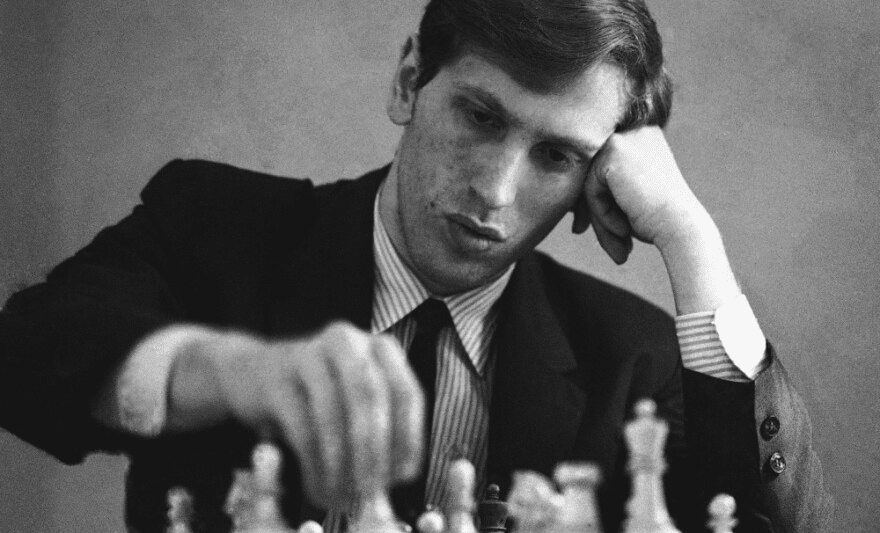
It should be noted that Bobby was only 6 years old when he became interested in chess. He taught himself the rules, various games and strategies. He even was his own opponent because he couldn’t find a partner his age.
Fischer was so engrossed with chess that his family even started to worry that he was spending too much time by himself. To rectify the situation and find Bobby an opponent of the same age, his family wrote a letter to a local newspaper, the Brooklyn Eagle, asking them to place an ad about seeking a young partner for their son to play chess with. Unfortunately, the Brooklyn Eagle had to decline the request as no one could qualify it.
In turn, the letter from Fischer’s family was forwarded to the dean of American chess, Hermann Helms. Shortly thereafter, a reply to the letter was received. Helms informed them that famous American chess player Max Pavey, who had won the title of Scottish champion, would hold a simultaneous exhibition on January 17, 1951.
Young Fischer eagerly participated in this exhibition but lost it. Chess Master Pavey defeated one player after another. When it was Bobby’s turn, the boy lasted for 15 minutes, attracting a huge crowd of spectators. This game marked his professional chess career.
Participation in Brooklyn Chess Club and first mentoring
The coach and outstanding chess player of that time, Carmine Nigro, was also present at the 1952 chess exhibition in New York. He was so amazed by Fischer’s game that decided to become his mentor. Thanks to his guidance, Fischer became a member of Brooklyn Chess Club. The club created the ideal conditions for the young prodigy to develop his skills. He met and played against experienced players who, acknowledging and seeing his exceptional talent, helped him to enhance it. It was Carmine Nigro who was Fisher’s mentor for a long time. He introduced him to advanced chess concepts. As a teacher and mentor, Nigro instilled discipline and strategic thinking in Fischer, which subsequently became his hallmark.
Fischer’s first chess tournament as a member of Brooklyn Chess Club took place in 1952 at his home. He remained a member of this club and Nigro’s mentee until the latter went away in 1956. After that, Bobby joined the Manhattan Chess Club. But he didn’t stay long there. In the same year, the young man transferred to the Hawthorne Chess Club. His mentor became John “Jack” W. Collins.
Achievements in chess
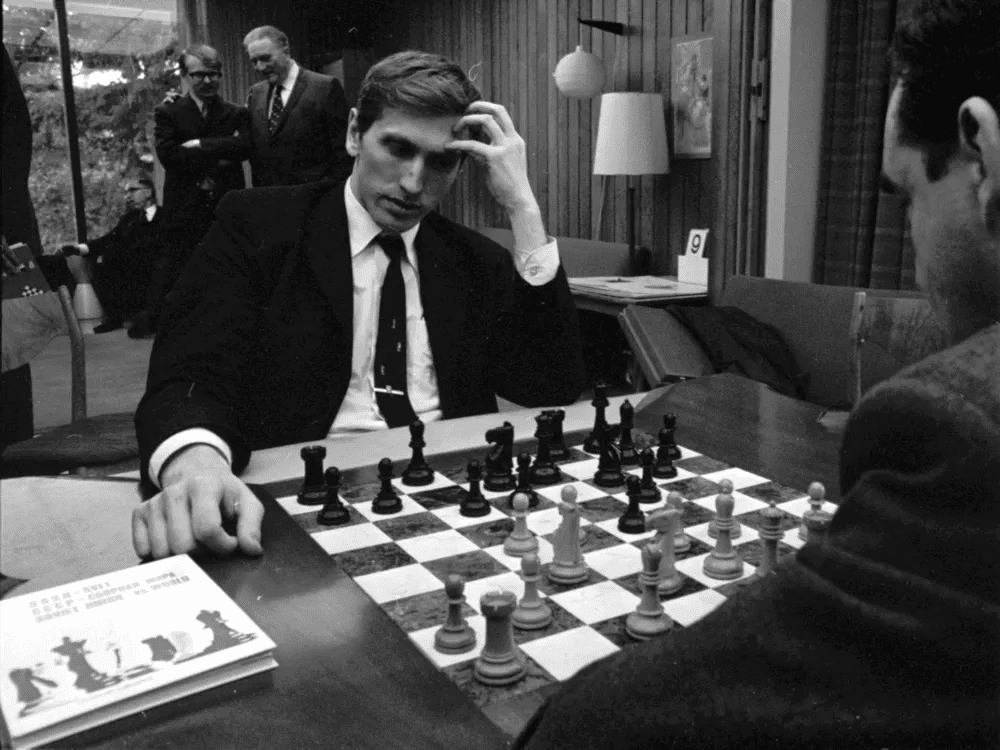
Fischer’s journey to success in chess was characterized by tireless work, perseverance and a pursuit of excellence. He honed his skills by playing countless games with various opponents as well as delving into chess literature.
The first breakthrough of Bobby as a chess player occurred in 1956 when he won the US Junior Chess Championship in Philadelphia. He was just 13 years old. This victory brought him national attention.
In 1958, the 15-year-old Fischer became the youngest grandmaster in history by winning the US Chess Championship. This remarkable achievement cemented his status as a chess prodigy. But it was not the end of Fisher’s career. He continued to actively represent his country in international chess championships, earning new titles and accomplishments.
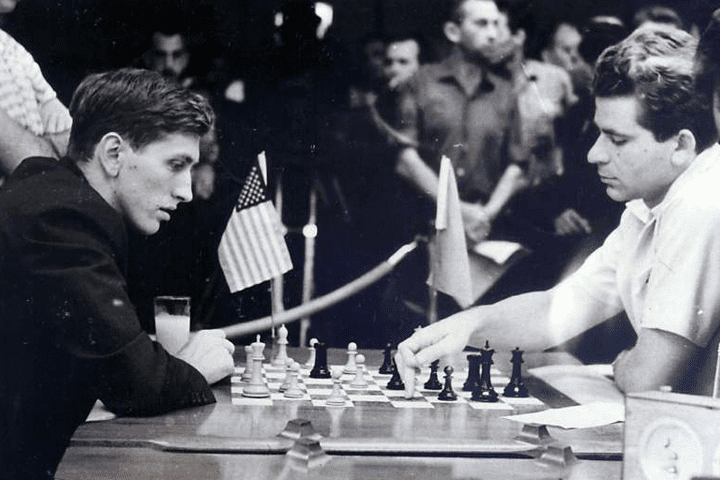
Bobby gained worldwide fame when he challenged and beat Boris Spassky in 1972, who was then-chess champion. This chess match was a grand historic event. Fischer not only earned victory and global recognition but also sparked a chess boom in the United States. After the 1972 World Chess Championship, Fischer did not play in public for almost 20 years.
Fisher passed away in 2008 when he was 64 years old. For New York City, he forever remained a symbol of indomitable spirit and a true legend of chess.