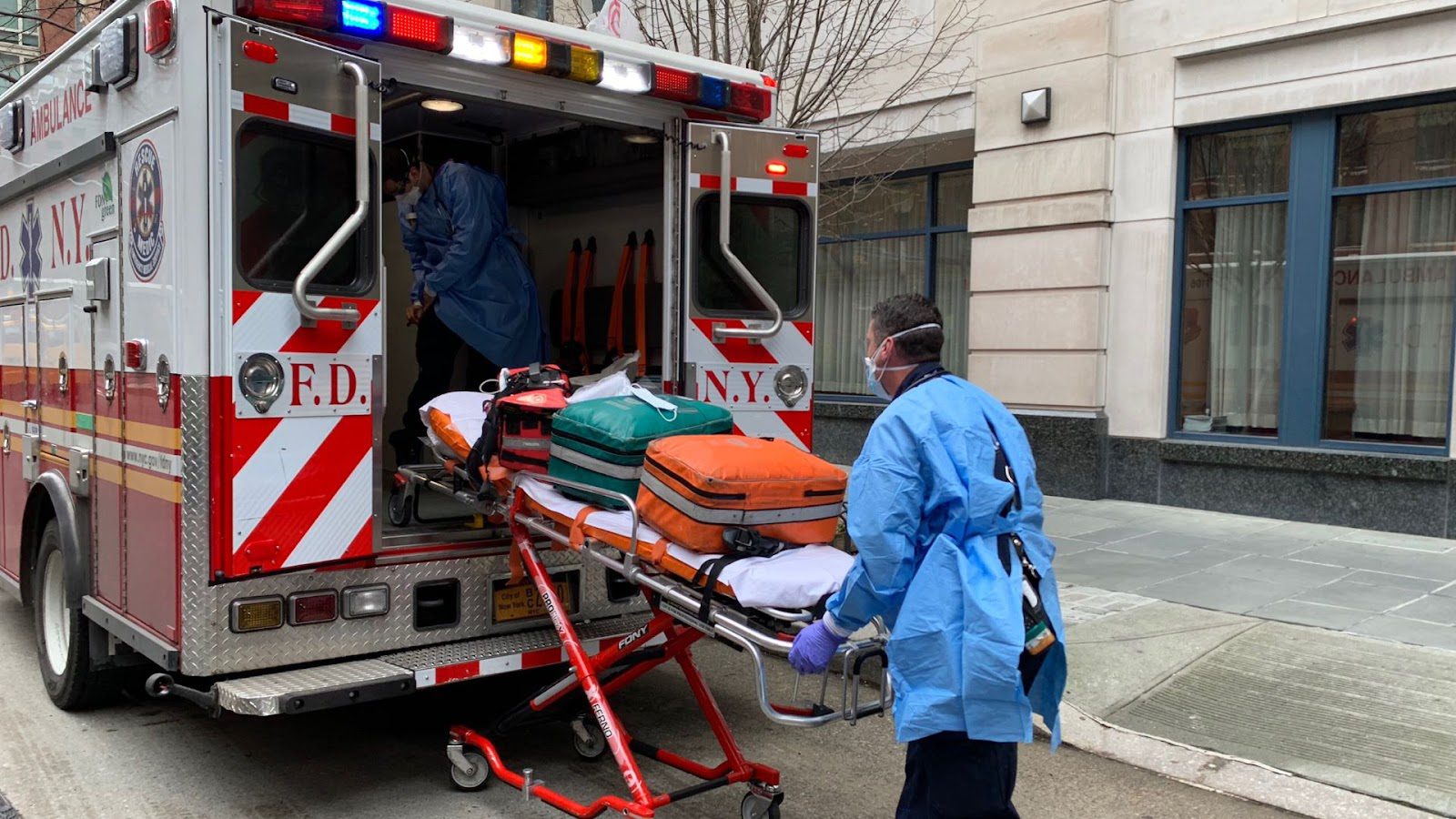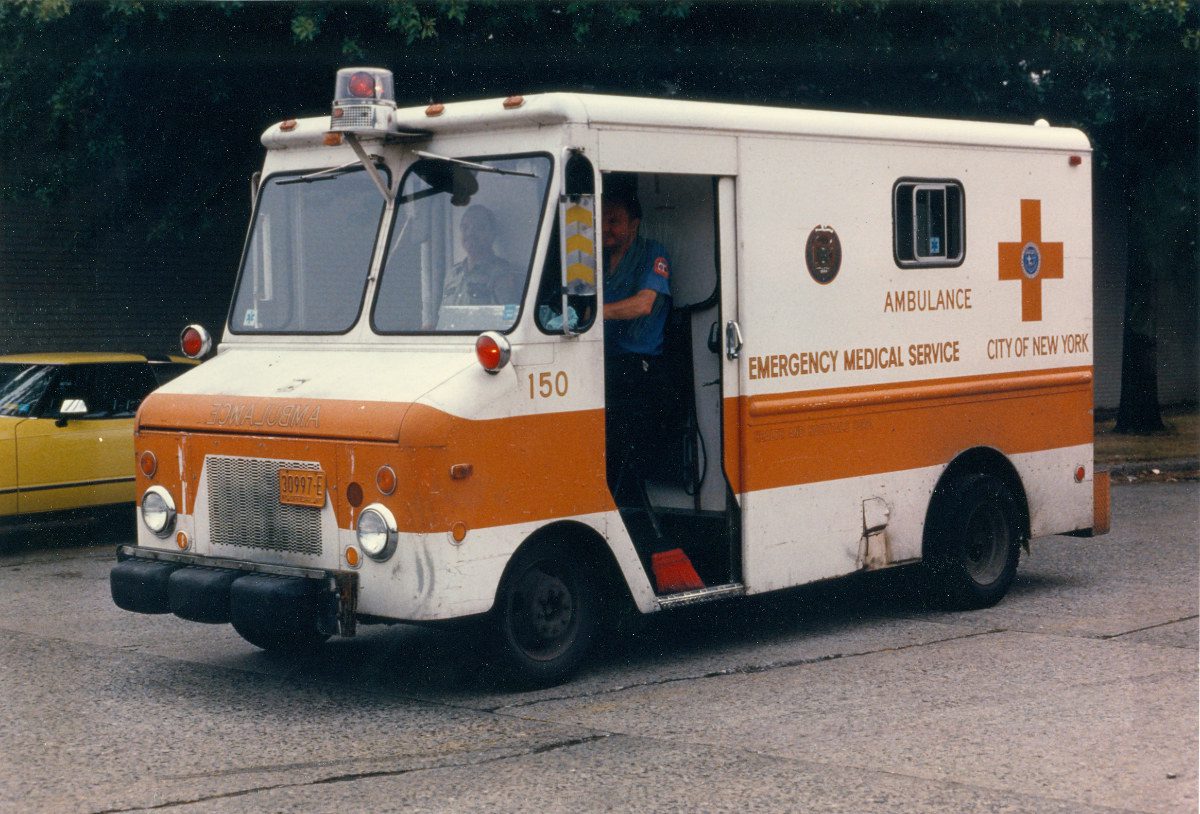

The history of ambulance services in New York is one of the most fascinating and crucial chapters in the history of medical care. Read more at i-new-york.
This history reflects not only the evolution of medical practice but also social changes, technological advances, and a deeper understanding of the importance of a rapid response to medical emergencies.
The beginnings of emergency medical services in New York trace back to the mid-19th century, when the city faced numerous challenges related to rapid population growth, industrialization, and frequent fires and epidemics. The history of ambulance services in New York started with horses transporting the sick, but over time, the medical field in New York evolved to a world-class level.
Today, New York’s Emergency Medical Service (EMS) is one of the most advanced in the world. It uses the latest technologies and treatment methods, has well-trained staff, and specialized units that respond to various types of emergencies, including cardiac, traumatic, and other critical cases.
The history of emergency services in New York demonstrates how a combination of innovation, training, and dedication can ensure a high level of medical care for millions of people. This story is a testament to the continuous evolution of medical aid, aimed at saving lives and improving the quality of life for the community. In this article, we will detail how emergency services in the metropolis evolved.
Who Invented the First Ambulance?
The credit for the first ambulance goes to Dr. Edward B. Dalton, who developed an effective system for evacuating wounded soldiers from the battlefield during the Civil War.
He recognized that the injured suffered significant additional trauma in the wagons used for transport. Dr. Dalton added roofs to the existing wagons for cover, a suspension system to soften the ride, and a red cross for identification.
What Were the First Ambulances Like?
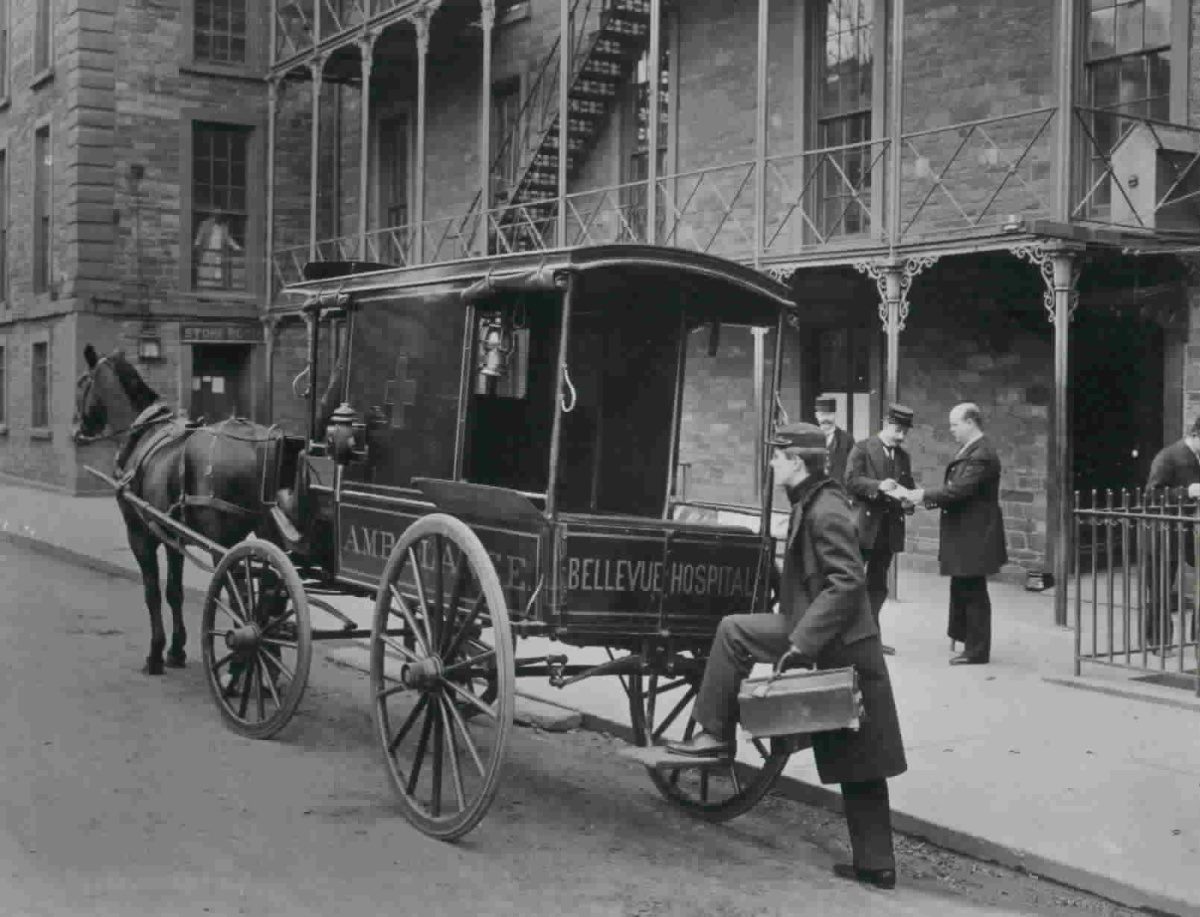
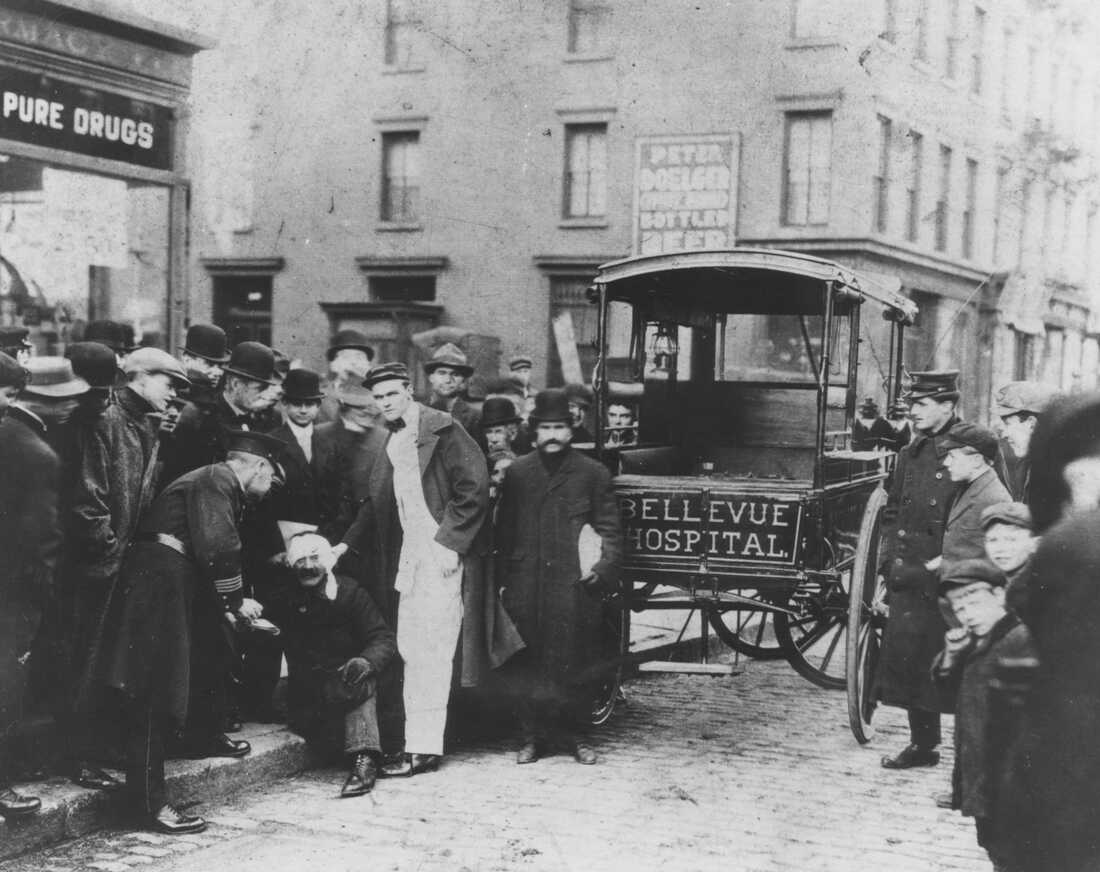
In 1869, the country’s first organized ambulance service was established at Bellevue Hospital in New York. This service was revolutionary for its time, as it provided transportation for patients to the hospital and offered basic medical care on site.
The first horse-drawn ambulances were staffed by a driver and a medical intern, who was typically a recent medical school graduate. The first ambulances were not very well-equipped. The vehicle had a box under the driver’s seat containing a quart flask of brandy (instead of ordinary spirits), two tourniquets, six bandages, six small sponges, splint materials, pieces of old blankets, straps of various lengths with buckles, and a bottle of iron persulfate.
Eventually, each hospital had its own ambulance service, usually staffed by a doctor and a driver, with the police department handling dispatch duties.
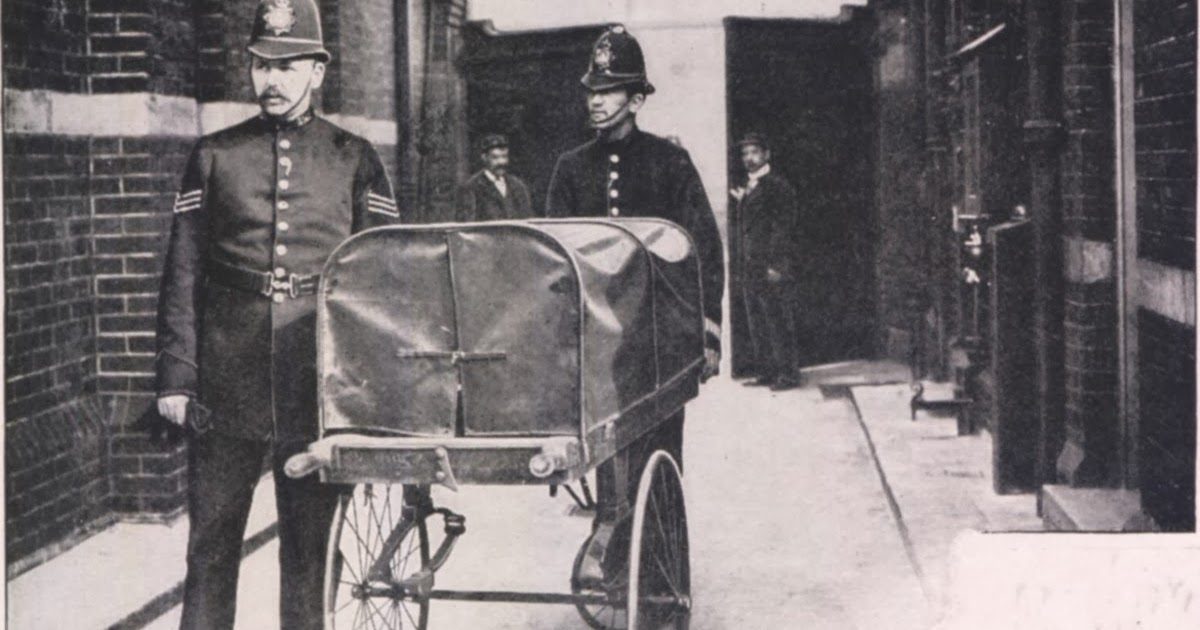
The early ambulances were only four feet wide. They had virtually no equipment designed for pre-hospital use, nor portable oxygen or suction equipment.
Basic medical supplies were carried in the doctor’s bag, and most patients were treated and sent home to recover. Only the most critically ill patients were transported to medical facilities. Those requiring transport were moved using military-style stretchers, which consisted of a leather lining stretched between two sticks.
Improvements to Emergency Services
A significant improvement to the system came in 1908 with the introduction of the first motorized ambulances.
In the early 1900s, New York’s population grew rapidly, and with it, the demand for ambulance services. By 1929, when the Department of Hospitals was created to consolidate the city’s municipal hospital system, there were 45 ambulances (12 municipal and 33 voluntary) and an annual call volume of 343,000. Each hospital had its own rules, and patients were usually returned to the same ambulance hospital, even if a closer hospital was bypassed.
By the late 1930s, all of New York’s ambulances were built on truck chassis, and drivers were fully responsible for the operation and maintenance of their vehicles.
At the start of World War II, the system took a significant step backward, as a huge number of doctors and nurses were conscripted into military service.
Doctors returned to an ambulance role after the war, but only for “special calls,” such as obstetrical tasks that required on-site amputation. However, the vast majority of calls were handled by “ambulance doctors.”
In the 1960s, the Department of Hospitals, Emergency and Transport Division, created a more unified ambulance service, standardizing training and equipment. The annual call volume was approaching 400,000.
In 1969, New York’s ambulance system consisted of 109 ambulances, 60 being city-owned and 49 from volunteer hospitals. That same year, the city first used computer modeling to determine the optimal placement of these ambulances.
In the mid-1970s, the old-style ambulances used since 1960 were replaced with modular vehicles. Amenities such as on-board oxygen and suction were added, along with improved cabinets. For the first time, supervisors began patrolling and responding to calls with crews.
To facilitate communication with dispatchers and supervisors, ambulance crews were issued portable two-way radios. Training began for mass casualty incident management and for airport emergencies.
Emergency Services in the Modern Era
By the mid-1990s, EMTs and paramedics in the New York EMS system were responding to 1.6 million emergency calls annually—that’s more than 4,000 calls per day.
Over the next decade, a significant increase in paramedic units was funded. Some medics received additional training as rescue medics and were equipped to handle hazardous materials, improving their cooperation with firefighters and NYPD emergency service officers during missions.
Since 1994, 24 new EMS stations have been added in New York.
In 2018, EMS workers responded to 1,862,159 medical emergency calls: an average of 5,100 calls per day. During the COVID-19 pandemic, the number of calls sometimes exceeded 7,000 per day.
From the first call in 1869 to the last call in the 21st century, the men and women who have dedicated themselves to working on these ambulances have responded to tens of millions of calls for help and saved countless lives. In doing so, emergency medical workers have sacrificed their own lives to help others.
In the 21st century, due to issues with the financial model, the U.S. EMS system significantly lags behind the capabilities of other countries. Workers in this field are known to be paid relatively little, which leads to an annual turnover rate of 25%. Furthermore, they face the devastating consequences of high rates of on-the-job death and injury. This was particularly evident during the COVID-19 pandemic.