
New Year is a time of magic and miracles when it’s time to have fun, make wishes and give gifts. Every year, millions of New Yorkers gather together on this day and watch as the glittering Ball drops from its flagpole in Times Square. They also attend a New Year’s Eve festival and take pictures in front of the Christmas Tree near Rockefeller Center. What other New Year’s traditions this city has and how they have changed are up next on the i-new-york website.
How did New Yorkers celebrate the New Year in the last century?
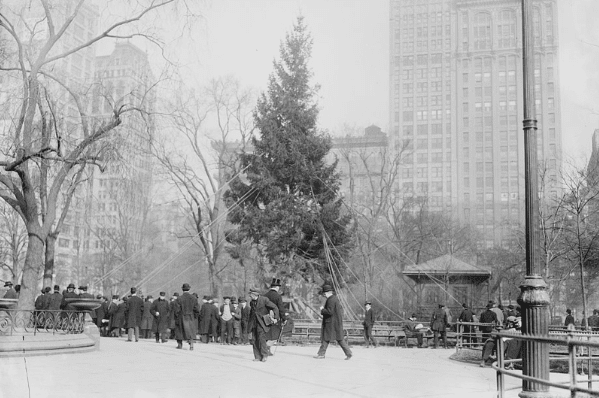
The culture of New Year’s Eve celebrations underwent a significant change in the twentieth century. In particular, thanks to British immigrants, holding New Year’s Eve shows, concerts, banquets and masquerades instead of family gatherings have become trendy. The city’s elite especially favored these celebrations. Since then, NYC has become known to many as a city of fun and vibrant nightlife. New Year’s entertainment was traditionally organized in hotels, restaurants, nightclubs and the city’s iconic Times Square.
The Great Depression and World War II also contributed to the development of New Year’s traditions. During these harsh times, it was customary to organize modest home parties instead of noisy and joyful celebrations. New Yorkers began to celebrate New Year’s Eve more often with loved ones and popularize family values.
With the end of the war and the economic crisis, the demand for public New Year’s celebrations has returned. It was the very time when the iconic New Year’s symbol of NYC was created: a large, sparkling ball that descends amidst vibrant fireworks, symbolizing the beginning of the New Year.
Fascinating facts about the biggest New Year’s Eve Ball in NYC
Every year, millions of New Yorkers hold their breath as midnight approaches. They eagerly await the descent of the Times Square New Year’s Ball and the strike of midnight. The tradition of the Ball Drop has been a part of the downtown New Year’s Eve celebration since the turn of the century. What else is known about this Ball and what makes it a memorable event for New Yorkers?
- The Times Square Ball is also referred to as a time ball.
- The Ball is a prominent feature of the One Times Square skyscraper in NYC.
- Since 1907, it has been lowered every year except for 1942 and 1943, when the tradition was suspended due to lighting restrictions in NYC during World War II.
- Every year on December 31 at 11:59 p.m., the Ball descends from a 70-foot height down the flagpole. It reaches its lowest point at midnight, symbolizing the coming of the New Year.
- The design of the New Year’s Ball underwent several changes. So, in 1907, the Ball was made of metal and wooden structures, had dozens of incandescent lights, weighed 700 pounds and was 5 feet in diameter.
- Today, it features triangular crystal panels and thousands of LEDs.
- The ball has descended 114 times.
- The modern ball has a diameter of 12 feet and weighs over 5 tons (11,875 pounds).
When and how did the tradition of celebrating New Year’s Eve in Times Square originate?
In the early 20th century, New Year’s Eve celebrations became more diverse due to the traditions and values of people of different nationalities in NYC. They started having raucous parties in restaurants, hotels, and homes. New Year’s Eve became a magical and joyful moment that united, inspired and delighted millions and millions of people.
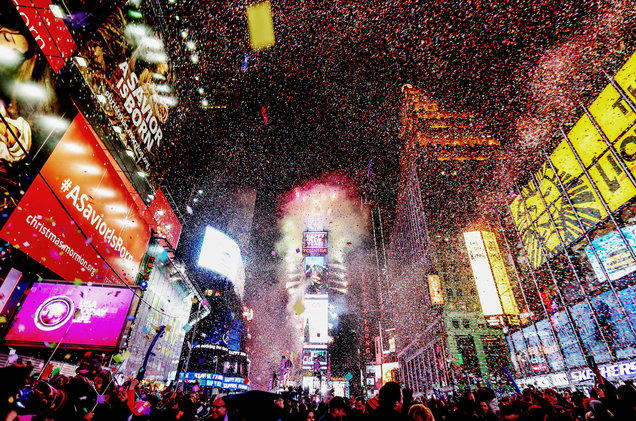
So, it was 1904 when the idea of having a New Year’s Eve festival in Times Square originated. At that time, nearly 200,000 people attended the festival. The first New Year’s Eve Ball drop occurred on December 31, 1907. Over time, the festival grew in popularity and became the most vibrant and joyful New Year’s Eve event.
New Yorkers have devised various ways to celebrate New Year’s Eve in Times Square, such as:
- New Year’s Eve Ball drop
- Enjoying fireworks
- Attending a New Year’s Eve concert
- Making wishes at midnight
- Taking photos by the major Christmas Tree.
Every year, over a million people come here to celebrate New Year’s Eve. They have fun and wish each other a Happy New Year. The event itself and the major Christmas Tree near Rockefeller Center are broadcast on television in the United States and other countries across the globe.